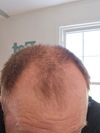
A user is frustrated about early balding despite older male relatives retaining hair into old age. Another user plans to start finasteride soon to address their hair thinning.
A 27-year-old male experienced rapid hair loss after dengue fever, which activated a balding gene. The doctor suggested platelet-rich plasma treatment for hair regrowth.
A 33-year-old male is starting treatment with oral dutasteride and topical minoxidil for hair regrowth. He is concerned about his receding hairline and hopes for some improvement despite years of balding.
A 29-year-old male shares progress pictures after 4 months using finasteride and 2% ketoconazole shampoo, noting initial shedding but overall improvement. He avoids minoxidil and microneedling, and reports thicker hair in balding areas while maintaining high water intake.
A 23-year-old male is worried about potential hair loss and is considering finasteride but is concerned about side effects. He received reassurance from a doctor that he might not be balding and plans to confirm with a specialist.
A 43-year-old male seeks advice on hair regrowth options, considering treatments like Minoxidil, finasteride, and RU58841, or possibly a hair transplant. He has low testosterone and a family history of balding.
A user reported that applying castor oil to their eyebrows for two weeks resulted in thicker hair and is considering using it on their scalp to thicken existing hair, not to stop balding. They do not expect it to cure male pattern baldness.
After stopping finasteride, the user retained hair without noticeable balding, suggesting an unusual reaction to the medication. The user initially experienced rapid hair loss and itchiness, possibly due to male pattern baldness, but maintained hair stability after tapering off finasteride.
The conversation discusses a five-year study on dutasteride, a medication for male hair loss. The study found that 89.9% of patients saw improvement or prevention of hair loss progression, with varying success rates based on different balding patterns. Side effects were mostly sexual and decreased over time. Dutasteride was concluded to be a long-term, safe, and effective treatment for male hair loss.
A 25-year-old male has been using oral finasteride and minoxidil for six months without noticeable progress in hair regrowth and is considering switching to dutasteride or a hair transplant. Users suggest giving the treatment more time, adding microneedling, and possibly using topical minoxidil.
A 16-year-old diagnosed with male pattern baldness (MPB) was prescribed hair vitamins, vitamin D, a non-ketoconazole shampoo, and redenysl + serum, with a suggestion for GFC or IHRF treatments. Some users recommended minoxidil, ketoconazole, and derma stamping, while others advised against certain treatments until the age of 18.
The user claims NoFap (abstaining from pornography, masturbation, and orgasm) helped stop their hair loss. Others argue that hair loss is primarily due to genetics and DHT, which can be managed with finasteride.
A 21 year old male who has been using finasteride and minoxidil for 3 months to treat hair loss, and others sharing their experiences with the same treatments.
Male pattern baldness and diffuse thinning can both be forms of androgenetic alopecia (AGA), and it's important to consult a doctor for proper diagnosis. Treatments like Minoxidil, Finasteride, and biotin are discussed, but their effectiveness varies, and side effects are a concern.
A 36-year-old male using dutasteride and minoxidil has seen significant hair regrowth, confirmed by a dermatologist and supported by before-and-after photos. He plans to increase his oral minoxidil dosage and add dermapen to his routine.
The conversation is about a user considering the use of Ketoconazole 2% shampoo before showing signs of male pattern baldness (MPB) to potentially delay its onset, inspired by a YouTuber who uses the shampoo to reduce scalp DHT levels. The user's interest in this preventative measure stems from a family history of MPB.
A 27-year-old woman is struggling with hair loss, feeling self-conscious and seeking advice on coping. She mentions trying Minoxidil but is hesitant due to scalp issues and is looking for ways to regain confidence.
The user is experiencing hair loss without a family history and suspects stress or telogen effluvium (TE) as the cause, despite using finasteride without results. Others suggest stress, vitamin deficiencies, or other conditions could be factors, and some mention that balding can occur without a family history.
A 21-year-old male has been using minoxidil and finasteride since July 2023 to combat hair loss but is considering embracing a bald look due to mixed results. Many commenters agree he looks better bald, praising his appearance and suggesting he maintain the shaved look.
A 42-year-old male shared his hair regrowth progress using a regimen of oral dutasteride, topical minoxidil, and finasteride, along with testosterone injections. He experienced noticeable improvement in hair growth and expressed gratitude for the support and information from the community.
Balding seems to worsen with each generation, possibly due to stress, diet, and environmental factors. The user started treatments like Minoxidil and finasteride.
A user shared their experience with male pattern baldness and accepting baldness after shaving their head at age 29. Some responses suggest treatments like minoxidil and finasteride, while others discuss acceptance and personal experiences with hair loss.
A 20-year-old with aggressive hair loss is using oral minoxidil and finasteride, considering a buzz cut to manage appearance. Most suggest a buzz cut or shaving, recommending patience with medication and possibly trying RU58841 or dutasteride.
A 28-year-old male is experiencing hairline recession despite his family having full heads of hair. Suggested treatments include finasteride, minoxidil, and ketoconazole 2% shampoo.
A 21-year-old male using minoxidil and finasteride for two months is experiencing increased hair loss, which is considered normal and part of the shedding process. Users advise continuing treatment, as results typically appear after 6 months to a year, and suggest adding vitamins, microneedling, or considering dutasteride for aggressive hair loss.
Young men experiencing hair loss are frustrated with advice to embrace baldness without exploring treatments. They advocate for using finasteride and minoxidil, considering hair transplants, and hope for future advancements in hair restoration.
A 30-year-old man is frustrated with hair loss despite using finasteride, topical minoxidil, ketoconazole shampoo, and PRP. Suggestions include trying oral minoxidil, dutasteride, RU58841, or considering a hair transplant.
The conversation humorously discusses hair loss treatments, suggesting minoxidil, finasteride, dutasteride, nizoral shampoo, and various unconventional methods. It also includes jokes about hairlines and the effectiveness of these treatments.
A man in his thirties found increased confidence after shaving his head, despite years of hair loss. Others discussed using treatments like finasteride, minoxidil, and hair transplants, with mixed opinions on their effectiveness.