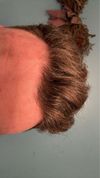
This conversation is about a 21-year old male's success with using finasteride, minoxidil and ketoconazole shampoo to regrow his hair. He increased the finasteride dosage from 1mg 3x per week to 1 mg daily for maximum results. People in the thread commended him on his progress.
Treating the itch associated with male pattern baldness, which is believed to be caused by DHT. Potential treatments discussed include salt water, finasteride, ketoconazole, and RU58841.
This conversation is about a user's experience with low-dose oral Minoxidil for hair loss, and includes advice from other users who suggest trying finasteride or microneedling, as well as shaving off the remaining hair and seeking a hair transplant in Turkey. It was originally intended as satire but had to be clarified due to confusion.
A user is trying to reverse male pattern baldness (MPB) naturally by taking high doses of Vitamin D, improving diet, exercising, reducing stress, and other lifestyle changes, but plans to use finasteride if no results are seen in 60 days. Other users are skeptical, advising medical treatments like finasteride and warning against potential vitamin D overdose and the ineffectiveness of natural remedies for genetic hair loss.
User reports 6 months on finasteride with visible hair growth. Others discuss the importance of similar hair length in before and after pictures for accurate comparison.
There is no natural way to stop hair loss; pharmaceuticals like minoxidil, finasteride, and RU58841 are the only effective treatments. Some users report success with minoxidil and microneedling, while others discuss the side effects of finasteride.
A user reported success with RU58841 and a 1mm derma roller for hair regrowth, noting significant improvement in hair density and reduced scalp visibility. They also mentioned using minoxidil and black castor oil in the past, with mixed results.
The conversation discusses a user's hair regrowth over three years using Minoxidil, Finasteride, and a hair transplant, along with Biotin supplementation. Some users question the authenticity of the results and the organization of the before-and-after photos.
An 18-year-old shares a 5-month hair loss treatment progress using finasteride, minoxidil, microneedling, Nizoral, biotin, and fish oil. The user discusses the effectiveness of finasteride over time and considers continuing the regimen despite suggestions to simplify it.
A user shared progress pictures showing significant hair regrowth after 3 months using a topical foam with 5% Minoxidil and 0.25% Finasteride. They plan to add derma rolling to their routine.
The user, a 27-year-old male, has been treating early hair loss with topical finasteride and minoxidil, then switched to oral finasteride and dutasteride, but has seen no improvement and plans to add oral minoxidil. Despite treatment, hair loss has progressed from Norwood 1-1.5 to Norwood 3, with noticeable thinning, especially on the left side.
The user experienced hair thinning and was diagnosed with alopecia incognito and male pattern baldness. They are using minoxidil, finasteride, and dutasteride scalp injections, reporting gradual improvement with no side effects.
Diet and lifestyle changes can reduce hair shedding but won't regrow hair lost to genetic male pattern baldness. Treatments like finasteride and dutasteride are necessary for significant hair regrowth.
The user is experiencing progressive hair thinning despite using finasteride and dutasteride. A biopsy confirmed male pattern baldness, and minoxidil was suggested as an additional treatment.
KX-826 is undergoing Phase III trials in China as a potential treatment for male pattern baldness, with some users considering it as an alternative or addition to finasteride and dutasteride. Opinions on its effectiveness vary, with some users reporting positive results and others finding it expensive and ineffective.
The user started finasteride (1mg) a year ago for hair thinning, experiencing stabilization but not significant regrowth. Suggestions included adding minoxidil, microneedling, and considering a hair transplant for improved results.
Dutasteride is shown to be significantly more effective than finasteride for treating male androgenic alopecia. Users discuss the difficulty of obtaining dutasteride in some countries and share personal experiences with its effectiveness and side effects.
A user is frustrated about early balding despite older male relatives retaining hair into old age. Another user plans to start finasteride soon to address their hair thinning.
Minoxidil, often combined with microneedling, has helped some users improve hair growth at the temples and hairline. Finasteride is also mentioned as a treatment, with mixed results on its effectiveness.
Testosterone within the normal range does not significantly contribute to male pattern baldness (MPB); DHT is the main factor that can be controlled. Genetics play a crucial role in hair loss, and treatments like finasteride and dutasteride, which block DHT, can help despite potentially raising testosterone levels.
A new study suggests microneedling alone doesn't benefit male balding, but users argue the study's methods differ from common practices, like combining microneedling with minoxidil and using more frequent treatments. Some believe the study's short duration and infrequent sessions are inadequate to assess microneedling's effectiveness.
A 30-year-old female with PCOS and male pattern baldness is frustrated with her endocrinologist's recommendation of only Spironolactone and minoxidil, feeling that dutasteride, finasteride, and progesterone would be more effective. Other users suggest various online sources for treatments, warn against self-medicating due to potential risks, and recommend seeking a specialized endocrinologist or considering additional treatments like Inositol, Berberine, and dermaneedling.
The conversation is about a 23-year-old male's seven-month progress in treating hair loss using 1mg finasteride daily and minoxidil, which he added after 4/5 months. The responses are positive, praising his noticeable improvement and encouraging him to continue the treatment.
A user was prescribed ketoconazole shampoo by their dermatologist for early-stage hair loss, but is unsure if this is the right treatment. Most commenters suggest seeking a second opinion or starting finasteride treatment immediately, while a few caution about potential side effects.
The conversation discusses the effectiveness of finasteride and dutasteride in treating hair loss, emphasizing that significant results often take 12-18 months or more. Dutasteride is generally considered superior, with similar or fewer side effects than finasteride, but patience is required for noticeable improvement.
The conclusion of the conversation is that the user has made significant progress in their hair loss treatment using a combination of oral minoxidil, topical minoxidil, RU58841, dutasteride, dermarolling, and scalp massage. Other users have praised their progress and recommended different treatments.
The post is about a user's progress with hair loss and the effectiveness of finasteride as a treatment. The conclusion is that the user did not see any progress with their hair loss after being on finasteride for a year.
The conclusion of the conversation is that the user experienced significant hair regrowth after taking finasteride for a year. They did not use any other treatments and did not experience any noticeable side effects.
Hair loss discussion mentions Native Americans' resistance to male pattern baldness and lack of facial hair. Users discuss genetics, sun exposure, and potential treatments like minoxidil and finasteride.