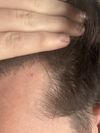
The user has been using topical finasteride and minoxidil for a month to address hair thinning. They are experiencing shedding but have noticed small hairs on their temples.
The conversation humorously acknowledges the role of mice in testing Minoxidil for hair loss while also discussing the ethics of animal testing. Some users argue against animal testing, citing cruelty, while others defend its necessity for medical advancements.
A 28-year-old shared surprising hair regrowth progress after 20 days using topical minoxidil, micro needling, GHK-cu, and BPC-157 injections. The user noted a significant reduction in their bald spot and overall hair improvement.
Oral minoxidil can cause multiple facial hairs to grow from one follicle, known as Pili Multigemini, leading to ingrown hairs and zits. Users report increased facial and body hair growth, with some experiencing fewer issues after switching to dutasteride.
A user in Egypt is seeking alternatives to oral minoxidil, which is banned there, after stopping topical minoxidil due to concerns for their cat's safety. Suggestions include drinking diluted topical minoxidil or making homemade minoxidil tablets, but these methods carry significant risks and are not recommended.
A user's successful hair regrowth after 7 months of using 5% minoxidil, 1mg finasteride, and adding micro needling 4 months ago. The user also took biotin, fish oil, and collagen supplements, and reduced finasteride intake to once every 3 days due to minor libido decay.
TurboMoe has been using 1mg finasteride and 2mL minoxidil daily for 6 months to reverse his frontal hair loss, with good results. He previously used finasteride in his 20's but stopped before having children due to low sperm count; he stayed off it until his last child was born.
Melatonin is being explored as a hair loss treatment, with one user mixing it into minoxidil but not seeing results. The conversation discusses experimenting with melatonin concentrations.
The conversation discusses a hair loss product containing Minoxidil, Finasteride, Azelaic Acid, and Caffeine. People are sharing their experiences and reviews of the product.
The conversation discusses using a multimodal approach to treat androgenic alopecia, including substances like gamma-linolenic acid, DHA, sulforaphane, melatonin, cetirizine, astaxanthin, fisetin, apigenin, curcumin, limonene, genistein, and berberine. Users also mention using ketoconazole, minoxidil, and low-level laser therapy (LLLT) as part of their hair loss treatment regimens.
The conversation discusses using Morr F Aqua, an alcohol-free version of Minoxidil, for hair loss, particularly for someone with dandruff issues. The user is considering if this product is suitable for their condition.
Hair loss discussion includes potential HMI-115 treatment. Topical mucuna pruriens shows good results, blocking prolactin possibly more important than blocking DHT.
The user regrets not using medication after a failed hair transplant and is now using a combination of minoxidil, finasteride, derma rolling, oils, and ketoconazole shampoo to try to improve hair regrowth. They are seeking feedback on progress and considering further treatment options.
The user is considering two hair loss treatments: Minoxidilmax Maxogen-x, which contains Minoxidil, Finasteride, Azelaic Acid, ABN Complex, Retinoic Acid, Fluocinolone, and Caffeine, and Morr-F, which contains only Minoxidil and Finasteride. They are asking for others' experiences with these brands.
The conversation discusses using a 4-in-1 spray containing minoxidil, tretinoin, caffeine, and melatonin for hair loss. Users consider the potential benefits of combining these ingredients, with some interest in a comprehensive approach to treatment.
Genetics mainly cause hair loss, but diet, stress, smoking, and alcohol can worsen it. Treatments include finasteride, minoxidil, and lifestyle changes like a healthy diet and avoiding caffeine.
The user is experiencing an allergic reaction to propylene glycol in Kirkland minoxidil and is considering switching to a foam version or a low-PG minoxidil solution. They are also contemplating oral minoxidil but are concerned about its long-term safety.
Scientists discovered a potential baldness treatment from hairy moles, which can be injected like Botox. Users discussed the treatment's implications, including its safety and effectiveness.
A user did not respond to finasteride, dutasteride, and oral minoxidil for hair loss after four years of treatment and is considering scalp micropigmentation (SMP). Other users suggest the hair loss pattern may indicate alopecia areata and recommend seeing a dermatologist.
A 25-year-old who has been using minoxidil and finasteride for 4 years to treat hair loss, underwent a successful FUE hair transplant in Mumbai, India, in April 2023. The user reported positive results, including increased hair density and reduced frizziness, and plans to continue treatment for further growth.
User started finasteride at 18, added minoxidil later but stopped due to side effects. Hair loss continued despite treatments, considering dutasteride but hesitant. Others suggest trying dutasteride and discussing with a dermatologist.
A user shared their 10-week progress using Minoxidil and 1mg Finasteride daily, reporting no side effects and increased sex drive. Replies praised the noticeable improvement in hair thickness and hairline definition.
The conversation is about using castor oil for hair loss treatment alongside finasteride and minoxidil. Users discuss the method of consuming castor oil, its potential side effects, and question its effectiveness for hair growth.
The post discusses using Sandalore as a potential hair loss treatment, emphasizing precise measurements and safe handling. The user compares Sandalore's effects to Minoxidil and mentions preparing a solution with ethanol and DMSO.
Many are unaware of effective male pattern baldness treatments like finasteride and minoxidil, often opting for ineffective remedies. Educating others on proven treatments and potential side effects is crucial.
A user is asking if Minoboost F, a topical solution with 5% Minoxidil and 0.1% Finasteride, is effective or a scam due to the lack of online reviews. They seek opinions and reviews from others.
A 35-year-old man shared his hair transplant experience in Tijuana, Mexico, choosing Artline for 5,000 grafts at a lower cost than U.S. clinics. He plans to use topical minoxidil and possibly microneedling for better results.
Whether topical caffeine can be as effective for hair growth as minoxidil and finasteride, with various replies discussing the efficacy of these treatments and criticism of Dr. Huberman's research methods.
A user discusses their experience with hair loss and treatments, including minoxidil, micro needling, rosemary oil, dietary supplements, and topical finasteride (Morr-F). They emphasize the impact of lifestyle on hair health and express hope for improvement with the new treatment.
The conversation discusses experiences with NMN supplementation for hair growth, with some users reporting increased hair growth activity and others seeing no significant changes. OP has been using dutasteride and oral minoxidil, and recently added NMN, noticing increased shedding, which they hope indicates new hair growth.