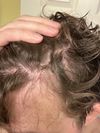
A 28-year-old male started a hair loss treatment with 2.5mg oral minoxidil daily, 1mg finasteride every other day, and a 1.5mm dermaroller once a week. After two months, he believes he sees some progress.
The conversation discusses choosing between titanium fixed needles and a pen with disposable needles for hair loss treatment at a 1.5mm depth. The preference is for disposable needles for better sanitization.
Switching from 2% liquid minoxidil to 5% foam minoxidil reduced scalp irritation but increased eyebrow flakiness and thinning. The user speculates that propylene glycol in the liquid formulation might have been protecting against seborrheic dermatitis while causing contact dermatitis.
User experienced hair growth after 4 months using Minoxidil and dermastamp. Others suggest adding Finasteride or Dutasteride for long-term results and trying microneedling with Minoxidil.
The user has been using finasteride for years with little regrowth and recently started using Cécred edge drops, which have significantly improved their scalp condition. Another user mentioned combining Cécred with derma stamping for better results.
Minoxidil may cause wrinkles and dark circles, which some users report can be mitigated by adjusting dosage. Reactions vary, and while some dismiss these side effects, others experience significant changes.
Taking 5mg oral minoxidil at night instead of splitting 2.5mg doses, with the rationale that a single larger dose may provide a stronger activation for hair follicles and reduce peak-related side effects. Some users report sleep issues with nighttime dosing, while others find it beneficial; opinions on effectiveness and side effects vary.
The user discusses using Follics FR5, FR10, and FR15, which combine Minoxidil, Adenosine, Procapil, Azelaic acid, and Procyanidin B2, to address hair loss. They have previously used Minoxidil, Finasteride, and Dutasteride with varying success.
PP405 is seen as a potential breakthrough for converting vellus hairs to terminal hairs, with users expressing both hope and skepticism. It is compared to treatments like minoxidil and finasteride, with discussions on side effects and marketing concerns.
A 28-year-old is assessing their hair loss on the Norwood scale, considering adding topical minoxidil and dermastamping to their current regimen of oral finasteride and minoxidil. They feel their hair loss is worsening and seek opinions on their condition.
Scalp micropigmentation (SMP) is a viable option for those experiencing hair loss, providing a natural look similar to a buzzcut. It requires touch-ups every 3-5 years, and using products like zero shine can help manage appearance issues in different lighting.
The user experienced noticeable hair regrowth after using finasteride for 2 years, oral minoxidil for 1 year, and recently starting dermarolling. The right temple shows significant improvement, while the left remains similar.
The user shared positive results after using 5% minoxidil foam nightly and dermastamping weekly for hair growth, noting significant progress after three months. They plan to add finasteride in the future but are currently avoiding it due to age.
A user is concerned about a change in the formula of Sons topical treatment, which now requires fewer sprays but contains less minoxidil. They question if the change is for convenience or if it's a way to charge the same for less product.
The user "EscapeNo3518" shares their positive results after using topical minoxidil and dermarolling for almost 5 months. They also made changes to their hair washing routine. Another user asks about when the results started to show.
The conversation discusses using topical melatonin for diffuse thinning and mentions treatments like Minoxidil, finasteride, and RU58841. The user is seeking advice on whether melatonin could help with their condition.
Beard gains from minoxidil are usually permanent due to facial hair follicles' lower sensitivity to DHT. Scalp hair requires ongoing DHT suppression with treatments like finasteride, dutasteride, and RU58841 to maintain gains after stopping minoxidil.
The user reported gradual hair regrowth after 4 months using oral finasteride, topical minoxidil, dermastamping, and vitamins C and D3. They noted the use of a 1.25mm dermastamp and discussed sourcing finasteride in Canada.
A 25-year-old shared their 3-month progress using a combination of 1mg finasteride and 5% minoxidil for hair loss. The images show noticeable improvement in hair density.
Prostaglandin balance affects hair loss, particularly in conditions like Lichen Planopilaris, where an imbalance can lead to hair follicle damage. Treatments mentioned include prostaglandin analogs and Pioglitazone HCL, with a focus on maintaining prostaglandin equilibrium for potential hair regrowth.
The conversation discusses the availability of GT20029, a new topical hair loss treatment with fewer side effects than Minoxidil or finasteride. Users suggest using finasteride to preserve hair until GT20029 becomes available.
Dermastamp is preferred for hair growth and skin health due to fewer scars, with recommended needle sizes of 0.5-1.5mm. Dermapen is also favored over dermarollers, which are considered dangerous.
Jamesdunn8811 has been using a combination of finasteride and minoxidil to treat his hair loss over the past four months, with successful results. He has experienced no side effects and noticed increased thickness and baby hairs growing in both temples.
Longitudinal partial follicular unit transplantation involves extracting part of the donor follicular unit, allowing the donor area to be overharvested without noticeable hair loss. The conversation questions if this method is practiced in clinics or if it's theoretical, and whether it relates to hair cloning or multiplication.
A potential alternative to Minoxidil for hair loss is discussed, specifically a sugar hydrogel. Users express skepticism about new treatments becoming reality.
Bimatoprost and latanoprost are being considered for scalp hair growth, with concerns about side effects like skin darkening and fat loss. A user warns about potential chemical burns from latanoprost.
The conversation discusses the potential availability of a new hair loss treatment, GT20029, on the grey market, with users suggesting it could be within a year but advising against using grey market products due to safety concerns and complexity of the drug.
The user experienced rapid hair thinning on top of the head after two GFC treatments, despite using topical minoxidil for four years. Hair on the sides and back became thicker, leading to confusion and questioning of the treatment decision.
The conversation discusses whether to take oral minoxidil in a split dose or a single dose at night. Users suggest that taking a single 10mg dose at night is simpler, while splitting may help minimize side effects.
A user experienced hair thinning due to traction alopecia from using Murray's Beeswax and is considering treatments like minoxidil and finasteride to reverse the damage. Another user suggests consulting a hair specialist, as the hair may not regrow if scar tissue has formed.