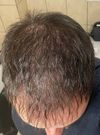
The conversation is about using a blend of coconut oil, peppermint oil, and rosemary oil with minoxidil for hair loss, and whether it's safe to apply this blend after microneedling.
Microneedling can be effective for hair regrowth, especially when used with oils like castor, emu, and rosemary, but should be done with caution regarding needle size and frequency. Some users avoid minoxidil due to its side effects and cost, opting for alternatives like rosemary oil.
Oleic acid and microneedling are being explored for hair regrowth, but results are mixed. Addressing DHT and fibrosis is crucial, with treatments like finasteride, minoxidil, and scalp massage also discussed.
Microneedling aftercare involves using saline water instead of sea water, and avoiding hyaluronic acid due to its potential pro-inflammatory effects. Users suggest using jojoba oil as a carrier for essential oils like rosemary and lavender, and combining microneedling with minoxidil for better hair regrowth results.
The conversation discusses a topical hair loss treatment containing 0.1% dutasteride, 6% minoxidil, tretinoin, and ketoconazole. The user is asking for opinions on the effectiveness of this solution.
The user shared a 4-month hair loss treatment update, using Kirkland liquid minoxidil twice daily, microneedling with 1.5mm and 0.5mm needles, and applying rosemary oil twice a week. They plan to start taking finasteride and also grew a beard by microneedling and applying minoxidil to their face.
The conversation is about a user experiencing hair shedding after using a brand of RU58841, questioning its effectiveness and safety. Concerns are raised about RU58841 being an abandoned research chemical and the use of heavy oils like castor and argan oil potentially affecting absorption.
Oleic acid, microneedling, and emu oil are discussed as potential hair growth treatments, with some users expressing skepticism about their effectiveness. Minoxidil and finasteride are recommended as current reliable treatments until more proven solutions are available.
A 23-year-old is experiencing severe hair loss and has been using oral minoxidil for 5 months without success. They plan to use ketoconazole cream, emu oil, peppermint oil, evening primrose oil, taurine, black currant oil, and a microneedle roller, and are seeking advice on their routine.
The conversation discusses the potential benefits of castor oil for hair thickening, with one user noting it may increase prostaglandin E2 and decrease PGD2. The original poster plans to take 1-2ml orally daily.
The conversation discusses using Musely's classic formula for hair loss, which includes minoxidil, dutasteride, tretinoin, ketoconazole, and hydrocortisone. Concerns are raised about hydrocortisone and the high concentration of dutasteride, with a preference for using research-backed concentrations without hydrocortisone.
Minoxidil can be effectively delivered through nanoemulsions containing eucalyptol or oleic acid, enhancing its diffusivity and targeting hair follicles. This contradicts the advice against mixing minoxidil with oils in topical formulations.
The user mixes their own RU58841 solution and found that increasing the ethanol content improved absorption and reduced scalp itching. A study on minoxidil showed that penetration increased with higher ethanol concentrations, reaching maximum penetration at 90% ethanol.
A user is trying to reverse hair loss using vitamins E and D, jojoba oil, rosemary oil, peppermint oil, and microneedling, avoiding finasteride and minoxidil. They plan to use Alpecin shampoo and will provide updates on the effectiveness of this regimen.
Peppermint oil may be beneficial for hair growth, potentially outperforming minoxidil. Users discuss its effectiveness compared to other treatments like finasteride and RU58841.
The user discussed hair loss treatments, considering options like oral and topical dutasteride, minoxidil, pumpkin seedoil, and a tonic with various ingredients. They expressed concerns about side effects and the cost of microneedling sessions.
The user uses finasteride, ketoconazole shampoo, and derma stamping for hair loss. They consider rosemary and castor oil as alternatives to minoxidil due to fewer side effects.
Choosing between two hair loss treatments, with a preference for a higher concentration of RU58841 and 5% minoxidil, avoiding oils like castor and argan that may hinder absorption.
The user is using topical finasteride and minoxidil for hair loss and is considering adding rosemary oil, castor oil, and stemoxydine to their routine. They are asking if anyone has experience with this combination or a similar one.
The user shared progress pictures after using minoxidil twice daily, rosemary, pumpkin seed, and castor oil three times a week, and a derma roller once a week for two months. The conversation discusses the effectiveness of these treatments for hair loss.
The user has been using oral minoxidil and dutasteride for hair loss without success and is considering adding topical 17α-estradiol, Pyrilutamide, Clascoterone, or cetirizine. They have confirmed low serum DHT levels and are exploring additional treatments due to genetic sensitivity to DHT and prostaglandin D2.
The user experienced positive hair growth results using microneedling with rosemary and mint oil, without Minoxidil, Finasteride, or RU58841. They switched from a dermaroller to a microneedling pen and targeted different scalp areas weekly.
The user is exploring alternatives to finasteride and dutasteride due to concerns about side effects, and is using rosemary and jojoba oil, ketoconazole, minoxidil, microneedling, multi-peptide serum, saw palmetto, and stinging nettle for hair loss. They are also considering CB 03 01 and spironolactone.
A user shared a list of natural supplements they tried that did not stop their male pattern baldness (MPB), including vitamin D, biotin, and various oils. The conversation includes skepticism and jokes about one of the methods, injecting jellyfish mucus into testicles, and mixed opinions on the effectiveness of natural treatments.
The conversation discusses creating a 0.01% topical dutasteride solution mixed with minoxidil for hair loss treatment, with concerns about absorption and effectiveness. Some users suggest that dutasteride needs specific formulation for better absorption, while others recommend oral use for practicality.
The conversation is about making a hair loss treatment combining minoxidil with azelaic acid, retinol, and caffeine, similar to the product Xandrox. The user has tried Xandrox but switched to Kirkland minoxidil for cost reasons and is seeking advice on creating a similar mixture.
Mixing peppermint and rosemary oil with minoxidil improves hair growth. Users report positive results with this combination, using both liquid and foam forms of minoxidil.
The conversation is about maximizing hair growth using treatments like oral finasteride, topical minoxidil, caffeine and ketoconazole shampoos, biotin, omega-3, vitamin D supplements, microneedling, and various hair oils such as rosemary, castor, coconut, and peppermint. Users discuss the effectiveness of these methods and share personal experiences with hair oils for scalp health and hair maintenance.