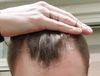
A user named KarensAnon who has been using minoxidil, finasteride, and derma rolling for hair loss treatments over the past 6 months with successful results in restoring their confidence. Other users have offered support and advice regarding similar treatment plans.
The user asks about the order and compatibility of using topical minoxidil, stemoxydine, The Ordinary natural moisturizing factors + HA for scalp, RU58841, and Nioxin system 2 leave-in treatment. They seek advice on layering these hair loss treatments.
Combining minoxidil 5%, tazarotene 0.1% cream, and lumigan for hair loss treatment is discussed. The conversation focuses on the safety and effectiveness of using these treatments together.
PP405 shows promise for hair regrowth by manipulating stem cell characteristics and lactate dehydrogenase, with Phase 2a trials pending. Google Ventures' $15M investment suggests confidence, but results and market availability remain uncertain.
Men with early male pattern baldness (MPB) may have hormonal abnormalities similar to those in women with PCOS. Specific treatments mentioned include Minoxidil, Finasteride, and RU58841.
The user plans to dermaroll and use minoxidil for hair loss over the next 4 months, documenting progress monthly. They will also consider finasteride later and include vitamins, a custom shampoo, castor oil, scalp massages, and increased water intake in their regimen.
The conversation discusses biannual SCUBE3 injections and microneedling as treatments for hair loss. Specific treatments mentioned include Minoxidil, Finasteride, and RU58841.
Two twins who used Minoxidil, finasteride and dermarollers to treat their androgenic alopecia over a 10 month time period. The user is providing details on the process they use for dermarolling.
TDM-105795 showed better efficacy and safety in trials for hair loss, with a higher hair count improvement compared to GT20029 and HMI 115, but it's not as widely discussed. The user is questioning why this is the case.
Emerging hair loss treatments like PP405, a topical MPC inhibitor, show promise in activating stem cells for hair growth. The conversation seeks information on the development stages and accessibility of these treatments.
The conversation is about a 23-year-old man's 5-month progress using minoxidil, finasteride, and dermarolling to treat hair loss, with before and after photos taken in the same location and lighting. One commenter notes difficulty in assessing the improvement due to the way the hair is combed over the bald spots.
KX-826 Max combines KX-826, Kopyrrol, and Kopexil as a potential alternative to minoxidil and finasteride for hair loss, but users express skepticism about its effectiveness and high cost. Some users believe traditional treatments like minoxidil, finasteride, and others are more reliable.
HMI-115 is a new drug developed by Bioinvent and licensed by Bayer, with mixed opinions on its potential effectiveness. Some users are skeptical and prefer proven treatments like Minoxidil, finasteride, and RU58841.
A user discusses using a mix of 10% CBD oil and emu oil for hair regrowth, seeking help to apply 3-4 mg daily. They mention needing 0.5-1ml to cover their buzzed scalp.
A potential new hair loss treatment, HMI-115, and the possibility of discontinuing finasteride in favor of it. The conversation also includes discussion about other benefits of using finasteride.
The conversation discusses hair loss treatments, including finasteride, microneedling, minoxidil, and PTD-DBM. The user has not noticed significant regrowth and is considering cost-effective options like valproic acid.
The user is likely at Norwood 4 and is advised to use oral finasteride and topical minoxidil, with the option of a hair transplant after two years for a better hairline. Finasteride and minoxidil are considered sufficient to maintain and slightly improve current hair.
A user shared their 3-year progress using finasteride and minoxidil for hair loss, noting significant improvement after adding minoxidil to their routine. They also use a derma roller weekly and apply minoxidil topically to the entire hairline.
Minoxidil and finasteride are effective for hair loss, especially when used together. Microneedling may enhance minoxidil's effects, but its standalone effectiveness is uncertain.
The conversation discusses the potential of topical rapamycin, metformin, and alpha-ketoglutarate (a-KG) for hair growth, with skepticism expressed about their effectiveness based on personal experience and existing use. It also mentions AICAR, known as cardarine or GW, which is not suitable for long-term use due to cancer risks in animal studies and its similarity to metformin.
SCUBE3 is available online but poses risks like tumor promotion and high costs. Users advise against using it due to health concerns and inefficacy as a standalone treatment.
User shares 4-month progress using finasteride, minoxidil, and microneedling for hair loss. Others discuss body hair, hair transplant possibilities, and user's treatment response.
The conversation is about the potential availability of GT20029 on the black market and whether users would try it. Participants advise waiting for phase 3 trial results to ensure safety and efficacy.
The conversation is about when GT20029, a hair loss treatment, might be available on the grey market, with users discussing the challenges of compounding it and speculating it might be available after phase 2 results, similar to pyri. Specific treatments mentioned are pyri, RU58841, and GT20029.
The user started using topical Minoxidil and Procapil, then added oral Minoxidil and Finasteride, seeing some hair thickening but no improvement in the frontal hairline. They believe nutrition, sleep, and lifestyle impact hair health and are seeking ways to track hairline and medication use.