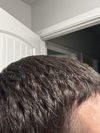
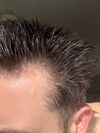
User suggests rotating scalp 180 degrees to address hair loss. Others discuss sanity, ethics, and similar procedures like scalp reduction and hair transplants.
The user experienced noticeable hair growth after starting dermarolling with a 1mm device, using minoxidil, and nizoral shampoo. They plan to reduce dermarolling frequency to three times a week and are considering additional treatments like finasteride or a hair transplant for increased hair density.
The user added melatonin to their 5% minoxidil solution for hair growth, using a concentration of 0.0033%, which equates to roughly 2mg for a 60ml bottle. They later reported no significant difference and planned to continue the treatment for a few more months before potentially stopping to observe any changes in shedding.
The user has been using Minoxidil 5% since August and has noticed hair regrowth, with the left temple showing more concentrated growth and the right side having scattered single hairs. Some hairs are turning black, but the right side doesn't yet appear as full as the left.
A 33-year-old man is concerned about potential hair loss, comparing his hairline to his father's and noticing increased shedding and thinning. He is considering treatments like Minoxidil and Finasteride but is unsure if he has male pattern baldness.
The conversation discusses why the difference between donor and balding hair isn't studied more to find a cure for hair loss. Treatments mentioned include Minoxidil, finasteride, and RU58841.
PP405 is moving to late-stage trials, showing potential for hair regrowth, with 31% of male patients experiencing a 20% increase in hair density. Veradermics is developing an oral minoxidil version, and there is interest in combining treatments for better results.
The conversation is about finding a pure high molecular weight hyaluronic acid for the scalp after microneedling. A user suggests using a product from The Ordinary.
The conversation discusses a user's hair growth routine involving scalp massages, dermastamping, and rosemary oil, with mixed opinions on its effectiveness. Some users suggest proven treatments like minoxidil and finasteride, while others debate the merits of alternative methods.
The conversation is about someone's 2-month hair regrowth progress using topical minoxidil and finasteride combined with 0.5mm dermarolling, started 3 months ago. They did not provide a baseline picture from the start date.
Using a topical formula with 5% minoxidil and 0.01% retinoic acid is considered effective, as tretinoin can enhance minoxidil results and improve scalp health.
The conversation discusses microneedling for hair loss, with one user trying 0.3mm daily without feeling pain and questioning its effectiveness. Another user suggests that 0.3mm is too shallow and recommends 0.5mm twice a week or 0.75mm once a week for hair growth.
A user switched from 2% to 5% minoxidil, alongside using finasteride and dermarolling, to address hair thinning and is curious about potential shedding. They have not experienced noticeable hair loss or shedding since starting the treatment.
A 25-year-old shared his 4-month progress using oral minoxidil, oral finasteride, a 1mm dermastamp, Nizoral, and upgraded shampoo and conditioner. He feels he sees some regrowth, though some commenters attribute the change to a different hairstyle.
User discusses scalp micropigmentation for denser hair appearance and its benefits compared to lifelong treatments. Special ink is used, which can fade and blur over time but can be topped up.
The conversation is about someone using finasteride and minoxidil along with microneedling as a treatment for hair loss, and there's a mention of scalp tattooing as an alternative or additional approach. Some responses mock the approach, while others inquire about the specifics of the treatment and its effectiveness.
Microneedling with 0.6 mm needles combined with 5% minoxidil is more effective for hair count and thickness than minoxidil alone or with 1.2 mm needles. Biweekly microneedling at 0.6 mm depth is recommended for better results in treating androgenetic alopecia.
The conversation is about a person's hair regrowth after 100 days using finasteride (0.5mg), minoxidil (3mg), and dermarolling, with others noticing improvement and discussing the appearance of the scalp and hairline.
A 19-year-old transgender individual is experiencing worsening temple recession despite taking female hormones and 1.25mg finasteride. They are seeking advice on additional treatments to address hair loss.
Elevated PGD2 levels in bald scalp tissue may contribute to hair loss, and treatments like castor oil, finasteride, and minoxidil are discussed as potential solutions. Some users explore alternatives like oral castor oil and cetirizine for those who cannot use finasteride.
PP405 is a potential hair loss treatment that inhibits mitochondrial pyruvate carriers, increasing lactate dehydrogenase activity and stimulating hair follicle stem cells. In a phase 1 trial, 31% of participants showed over 20% hair density increase with PP405 treatment.
PP405 is a safer alternative to JXL069 for hair loss treatment because it penetrates the skin effectively and degrades in the blood, avoiding systemic toxicity. JXL069, when forced into the body, can cause dangerous side effects like lactic acidosis due to its inability to degrade safely.
A user experiencing diffuse thinning since age 18 describes their hair as unhealthy, dry, thin, and hard, with texture changes cycling between good and bad every few weeks. They are not on any medication, only taking vitamins and supplements.
The user noticed baby hair growth and thicker hair after using minoxidil, rosemary, and a dermaroller for two months and plans to start finasteride soon. Another user suggests cutting hair to the same length for better comparison.
The conversation discusses hair loss treatments, including scalp massage, and the importance of blocking DHT for hair loss management. The user shares blood test results, which appear normal, and seeks advice on effective tests and treatments, expressing a preference for natural methods over medication.
Switching from 2% liquid minoxidil to 5% foam minoxidil reduced scalp irritation but increased eyebrow flakiness and thinning. The user speculates that propylene glycol in the liquid formulation might have been protecting against seborrheic dermatitis while causing contact dermatitis.
Microneedling combined with latanoprost may convert vellus hairs to transitional or terminal hairs. The user suggests using oral minoxidil to increase vellus hair, then applying a high concentration of latanoprost with microneedling for conversion.