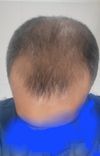
A user trying various treatments for hair loss, such as minoxidil, stemoyxidine, alfatradiol, and microneedling, with plans to add tretinoine and finasteride.
The conversation is about selling KY19382 powder, a novel activator of Wnt/β-catenin signaling, and Kolliphor EL liquid for vehicle formulation. The seller offers worldwide shipping.
The user is using Minoxidil, RU58841, CB-03-01, WAY-316606, Ketoconazole, MK-677, and derma stamping to treat hair loss and has noticed new hair growth, especially around the temples and hairline. They apply different treatments at various times of the day and have seen improvements in skin condition and body hair texture.
Minoxidil and microneedling are causing new hair growth, particularly in the center of the hairline, creating a more prominent M shape. Users discuss the progress and potential benefits of the treatment.
MSM is discussed as a potential treatment for hair regrowth, with mixed opinions on its effectiveness. Some users report faster hair and nail growth, while others question its credibility due to lack of scientific evidence.
The user experienced hair loss after switching to daily microneedling and stopping tretinoin, while continuing oral finasteride, minoxidil, and other treatments. The consensus suggests daily microneedling is excessive and harmful, recommending less frequent sessions to allow healing.
A young male in his twenties discusses hair loss, mentioning the use of Minoxidil, topical finasteride, and occasional derma rolling. He inquires about scalp inflammation, fibrosis, and the potential benefits of magnesium oil and scalp massages for improving blood flow and hair health.
Creatine may increase hair loss in those with male pattern baldness (MPB) due to increased DHT, but whey protein generally does not affect hair loss. Finasteride and minoxidil are used to manage hair loss, and some users report increased shedding with creatine but not with whey protein.
The user shared their 3-month progress using 5% topical minoxidil and microneedling with a 1mm dermaroller, noting significant hair growth without using finasteride. They applied minoxidil twice daily and used the dermaroller three times a week, experiencing a short shedding phase after 2-3 weeks.
Pyrilutamide, a nonsteroidal antiandrogen drug under development for the potential treatment of androgenic alopecia. The conversation discusses its binding affinity to the androgen receptor and the timeline for possible availability after trials are completed in the United States and China.
A peptide-based hair loss treatment, PP405, reportedly increased hair density by 62% in 90 days, but these claims are unverified and met with skepticism. Users compared PP405 to Minoxidil and Finasteride, expressing doubts about its effectiveness without more evidence.
The user has tried topical Minoxidil and oral Minoxidil for beard and scalp hair growth with minimal results, and has been on Finasteride for 7 months with stabilized scalp hair but no facial hair improvement. They are considering using a SULT1A1 enzyme booster to enhance results and are questioning its effectiveness without concurrent topical Minoxidil application.
The user experienced reduced hair loss using an online serum but found it too expensive and is seeking a vendor for ptd-dbm. They are also interested in KY19382 but are unable to find it.
A user shared their 3-month progress using RU58841, 10% minoxidil, and microneedling every two weeks for hair loss. They found the new minoxidil sprayer effective for applying the treatment across the scalp.
The conversation discusses hair loss treatment options, focusing on finasteride and its potential effects on gynecomastia. The user is considering finasteride while managing hormone levels with supplements like boron, vitamin D, zinc, magnesium, and P5P, and is advised to consult an endocrinologist for further evaluation.
Hope Medicine's HMI-115 is expected to be released in 2027, with phase 3 trials currently recruiting. Concerns include the safety of targeting prolactin and the potential cost of the treatment.
The conversation discusses using estradiol mesotherapy to replicate hormone replacement therapy results while minimizing systemic exposure. It also covers the use of Spironolactone cream, which reportedly has no systemic side effects, and the potential risks of using bicalutamide and Spironolactone in men.
The conversation discusses managing gynecomastia symptoms potentially caused by finasteride use, with treatments including reducing finasteride dosage, using DIM, ashwagandha, tamoxifen, epistane, and arimistane. Users share experiences and advice on balancing testosterone and estrogen levels to address symptoms.
Pyrilutamide is a selective AR antagonist with a high binding affinity, making it effective in competing with DHT for androgen receptors. The 1% concentration is more effective than the 0.5%, but the latter may suffice for mild hair loss; the drug is considered a good option for those avoiding 5AR blockers due to side effects.
SCUBE3, a protein linked to hair growth in moles, was discovered over 25 years ago and is being developed by Amplifica for potential hair loss treatment. Concerns exist about SCUBE3's association with cancer, as it is a protein that promotes cell growth, which could potentially trigger cancer development if used for hair growth therapy.
HMI-115, a potential treatment for hair loss that can reverse miniaturization and make individual hairs thicker, as evidenced by data from macaques given the treatment and one subject in the phase I trial.
A 22-year-old male uses dutasteride, a serum with 10% minoxidil and 0.5% finasteride, and microneedling for diffuse androgenetic alopecia. Progress pictures show changes from July 2025 to February 2026.
The conversation discusses the potential of topical rapamycin, metformin, and alpha-ketoglutarate (a-KG) for hair growth, with skepticism expressed about their effectiveness based on personal experience and existing use. It also mentions AICAR, known as cardarine or GW, which is not suitable for long-term use due to cancer risks in animal studies and its similarity to metformin.
A user is documenting their natural approach to treating a receding hairline using a dermastamp, essential oils (rosemary oil at 3% dilution with pumpkin seed oil), a multivitamin with vitamin D, and daily collagen shakes. They acknowledge the common recommendations of minoxidil and finasteride but prefer to test natural methods and share their results.
A 21-year-old woman diagnosed with male pattern baldness (MPB) who is considering treatments such as spironolactone, minoxidil and finasteride to address her hair loss. The user also discusses potential solutions for concealing the appearance of her thinning hair, such as wigs or haircuts.
The user has been using Minoxidil and Finasteride for four years, added microneedling, and is considering increasing microneedling frequency and possibly using Dutasteride. They are seeking advice on improving hair regrowth and better tracking progress.
A user experienced significant hair improvement using magnesium oil after stopping finasteride due to side effects, but the effects of magnesium diminished over time. They are seeking alternative treatments for hair loss without using finasteride.
A 35-year-old male experienced significant hair improvement using microneedling, finasteride, minoxidil, and keto shampoo. He adjusted his microneedling routine for better results.
A user shared their successful hair loss treatment using RU58841, topical minoxidil, and microneedling, noting significant improvement over three months. They chose RU58841 over finasteride due to personal preference and reported no side effects, while others discussed their experiences with different treatments and supplements.