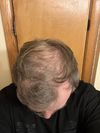
The user plans to use 1% Koshine826, 0.1% Alfatradiol, Minoxidil with Tretinoin, microneedling, and Stemoxydine for hair loss treatment. They expect significant recovery with this regimen.
Hair follicle stem cells remain in bald individuals, but progenitor cells do not, raising questions about hair regrowth claims by Pelage. PP405 is discussed as a potential treatment, with skepticism about its effectiveness compared to existing treatments like Minoxidil and Finasteride.
A human trial of verteporfin, a potential treatment for hair loss, with some users noting potential improvements in scarring and overall healing compared to control areas.
A user's success in hair regrowth after taking oral and topical medications, such as minoxidil and dutasteride, and using microneedling. Other users shared their experiences and advice with treatments used to reverse hair loss.
A user shared their hair loss progress using minoxidil, biotin, finasteride, and ketoconazole, with 7 months of microneedling. They confirmed using oral treatments.
HMI 115 did not work as expected for hair regrowth in humans, unlike in macaque monkeys. There is anticipation for further research on prolactin's role in hair loss, with expectations that pharmaceutical companies will likely solve this before universities.
Pyrilutamide, a nonsteroidal antiandrogen drug under development for the potential treatment of androgenic alopecia. The conversation discusses its binding affinity to the androgen receptor and the timeline for possible availability after trials are completed in the United States and China.
PP405 is ineffective for miniaturized, fibrosed hair follicles in androgenetic alopecia. AMP303 may activate hair follicle stem cells, but minoxidil and finasteride are still the main treatments.
A 7-month update from Markoj44 regarding their hair transplant results, which includes the use of topical finasteride and minoxidil in combination with Viviscal, biotin, Nizoral shampoo, and donor area photos. People responded positively to the post.
Human pluripotent stem cells have been used to create hair and skin, potentially offering a new solution for baldness. A user also mentioned starting finasteride but experiencing unexpected hair thinning.
The user experienced side effects from a hair loss treatment and is considering using pyrilutamide, alfatradiol, and possibly minoxidil. They are unsure about starting minoxidil immediately or waiting to see the effects of the other treatments.
A user shared progress pictures after 7 months on 1.5mg of finasteride, showing significant hair improvement. The user clarified they split 5 mg pills into quarters, resulting in a 1.33 mg dose.
Pirfenidone is suggested to treat fibrosis and baldness by blocking inflammation markers and reducing collagen. It is also available as a gel for scar removal.
The conversation is about the release of Phase 3 trial results for pyrilutamide in China for treating hair loss. The user is inquiring if the actual results have been posted, noting that a recent release did not contain them.
Chinese researchers have successfully created hair follicles in vitro, potentially offering unlimited hair for transplantation and a cure for hair loss. They plan to test these follicles in vivo on human scalps.
The user is happy with hair regrowth after 7 months using a topical spray containing 6% minoxidil and 0.3% finasteride from Hims, experiencing no side effects. They noticed significant results around 3-4 months and find the treatment convenient and cost-effective.
The user is considering continuing minoxidil and microneedling, possibly adding low-dose topical finasteride, and undergoing a large FUE hair transplant to improve hair appearance. They plan to use hair fibers for added density, aiming for a convincing cosmetic look rather than full density.
The user successfully managed hair regrowth by using a combination of finasteride, dutasteride, minoxidil, and specific shampoos to treat seborrheic dermatitis. They emphasize the importance of maintaining a healthy scalp and are considering food intolerance tests to further address inflammation.
The conversation is about someone planning to use cb-03-01 for hair loss because they experience side effects with other treatments like finasteride, minoxidil, and RU58841. They have not found progress pictures online and are considering sharing their own experience with cb-03-01, which is expensive.
The user completed a Clascoterone study with no observable changes in hair loss and plans to try microneedling and Minoxidil next. They will microneedle weekly and apply Minoxidil twice daily, except on the night of microneedling, and compare results after six months.
Ibrox1972 shared an 8.5-month update on their 2,689-graft hair transplant by Dr. Raghu Reddy in London, along with using oral finasteride, oral minoxidil, and microneedling. Users praised the natural-looking results and discussed the importance of choosing a skilled doctor.
The conversation is about testing the effectiveness of RU58841 for hair loss, with the user planning to increase their dose to 30 mg per day along with 20 mg of Minoxidil. The test results showed approximately 70 mg/ml, which the user considers a good result.
A user shared their 7-month progress using Minoxidil and Finasteride for hair loss, which significantly reversed their aging appearance. They applied Minoxidil twice daily, took 1mg Finasteride once daily, micro-needled weekly, maintained a high protein diet with vitamins and biotin, and recommended a balanced lifestyle for best results.
PP405 is a potential hair loss treatment that inhibits mitochondrial pyruvate carriers, increasing lactate dehydrogenase activity and stimulating hair follicle stem cells. In a phase 1 trial, 31% of participants showed over 20% hair density increase with PP405 treatment.
Replicel's results were delayed, but Shiseido might share data at BioJapan on October 11. Users are hopeful for new treatments like RCH-01, potentially eliminating the need for finasteride or minoxidil.
The potential of using a specific antibody, HMI-115, as a treatment for hair loss alongside traditional treatments such as minoxidil and finasteride. The user suggests trying either a 240 mg or 30 mg dose to see if it works.
A 19-year-old's progress after 7.5 months of using topical finasteride and minoxidil, as well as 3 months of microneedling, to treat hair loss. The user has experienced positive results from the treatment and expressed gratitude for the support they have received throughout their journey.
A 46-year-old male shared his 3-week progress using HIMS serum with Finasteride 0.3% and Minoxidil 6%, showing improvement without noticeable shedding. His routine includes vitamins, a healthy diet, and specific hair care practices like microneedling and using caffeine solution.
A 55-year-old man shared his successful hair transplant results, using 9,100 grafts from his scalp and beard, and is also using minoxidil, finasteride, and multivitamins. The discussion includes opinions on the necessity of DHT blockers and the effectiveness of the transplant, with some users questioning the need for such procedures at an older age.