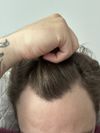
User experienced hair thickening and slight regrowth using RU58841, Fin, DUT, and Minoxidil. They plan to get a hair transplant in Turkey for further improvement.
RU58841 worsened hair condition, causing thinning and unusual patterns. The user stopped using it two months ago but hasn't seen recovery, and there's speculation about androgen receptor upregulation.
The user shared a 6-month progress update on hair loss treatment using Dutasteride (0.5mg), Minoxidil (5%), and Dermanator 2. They reported improved hair density and coverage, especially in the crown/mid-scalp, and are focusing on enhancing the hairline.
A 22-year-old with advanced diffuse thinning is considering oral dutasteride after stopping finasteride due to side effects like brain fog and testicular pain. They are also contemplating a hair transplant combined with oral dutasteride and topical finasteride, noting a thick donor area.
The conversation discusses using topical dutasteride with a dermapen for hair loss treatment. The user is deciding between liposomal and mesosomal formulations for this purpose.
A user is considering dutasteride mesotherapy for hair loss due to concerns about oral side effects from high DHT levels. They have been using topical finasteride with minoxidil but are exploring mesotherapy as an alternative, while another user shares their experience with mesotherapy sessions using dutasteride and minoxidil without side effects.
A 26-year-old with extreme male pattern baldness saw hair regrowth after 6 months using Minoxidil, Finasteride, microneedling, Nizoral, a vitamin complex, biotin, and a shampoo with baicapil. Continuation of treatment is necessary to maintain results; stopping may lead to hair loss, making a hair transplant a potential future option.
After over a year of treatment with daily oral dutasteride and minoxidil, plus injected dutasteride every 6 months, the user is happy with the increased thickness of their hair and improved self-esteem, although scalp visibility remains. They encourage others to follow similar treatments for long-term hair maintenance.
A user in their early 20s is concerned about minor hair thinning and is considering a hair loss regimen involving PRP sessions, mesotherapy with dutasteride injections, and low-dose finasteride. They dislike minoxidil due to its greasiness and prefer a routine that is easy to maintain.
A 21-year-old experiencing hair loss since age 16 is using 1mg dutasteride, 5mg minoxidil, and Nizoral, with occasional microneedling, but stopped microneedling due to scalp inflammation. They report some patchy regrowth, with stronger results at the front than the midsection.
A new hair loss treatment, PP405, is moving from phase 2A to 2B in clinical trials, sparking discussions about its potential to regrow dormant hairs and its impact on existing treatments like Minoxidil and finasteride. Some users express skepticism, while others are hopeful about its future effectiveness.
A 26-year-old male shared progress pictures after 4 months of treating hair loss with finasteride (1.25 mg on Mondays, Wednesdays, and Fridays), topical minoxidil twice daily, ketoconazole shampoo twice weekly, and weekly microneedling at 1.5 mm. He is seeing hair growth improvement, especially in the front, and is considering hair grafts for the crown area if necessary for more density.
The conversation discusses the potential of a new hair loss treatment, GT20029, which targets androgen receptors in the scalp and is in phase 1 trials in China. Users express hope that this treatment will be more effective than current options like Minoxidil and Finasteride.
The conversation discusses using cyproterone acetate at 12.5 mg to manage hair loss, with concerns about its effects on testosterone and potential health issues. Other treatments mentioned include finasteride, dutasteride, minoxidil, and RU58841, with varying experiences and outcomes.
RU58841, an anti-androgenic compound, showed early promise for treating alopecia but faced challenges after its patent in 1997. Despite advancing to Phase II trials, safety concerns and financial struggles led Aventis to abandon its development. Proskelia, which later merged into ProStrakan, couldn't prioritize the drug, leading to its eventual stagnation and failure to reach the market.
A 45-year-old male experienced significant hair regrowth using 0.5 mg dutasteride and 1.5 mg minoxidil after initially starting with finasteride. He reports no major side effects, except increased hair growth in unwanted areas, and attributes his success to being a good responder to the medication.
The user experienced high liver enzyme levels, possibly due to topical finasteride or supplements, and decided to stop using finasteride while continuing minoxidil. After stopping finasteride and supplements, liver levels returned to normal, suggesting finasteride or supplements might have been the cause.
A 42-year-old male using Minoxidil since June reports hair regrowth and thickening, with additional improvements from vitamin supplements and stress-reducing medication. Suggestions include adding topical finasteride and microneedling for better results.
17M approaching Norwood 2, using topical minoxidil and considering finasteride, oral minoxidil, and pyrilutamide. Plans to study dermatology and possibly get a hair transplant at 25 if treatments don't work.
The conversation discusses hair loss treatments, specifically Minoxidil, finasteride, and RU58841. The user seeks input from medical professionals and scientists on these treatments.
A 21-year-old male diagnosed with telogen effluvium and male pattern baldness started oral finasteride, which initially slowed hair loss and slightly thickened hair, but experienced increased shedding after surgery. The doctor recommended iron and vitamin D supplements, and the user is seeking additional advice.
The post discusses a new hair loss treatment involving an improved pyri formula that has shown promising results, including thicker hair and a restored hairline, with minimal side effects. The author seeks investors to collaborate with Kintor or acquire the pyri patent, offering equity rewards and complimentary samples for verification.
The user is considering using CB or clascoterone for hair loss, potentially as an alternative to RU. They're also contemplating asking a dermatologist for topical clascoterone cream to apply to their temple.
The post discusses a DIY Dutasteride Mesotherapy procedure for hair regrowth, supplemented with oral Minoxidil. The user describes the process, including preparation, equipment used, and initial results, expressing excitement for future outcomes.
Minoxidil, finasteride, and RU58841 are discussed as treatments for hair loss. Concerns about AI-generated content accuracy and misinformation are raised.
A user is taking 2.5 mg oral Minoxidil and was prescribed a topical oil with Minoxidil 8%, Dutasteride 0.05%, and Finasteride 0.5%. They are seeking opinions on whether this combination is excessive or appropriate.
The user has been using finasteride, dutasteride, minoxidil, and a dermaroller/dermastamp for hair loss, reporting positive results and no significant side effects. They switched from finasteride to dutasteride for better results and apply topical minoxidil despite having braids.
The user has been using oral minoxidil and topical finasteride for over a year with good results but is considering adding mesotherapy with dutasteride due to concerns about side effects and is seeking advice. Another user suggests continuing with oral finasteride or dutasteride, while another supports mesotherapy for its benefits and professional oversight.
PP405 shows promise for hair regrowth, with new hairs observed in 66% of patients in just 27 days. The discussion also mentions Minoxidil, finasteride, and RU58841 as potential treatments.