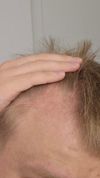
User shared progress pictures showing significant hair regrowth using oral finasteride, oral minoxidil, and keto shampoo. They noted the best results after consistently using oral minoxidil for six months.
A 21-year-old male, 13 months into hair loss treatment, reports increased hair fall despite using Dutasteride, oral Minoxidil, vitamins, and specialized shampoos. He questions the impact of anxiety and depression on hair fall and is hesitant to seek therapy.
The user has seen great results from microneedling but is worried it might lead to faster balding without medication. They are considering adding Finasteride or Dutasteride to their routine to address underlying DHT issues.
The individual has experienced no hair regrowth from using minoxidil and finasteride and is considering a hair restoration clinic's options, including PRP and nano follicle hair replacement, as well as a potential beard transplant. They are seeking advice on whether to pursue PRP, timing for hair replacement surgery, and experiences with beard transplants.
Chime Biologics and Hope Medicine are speeding up the launch of a first-in-class antibody drug, HMI-115, for endometriosis and androgenic alopecia. The treatment involves a series of subcutaneous injections, has shown promising results in phase 1, and continues to promote hair regrowth even after the treatment is stopped.
The conversation lists medications, oils, and herbs for hair loss, including FDA-approved treatments like Finasteride and Minoxidil, off-label options like Dutasteride and Clascoterone, and others like RU58841. It also mentions Rosemary oil, Saw palmetto, and Fo-Ti root as non-medical treatments.
Ibrox1972 shared an 8.5-month update on their 2,689-graft hair transplant by Dr. Raghu Reddy in London, along with using oral finasteride, oral minoxidil, and microneedling. Users praised the natural-looking results and discussed the importance of choosing a skilled doctor.
The importance of patience when using treatments for hair loss, such as finasteride, minoxidil and RU58841, which can take 6-12 months to show results, sometimes causing initial hair loss. Everyone's experience is different, so it may take time to find what works best.
The user's progress in treating their hair loss using finasteride, minoxidil, vitamins, and microneedling, with one person suggesting to wait six more months before considering a hair transplant. The other person agreed that a hair transplant would be nice.
The conversation discusses the variability in effectiveness and safety of generic finasteride from different manufacturers, with some generics potentially containing impurities. Users shared their experiences with various brands, questioning if different brands affect hair loss treatment outcomes.
Bhringraj oil showed better hair regrowth results than minoxidil in mice, but its effectiveness in humans is uncertain. Users discussed using bhringraj oil, coconut oil, and microneedling for hair regrowth, with some reporting slow but noticeable improvements.
The conversation discusses a medical service that provides prescriptions for a compounded hair loss treatment containing high concentrations of Minoxidil, Finasteride, and other ingredients. The user is seeking feedback on the service and inquiring about the cost and uniqueness of the compound cream.
A 22-year-old from India is using finasteride, Trichoton AT, and a multivitamin to address hair loss, noticing some regrowth. They are concerned about weight gain and the psychological effects of masturbation but find no strong evidence linking it to hair loss.
Stopping dutasteride for a year caused significant hair loss, and resuming it with oral minoxidil led to only partial recovery. Users discuss treatments like finasteride, microneedling, and RU58841, noting mixed results and side effects.
A 23-year-old discusses their hair loss treatment using finasteride, dutasteride, oral and topical minoxidil, and topical tretinoin under medical supervision. They stress stabilizing hair loss before a hair transplant and plan to continue the regimen for at least 18 months.
Concerns about hair loss treatments like finasteride and minoxidil not being administered during a coma. Dutasteride remains in the system longer, and hair loss may not be immediate if treatment stops temporarily.
The user experiences significant hair shedding during seasonal changes while using oral minoxidil 2.5mg and finasteride 1mg daily. They question if shedding miniaturized hairs is normal or if a stronger treatment is needed.
The conversation discusses using tretinoin as an additional treatment for hair loss alongside minoxidil, with plans to test its effectiveness by applying it to only one side of the scalp. The user intends to start this experiment after using minoxidil for a year.
High prolactin levels may contribute to hair loss, and some users suggest supplements like mucuna pruriens, vitamin B6, vitamin E, L-Tyrosine, L-Theanine, DIM, and Zinc to lower prolactin. Lifestyle changes to increase dopamine, such as reducing screen time and stress, are also recommended.
The user is experiencing a receding hairline and is considering treatments. They are seeking advice on whether to use finasteride, minoxidil, or both for hair preservation and potential regrowth.
A 20-year-old using 1 mg finasteride, 2 ml topical minoxidil, tretinoin, and microneedling for hair loss shows progress after three months, with thicker hair and temple regrowth. No side effects reported, and the user is considering switching to oral minoxidil.
Elevated liver enzymes were reported from taking finasteride and minoxidil. The doctor advised stopping oral minoxidil and taking finasteride every other day.
The user is generally happy with their hair transplant results but has concerns about graft density and placement, particularly on the left temple and hairline. They are using finasteride and minoxidil inconsistently, plan to add Priorin, and are considering microneedling and PRP sessions for future care.
The user shared a 3-month progress update on hair loss treatment using oral finasteride, oral minoxidil, dutasteride, ketoconazole, biotin, collagen shampoo, dermarolling, and scalp massage, noting some side effects like decreased libido and low mood. The user received feedback and questions about their regimen, including why both finasteride and dutasteride are used.
A 42-year-old user shared progress after 6 months using 1.25mg finasteride and 5mg oral minoxidil daily, with 5% topical minoxidil twice a day, improved nutrition, and weekly dermarolling. The user noticed some shedding and slower regrowth but remains disciplined, while others commented on the impressive results and potential side effects of high minoxidil doses.
The conversation discusses using a custom topical from Skin Medicinals containing latanoprost for hair loss, which helps move hairs into the anagen phase. The user is curious about the cost and effectiveness of this treatment.
The user achieved significant hair regrowth using 0.5mg oral Dutasteride, 2.5mg oral Minoxidil, topical Minoxidil twice daily, Ketoconazole shampoo twice a week, and weekly dermastamping with no side effects. Results were noticeable after 2-3 months, with the best results at 9 months.
Finasteride, dutasteride, and minoxidil are discussed as effective hair loss treatments, with mixed opinions on their use and side effects. The conversation highlights a divide between supporting medical treatments and accepting baldness.
A user is seeking an online prescription for finasteride after local dermatologists recommended alternatives like vitamins, caffeinated shampoo, and minoxidil. Another user suggests using Mobidoctor to obtain the prescription.