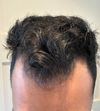
User seeks treatment to increase minoxidil efficacy. Suggestions include microneedling, oral minoxidil, and Tretinoin, with mixed experiences and side effects.
A 23-year-old male experienced good hair growth and increased self-confidence after 10 months of using oral finasteride (1.25mg) and topical minoxidil (5% twice a day), despite no decrease in hair shedding. He also used 1mm microneedling monthly and reported minor side effects like forgetfulness.
Veradermics' new hair loss treatment, VDPHL01, is likely a modified release oral minoxidil, which has received $75 million in funding for clinical trials. Despite skepticism about investing in a known treatment, some believe it could offer improved efficacy and reduced side effects.
The user reported significant hair regrowth after one month using Cécred edge drops, microneedling, and finasteride, despite skepticism from others. They had previously tried minoxidil, finasteride, PRP, and other treatments with limited success.
The post discusses the use of mesotherapy with dutasteride for hair loss treatment, showing before and after photos. The conversation includes mentions of Minoxidil, finasteride, and RU58841 as other treatments.
AHK and GHK are discussed for hair growth in the crown area, with questions about side effects and safety after microneedling. Users share experiences and concerns about these treatments.
The conversation discusses Dr. Blake Bloxham's experiment with Verteporfin for hair loss, with one person suggesting more doctors should try it as it seems beneficial. Another comment notes that results at 4-5 months were not very impressive.
A user shared their 9-month post-hair transplant results with 4600 grafts, using only Nourkin hair vitamins, Vitamin D, and B12, and expressed satisfaction. The replies debated the necessity of medications like finasteride and minoxidil for maintaining hair health.
A 30-year-old is seeking advice on hair loss treatment, currently using oral minoxidil, finasteride, mesotherapy, and a supplement. They are experiencing shedding and are anxious about the effectiveness of the treatment, asking if they should continue or consider other options like topicals or microneedling.
The user is experiencing hair miniaturization despite using dutasteride 0.5mg daily and oral minoxidil 3mg daily for three months. They are advised to continue the treatment as full effects may take up to a year.
The user has been using finasteride and minoxidil for 7 months, seeing thicker hair but no temple regrowth, and is considering switching to dutasteride. Another person suggested trying microneedling on the temples before changing medications.
The conversation is about the appropriate wait time to apply topical finasteride after microneedling to prevent it from going systemic. The user is combining finasteride with minoxidil and is unsure whether to wait 24 or 48 hours after microneedling before applying the treatment.
A 21-year-old male has been using dutasteride, minoxidil, ketoconazole shampoo, and microneedling for hair loss, with plans to increase minoxidil dosage. He is experiencing no side effects and is planning a trichoscopy to assess hair regrowth.
The user is updating on their hair loss treatment progress after 4 months using oral finasteride, topical minoxidil spray, and weekly 1mm dermarolling. The crown area is slowly improving, with a smaller bald spot radius compared to the previous month.
The conversation discusses a hair loss treatment regimen that includes a topical spray with finasteride and minoxidil, tretinoin, and using a Derminator (microneedling device) at 1.25mm depth every 5-6 days. The user reports positive results after 90 days and plans to continue the treatment, with others commenting on the process and potential outcomes.
A 40 year old male using Dutasteride every other day, Minoxidil once daily, micro needling roughly every other week, Nizoral twice a week and taking vitamins and biotin, with results showing hair darkening. The conversation includes discussion of side effects experienced by the user, as well as potential alternative treatments such as finasteride or RU58841.
The user experienced hair regrowth with Minoxidil but noticed some hair loss after stopping microneedling for two months. They are hesitant to use finasteride again due to side effects and are considering other DHT blockers.
A 20-year-old with diffuse hair thinning has been using finasteride daily for 2 years and added topical minoxidil once daily at night for the past 7.5 months, seeing improved results. They are switching to oral minoxidil for convenience and will update on the outcome.
The conversation discusses microneedling for hair loss, focusing on optimal needle depth and frequency. Users report varying practices, with some using Minoxidil after microneedling and others suggesting different depths and frequencies based on personal tolerance.
The user is using a combination of 7% minoxidil, 0.2% finasteride, 0.5mg finasteride, RU58841, and daily microneedling but is not seeing hair regrowth after 5 months. Suggestions include being patient, reducing microneedling frequency, considering oral minoxidil, and possibly switching to dutasteride if no improvement after a year.
The user has been using oral minoxidil, finasteride, and dutasteride to prevent hair loss, despite not showing significant balding. Many commenters believe the treatment is excessive, while some support early prevention.
A user is seeking recommendations for purchasing Minichek 5% solution, a PG-free minoxidil, due to a contact allergy to propylene glycol. They are looking for an affordable option comparable in price to Kirkland or Amazon brand minoxidil.
The user successfully managed hair regrowth by using a combination of finasteride, dutasteride, minoxidil, and specific shampoos to treat seborrheic dermatitis. They emphasize the importance of maintaining a healthy scalp and are considering food intolerance tests to further address inflammation.
A 26-year-old is starting a hair loss treatment using 1mg oral finasteride daily, 5% topical minoxidil foam twice daily, 2% ketoconazole shampoo weekly, and microneedling once a week. They noticed worsening hair loss over the past year and are seeking advice.
Despite using finasteride, minoxidil, and RU58841, the user is experiencing slow hair loss, particularly at the hairline, and is considering additional treatments like microneedling and possibly switching to dutasteride. Concerns about medication side effects, such as reduced sperm count and performance anxiety, are also discussed.
A user reports significant hair regrowth after 3 months using finasteride, minoxidil, microneedling, Nizoral shampoo, biotin, and vitamins. They apply minoxidil twice daily, dermaroll twice a week, and use Nizoral shampoo twice a week.
A 24-year-old woman with hair loss due to anemia and possibly thyroid issues is undergoing mesotherapy, which was only applied to the top of her head. She is considering minoxidil and is concerned about the effectiveness of the treatment, as her hair loss is not related to hormonal factors.
A 40-year-old man experienced significant hair density improvement after using 5mg oral Minoxidil for one year, 3 months of Finasteride, and 8 months of Dutasteride. Dutasteride was chosen for its stronger effect against DHT compared to Finasteride, and the user reported no side effects.
People are humorously discussing unconventional and satirical uses of minoxidil, such as drinking it or injecting it, and the potential absurd consequences. The conversation also touches on the ineffectiveness and risks of these methods compared to proper topical application with microneedling.