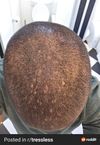
Maneup GHK-Cu peptide was used for hair loss, resulting in some hair growth in the receded hairline, but the new hairs were dry and split easily. Users discussed their experiences with this treatment.
The user is experiencing white flakes and a greasy look from using a topical solution containing 0.025% finasteride, 8% minoxidil, 0.01% retinoic acid, and 1% hydrocortisone. Suggestions include reducing application frequency, using a brush to clean the scalp, and considering alcohol-free alternatives.
A person had three hair transplant surgeries using 7,600 grafts from scalp, beard, and chest, along with finasteride and minoxidil. Reactions are mixed, with suggestions for alternatives like hair systems or scalp micropigmentation.
Baldness is difficult to cure because current treatments like finasteride, dutasteride, and minoxidil only prevent hair shedding, and new developments are mostly ineffective. Botox shows potential in aiding skin regeneration and hair growth, but maintenance therapy with treatments like dutasteride and minoxidil may still be necessary.
The conversation is about disappointment with pyrilutamide's performance as a hair loss treatment, with some users expressing interest in other treatments like Verteporfin, GT20029, and RU58841, while others suggest sticking with established treatments like finasteride or dutasteride.
The user has been using topical minoxidil and dutasteride but is experiencing significant hair shedding, including smaller hairs. They are concerned if this shedding indicates the treatment is working.
The user has been using topical Minoxidil since April 2025 and Finasteride since September 2025, but their bald spot has worsened. They are considering switching to oral Minoxidil and have been advised to be patient, see a dermatologist, and possibly try additional treatments like derma rolling.
The conversation discusses a hair loss treatment regimen involving a homemade topical solution of Minoxidil and Tretinoin, combined with Finasteride and microneedling. Users share advice on Tretinoin application, emphasizing gradual use to avoid skin irritation.
The post and conversation are about skepticism towards a new hair loss treatment containing 2-deoxy-D-ribose, copper peptides, and exosomes, with concerns about the legitimacy of the product and its website. The treatment's effectiveness and authenticity are questioned due to lack of testing and transparency.
Topical minoxidil is effective for hair loss, while topical finasteride caused side effects like erectile dysfunction. Mesotherapy is considered stronger than home treatments like microneedling with topical nutrients.
The conversation is about microneedling for hair loss. The conclusion is that there are differing opinions on the depth and frequency of microneedling, with some studies suggesting positive results with 1.5mm depth once a week, while others prefer lower depths and less frequent sessions.
Men with early male pattern baldness (MPB) may have hormonal abnormalities similar to those in women with PCOS. Specific treatments mentioned include Minoxidil, Finasteride, and RU58841.
A user shared progress pictures showing improvement in PCOS-related hair loss after six months of using topical minoxidil, dermarolling 0.5mm weekly, and taking biotin gummies. They expressed happiness about the appearance of new baby hairs.
Transplanting mice skin to humans is not feasible due to immune rejection, but some suggest genetic modification or immune suppression could make it possible. Xenograft hair transplants are discouraged.
The conversation is about a user trying a new hair loss treatment, Ruxolitinib, alongside their existing regimen of finasteride, minoxidil, ketoconazole shampoo, and microneedling. They plan to apply Ruxolitinib to their temples daily for 1-2 months.
The conversation is about using Minoxidil and microneedling for hair regrowth. Some users notice a difference, while others attribute changes to lighting, angle, or hair styling, and suggest waiting longer for noticeable results.
The conversation is about someone's 2-month hair regrowth progress using topical minoxidil and finasteride combined with 0.5mm dermarolling, started 3 months ago. They did not provide a baseline picture from the start date.
Hair loss discussion includes treatments like Minoxidil, finasteride, and RU58841. Conversation focuses on foods with sufficient procyanidin b2, such as dark chocolate and apples, and the required dosage.
The user had a hair transplant 10 months ago and sees some improvement but still has thin spots. They previously used finasteride pills and now use a topical solution of minoxidil, dutasteride, and tretinoin.
The conversation discusses whether gt20029 could cure complete baldness, mentioning verteporfin as a realistic treatment. Other treatments like Minoxidil, finasteride, and RU58841 are implied to be less promising.
Minoxidil 0.5% MMP® showed better results in parietal-vertex regions for less advanced female pattern hair loss compared to Minoxidil 5%. MMP® with Minoxidil can improve the quality of life for these patients.
A user shared their 3.5-4 month progress using Topical Minoxidil, Oral Finasteride, Keto 1%, and Dermastamp, reporting positive results despite some shedding and flaking. Replies praised the progress and inquired about the treatment routine and temple condition.
The conversation discusses using topical synthetic prostaglandins like Bimatoprost, Latanoprost, and cetirizine for hair growth. The user shares a link suggesting these treatments may be effective.
The user experienced tiny vellus hairs from 0.5mg finasteride and 2.5mg minoxidil over 9 months. Topical minoxidil, alfatradiol, and RU58841 applied twice daily for 1.5 months significantly improved temple hair regrowth.
The conversation discusses using gartanin from mangosteen mixed with castor oil to degrade the androgen receptor for hair loss treatment. Alternatives like setipiprant, minoxidil, and dermastamping are also mentioned, with concerns about cost and potential side effects.
The conversation discusses the potential benefits of adding Vitamin B6 (P-5-P) to topical hair loss treatments like RU58841, finasteride, or minoxidil. The user suggests that Vitamin B6 might enhance these treatments by naturally lowering scalp prolactin.
Microneedling combined with minoxidil and finasteride shows significant hair regrowth, though opinions on its effectiveness vary. Some users report substantial benefits, while others highlight the need for more research and consistency in application.
A user tried the Rapid Minoxidil Response Test (TrichoGene) and found they don't respond to topical Minoxidil, so they added tretinoin. The test is available internationally, and another user is considering ordering it.