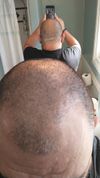
User discusses using C60 serum with microneedling at 1.75mm and asks if it's safe. Current routine includes daily Pyril on temples, weekly microneedling, and C60 serum on non-Pyril days.
The user shared their 6-month progress using 5mg oral minoxidil, 1mg oral finasteride, topical 5% minoxidil, tretinoin, and weekly microneedling, noting improved results after adding these treatments post hair transplant. They hope for continued improvement.
PP405 is a new hair growth stimulant different from Minoxidil, currently in phase 2 trials. Users discuss its potential, safety concerns, and the long wait before it might be available.
The user reports regrowth after 5 months using Minoxidil, finasteride, microneedling with a derma stamp, Nizoral shampoo, multivitamins, and biotin, and has shared progress pictures. They apply treatments daily, microneedle twice a week, and exercise regularly, noting an improvement in their mental well-being.
A user discusses the potential of caffeine and DMG in shampoo for treating hair loss, citing a pending patent and personal plans to test it. They find it more convenient than using minoxidil, tretinoin, and microneedling.
New hair loss treatments like Shiseido/Replicel and Histogen were discussed, with cautious optimism about their availability by 2018. Setipiprant, Replicel, and Bimatoprost were mentioned as potential treatments expected around 2016-2017.
The user has been using minoxidil, finasteride, and microneedling for two years, resulting in significant hair regrowth and plans for a 4000 graft hair transplant. The treatments have strengthened the donor area, making a hair transplant feasible.
The conversation discusses a user's six-month progress in treating hereditary hair loss using a regimen that includes minoxidil, finasteride, dutasteride, and other medications. Opinions vary on the effectiveness and logic of the treatment, with some users suggesting additional methods like microneedling.
The conversation discusses the timing of applying Minoxidil and finasteride after microneedling. Opinions vary, with some suggesting immediate application and others recommending waiting to avoid skin irritation.
Microneedling for hair regrowth, using a 1.0 dermastamp, is discussed with a focus on achieving slight redness without bleeding. Minoxidil is mentioned as an effective treatment when used after dermastamping.
The conversation is about a 21-year-old using finasteride, dermarolling, ketoconazole shampoo, hair growth serums, and exosome therapy to treat early-stage thinning on the crown. They are questioning if these treatments are sufficient to improve hair thickness.
A user's successful hair regrowth after 7 months of using 5% minoxidil, 1mg finasteride, and adding micro needling 4 months ago. The user also took biotin, fish oil, and collagen supplements, and reduced finasteride intake to once every 3 days due to minor libido decay.
Hair loss and potential treatments, primarily focusing on Finasteride and Minoxidil. Other solutions discussed include PRP, dermarolling, LLP, and scalp tension relief.
The conversation is about a user obtaining a compounded treatment for hair loss, including 0.1% latanoprost, 0.2% melatonin, and 1% cetirizine. The user also uses 2.5 mg dutasteride, 5 mg minoxidil, and RU58841 daily, and is at Norwood 2.
The post discusses using a topical tincture containing zinc, azelaic acid, and other ingredients to inhibit 5 alpha-reductase activity for treating hair loss. The user plans to try this natural alternative before using finasteride or RU58841.
The user used microneedling, zinc, vitamin D3, biotin, magnesium, saw palmetto, pumpkin seed oil, and a DHT-blocker shampoo with biotin for hair loss. They are considering adding minoxidil due to stagnation in progress.
The user reported significant hair regrowth using a topical treatment of 0.3% finasteride and 6% minoxidil, with noticeable progress in five months. The treatment is applied once daily, and the user experienced some initial shedding but no side effects.
A user who initially had positive results with oral finasteride, topical minoxidil, and microneedling for hair loss, but experienced side effects like fog and depression. After stopping and losing progress, they restarted with topical treatments and microneedling, reporting good results and no side effects.
The conversation discusses hair loss treatments, specifically Setipiprant, finasteride, and bimatoprost. Setipiprant is suggested for maintenance, while bimatoprost is for regrowth, and combining them with dermarolling is recommended for better results.
A 28-year-old male is happy with his hair regrowth on the crown after using topical Minoxidil 5% and Finasteride 0.25% once daily, micro needling weekly, and Nizoral shampoo once a week. He has experienced no significant side effects, and his hair has become darker and thicker, with improvements in his hairline.
Combining microneedling and tretinoin with topical minoxidil involves discontinuing tretinoin a week before microneedling and resuming it a week after. Some people microneedle weekly, adjusting tretinoin use accordingly.
The user is seeing positive results in hair growth using a combination of topical minoxidil, finasteride, microneedling, and keto shampoo. They also use a red light panel for collagen rebuilding and are happy with the progress.
The user reported noticeable hair improvement over four months using 1 mg of finasteride and weekly microneedling. Progress photos from October 2024 to January 2025 show positive changes.
A user shared their progress after using a topical treatment combining 5% Minoxidil and 0.1% Finasteride for two months to address hair loss at the temples. They apply 5ml nightly without side effects and plan to switch to a different brand soon.
The user is seeking help with using Ell-Cranell for hair loss treatment. They are unsure about the correct application method and dosage. They also inquire about combining microneedling with topical alfatradiol and question a study that referred to alfatradiol as a hair growth inhibitor in male mice.
The user has been using finasteride, minoxidil, and microneedling consistently for one month to improve hair regrowth. They also use collagen peptides, pumpkin seed oil, vitamin D, biotin, nizoral shampoo, adenosine shampoo, caffeine topical, and rosemary oil as part of their routine.
The conversation is about a person's 3.5-month hair regrowth progress using a combination of 8% topical minoxidil with 0.1% finasteride and 0.01% tretinoin, 5 mg oral minoxidil, and weekly use of a 1.5mm dermapen.
The user shared progress after using 5% minoxidil twice daily, 0.2% topical finasteride once daily, Nizoral shampoo thrice weekly, and microneedling weekly for hair loss. They observed thicker hair after 12-14 months and are curious about further improvement.
A user shared their successful hair loss treatment using 1.25mg finasteride daily, 2.5mm microneedling every 1-3 weeks, zinc pyrithione shampoo, occasional scalp massages, and 40% glycolic acid on temples. They reported significant progress over 21 months.
A user's 15 month progress with finasteride and minoxidil treatments, which have produced great results. Microneedling depth and frequency were discussed in the replies.