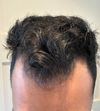
Dr. Bloxham's 9-month update on FUT scar revision with Verteporfin shows promising results. Excitement is high for FUE, which appears highly effective based on Dr. Barghouthi's findings.
The conversation discusses hair loss treatments, specifically using Dutasteride, needling, and Minoxidil for temple regrowth. It highlights the importance of patience and managing expectations while trusting the process.
Finasteride may inhibit melanin production, affecting tanning and causing white hairs in the beard and eyebrows. The user considers switching to oral Dutasteride or topical treatments to address these issues.
Microneedling combined with minoxidil may promote hair regrowth, with some users reporting success using a 1.5mm dermaroller twice a week. Others have seen results with minoxidil alone or by increasing microneedling frequency.
The user shared progress pictures after 5 months of using 1mg finasteride, weekly 1.5mm microneedling, and daily 2mg copper peptide injections. They discussed their hair loss treatment and results.
The user is managing hair loss with oral finasteride, recently switching to dutasteride, and topical minoxidil, but faces challenges due to seborrheic dermatitis. They seek advice on effective regrowth methods that don't worsen their condition, with suggestions including various shampoos like Vichy Dercos and ketoconazole.
Scalp biopsies are crucial for diagnosing hair loss conditions like Diffuse Unpatterned Alopecia (DUPA) and retrograde hair loss, as treatments like finasteride and dutasteride may not be effective if other conditions are present. Combining PPAR-GAMMA agonists with retinoids could improve treatments for conditions like Lichen Planopilaris.
A 50-year-old Black woman with alopecia areata and traction alopecia is seeking a science-based hair loss routine. Current treatments include spearmint tea for DHT levels and considering PRP.
The conversation discusses the use of microneedling for hair loss, with concerns about potential long-term effects like fibrosis and scarring. Users share experiences and opinions on combining microneedling with treatments like minoxidil and finasteride, but there is uncertainty about the long-term safety and efficacy.
Microneedling combined with minoxidil is more effective for hair growth than microneedling alone. Optimal results are seen with weekly microneedling using 0.5 - 1mm needles and regular minoxidil application, avoiding minoxidil on the needled area for 24 hours.
Microneedling combined with latanoprost may convert vellus hairs to transitional or terminal hairs. The user suggests using oral minoxidil to increase vellus hair, then applying a high concentration of latanoprost with microneedling for conversion.
The conversation is about a hair loss treatment routine involving dermarolling, finasteride, minoxidil, and natural oils. Suggestions include using shorter needles for better absorption of treatments and longer needles less frequently for hair follicle regeneration.
Using a dermaroller with topical minoxidil and oral finasteride regrows hair and improves temple areas. Users highlight the benefits of microneedling tools and stress the importance of consistency and proper sanitation.
The conversation discusses hair regrowth after 7 months of treatment, with the recent addition of tretinoin 0.05%. The treatment routine remained the same as before, except for this new addition.
The user is using oral Minoxidil, oral Dutasteride, microneedling, and RU58841 for hair loss, noticing slow progress with small hairs appearing. They are inconsistent with microneedling frequency, sometimes doing it weekly or skipping weeks.
The conversation is about a 21-year-old using finasteride, dermarolling, ketoconazole shampoo, hair growth serums, and exosome therapy to treat early-stage thinning on the crown. They are questioning if these treatments are sufficient to improve hair thickness.
The conversation discusses diffuse unpatterned alopecia (DUPA) and its possible causes, including sensitivity to DHT, not being androgenic alopecia, being diffuse alopecia areata, or hormonal issues. Treatments mentioned include topical melatonin, Clobetasol Propionate for alopecia areata, and the lack of results from using finasteride, dutasteride, and minoxidil.
A 26-year-old is starting a hair loss treatment using 1mg oral finasteride daily, 5% topical minoxidil foam twice daily, 2% ketoconazole shampoo weekly, and microneedling once a week. They noticed worsening hair loss over the past year and are seeking advice.
The conversation is about hair regrowth using high-dose dutasteride, oral minoxidil, and microneedling. Users discuss seeing tiny hairs and hope they will become terminal, with advice to use derma rolling weekly for better results.
The user experienced significant hair regrowth using a regimen of topical Minoxidil and Finasteride, oral Finasteride, weekly microneedling, and supplements over a year. They noted improvements in the crown and temples, with minimal side effects, and plan to continue the regimen.
The conversation is about a user sharing their 3-month progress with finasteride, minoxidil, and weekly derma rolling for hair loss. Some suggest buzzing the hair off to better apply treatments and consider a hair transplant in the future.
A user shared their hair loss treatment routine, which includes oral finasteride 5 times a week and topical minoxidil twice a day, and plans to add microneedling. They reported positive results, with reduced bald spots and no side effects affecting libido or physical strength.
The user shared a 4-5 month update on using finasteride, minoxidil, vitamins, oiling, and microneedling for hair loss. They reported improved hair density and confidence but experienced unwanted hair growth, thin hair, itching, and a flaky scalp.
A 25-year-old shared progress after a year using oral finasteride, topical minoxidil, and microneedling, noting significant hair improvement despite periodic shedding. The user experienced body hair loss as a side effect but reported no other issues and plans to continue the treatment.
The user shared their 21-month hair loss treatment journey using oral finasteride, minoxidil, microneedling, and ketoconazole shampoo, noting visible improvement by months 3-4 and reduced shedding after month 20. They experienced no side effects and emphasized this is based on personal experience, not medical advice.
The conversation discusses hair loss treatments, including scalp massage, and the importance of blocking DHT for hair loss management. The user shares blood test results, which appear normal, and seeks advice on effective tests and treatments, expressing a preference for natural methods over medication.
A user tried topical melatonin for hair loss and experienced significantly reduced shedding, similar to when they used finasteride, but stopped finasteride due to side effects. They applied liquid melatonin from a dropper and noticed a decrease in hair fall within two days.
The user is using topical finasteride 0.1%, minoxidil 5% twice daily, red light therapy, a multi-peptide serum, and a weekly oil hair mask with various oils and ingredients. They also use ketoconazole shampoo, condition their hair, and microneedle with a dermapen, seeking advice on any changes to their routine.
A user shared a 3-month progress picture showing hair regrowth using 5% Minoxidil and microneedling, but not taking Finasteride. Some users are surprised by the quick results, and there's a discussion about the effectiveness of frequent deep microneedling.