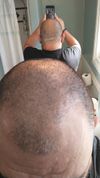
Microneedling once a week at 1mm caused bumps, possibly scars, in the treated area. The user is considering cleaning the skin before microneedling to prevent this issue.
Daily microneedling at 0.25mm before applying minoxidil is debated, with some suggesting weekly microneedling is safer and more effective. Concerns include potential skin damage and systemic absorption, while alternatives like tretinoin are considered safer for enhancing minoxidil absorption.
The user "Expliced" shared their progress pictures after using finasteride, minoxidil, and microneedling for 1 year and 3 months. Another user mentioned that using a high-definition camera with flash and sharpening the photo can show new hairs appearing sooner.
The conversation is about using liquid melatonin, typically for sleep, as a topical treatment for hair growth on the scalp. No specific treatments were mentioned.
A user tried topical melatonin for hair loss and experienced significantly reduced shedding, similar to when they used finasteride, but stopped finasteride due to side effects. They applied liquid melatonin from a dropper and noticed a decrease in hair fall within two days.
Microneedling is more effective when combined with minoxidil, especially for temple regrowth, but is considered near-useless on its own. Users suggest combining microneedling with oral minoxidil and dutasteride for better results, while some caution against potential scalp damage.
Microneedling combined with minoxidil may promote hair regrowth, with some users reporting success using a 1.5mm dermaroller twice a week. Others have seen results with minoxidil alone or by increasing microneedling frequency.
Microneedling for hair regrowth, using a 1.0 dermastamp, is discussed with a focus on achieving slight redness without bleeding. Minoxidil is mentioned as an effective treatment when used after dermastamping.
Mixing Pyrilutamide powder with Minoxidil solution is being considered. The Minoxidil solution contains Minoxidil 5%, Azelaic acid 5%, ABN complex 0.8%, Retinol 0.025%, Caffeine 0.001%, and a delivery vehicle.
The conversation discusses using daily microneedling at 0.25mm and red light therapy to enhance hair regrowth, especially when traditional treatments like finasteride and minoxidil become less effective. The combination is said to improve hair density and thickness, with red light therapy being more cosmetic, while microneedling is essential for challenging areas.
Hair loss treatments discussed include Minoxidil, Finasteride, and RU58841. HMI-115, a monoclonal antibody drug, is in phase 1 and 2 trials for different conditions, but its availability on the gray market is unlikely due to high production costs.
Exosome treatment for hair loss, derived from umbilical cord stem cells, is being considered as an option before a hair transplant. Users discuss the need for ongoing maintenance and share experiences with different exosome sources, including plant-derived options.
The conversation discusses using a 4-in-1 spray containing minoxidil, tretinoin, caffeine, and melatonin for hair loss. Users consider the potential benefits of combining these ingredients, with some interest in a comprehensive approach to treatment.
A user shared their 4.5-month hair transformation using a homemade topical solution with 5% minoxidil and crushed finasteride pills, applied twice daily with weekly microneedling. They plan to switch to once-daily application with tretinoin gel to enhance absorption.
The conversation discusses GT20029, a compound by Kintor Pharma that degrades androgen receptors and is in trials, with potential as a hair loss cure. Another promising treatment mentioned is an antibody that blocks prolactin and has shown positive results in macaques.
User "hairlossblows" shares their positive experience with minoxidil, microneedling, and finasteride for hair loss treatment. They report significant hair regrowth, especially in the hairline, and minimal side effects from finasteride.
Microneedling promotes hair growth by increasing circulation and collagen production, with gains potentially lasting longer than those from minoxidil. Some users report sustained results after stopping microneedling, unlike with minoxidil and finasteride.
The user is trying topical melatonin for hair loss and reports feeling tired and unmotivated, considering using it only at night due to restlessness. No hair regrowth noticed after 4 days.
The conversation discusses using USB microscopes for scalp photos and provides a link to an overview of trichoscopy. Treatments mentioned include Minoxidil, finasteride, and RU58841.
The user is experiencing hair regrowth using daily 5% minoxidil and weekly microneedling, and plans to add finasteride soon. They are considering the effectiveness of once-daily minoxidil and adjusting microneedling needle size.
The conversation discusses potential hair loss treatments focusing on stimulating IGF-1 at the follicle level using growth-factor cocktails and engineered peptides, such as Acetyl Tetrapeptide-3, Copper Tripeptide-1, Oligopeptide-20, Thymosin-β4, and Palmitoyl Tetrapeptide-7. It suggests that device-assisted delivery methods like microneedling may enhance effectiveness.
The user shared progress pictures after 4 months of using 5% topical minoxidil and microneedling for hair loss. They discussed their positive results and experiences with these treatments.
The user shared progress pictures showing improvement in hair growth after one year of using finasteride and minoxidil. They are considering microneedling to further improve their hairline and have chosen to use a derma stamp.
Melatonin, gingko biloba, and biotin are effective for treating hair loss with good tolerability. Alternatives like dutasteride, minoxidil, and other peptides are also discussed.
The conversation discusses using magnesium oil and microneedling to promote hair growth, alongside finasteride, due to financial constraints preventing the use of minoxidil. Another suggestion includes using a certilizine solution for hair health.
A new company is introducing a topical treatment combining Minoxidil, Finasteride, and Bimatoprost for hair loss. Users are also inquiring about updates on a minoxidil-enhancing shampoo from Applied Biology.
The conversation is about starting a hair loss treatment using a topical solution containing RU58841, Minoxidil, and Copper Peptides. The user plans to test the product and share updates on its effectiveness.
Broccoli or sulforaphane supplements are unlikely to improve Minoxidil results due to the need for an unrealistically large dose. Tretinoin, micro-needling, and low-dose oral Minoxidil may be more effective for those lacking the necessary enzyme in the scalp.