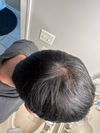
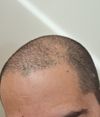
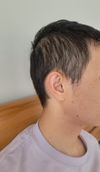
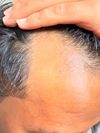
The user underwent a second hair transplant for the crown and mid-scalp, achieving good density. They are using minoxidil, finasteride, and biotin, and considering PRP treatments to enhance growth.
The conversation discusses the scalp tension theory as a potential factor in hair loss, alongside DHT, inflammation, and other mechanisms. Treatments mentioned include finasteride, minoxidil, and botox injections, with some users exploring additional methods due to varying effectiveness.
A 35-year-old man has used finasteride for 12 years and oral minoxidil at 5 mg for 2 years, achieving significant hair regrowth and density without side effects, avoiding a hair transplant. He recommends consistency with medication and highlights the effectiveness and affordability of oral minoxidil.
Finasteride, minoxidil, and derma rolling are currently the best treatments for hair loss. New treatments like TDM-105795, GT20029, PP405, HMI 115, Tsuji, Scube 3, RU, JW0061, Topilutamide, and verteporfin show promise but have uncertain timelines.
The user experienced significant hair regrowth using 1mg finasteride daily and 5% minoxidil twice a day over 6.5 months, improving from a Norwood 3.5 to a Norwood 2. Despite progress, they still feel their hair is thin, especially at the temples.
A 38-year-old man reports positive results using topical Minoxidil 5% and infrared therapy for hair regrowth over four months, along with Saw Palmetto and Pumpkin Seed Oil supplements. Others suggest adding Finasteride for better maintenance and discuss the role of DHT blockers.
The user has been using finasteride for over two years with mixed results and is considering starting dutasteride and oral minoxidil, though both are hard to obtain. They are also contemplating a hair transplant in the future due to diffuse thinning.
A 30-year-old male is experiencing hair loss and is concerned about his receding hairline, seeking advice on his Norwood scale classification. He is apprehensive about using Minoxidil and finasteride as treatments.
A 42-year-old male has been using finasteride successfully for over 10 years but is now experiencing thinning at the crown. He is considering adding minoxidil or switching to dutasteride for better results.
The user is considering a hair transplant to increase hair density after using finasteride and minoxidil for two years. They prefer a natural hairline and are unsure if a transplant is suitable for overall thinning.
The user shared progress pictures showing hair regrowth after 6 months on finasteride and 3 months on minoxidil. They reported increased hair thickness and density without side effects from the treatments.
A 17-year-old is addressing hair loss with finasteride, topical minoxidil, and microneedling. They are considering adding GHK-Cu to their regimen, but others advise caution with finasteride due to age.
The conversation jokes about a well-preserved mummy having more hair than living people, with comments on male pattern baldness and humorous speculation on the mummy's hair loss treatment, possibly using Minoxidil and Finasteride.
A 78-year-old man regrew hair after suffering burns, suggesting that injury-induced healing processes might trigger hair growth. Microneedling and other treatments like minoxidil and finasteride are discussed as potential methods to stimulate similar regrowth.
A person mistakenly drank an entire bottle of topical minoxidil, leading to ICU admission with shock and heart failure. The incident highlights the dangers of ingesting topical treatments and the importance of proper usage and dosage.
The user has tried various treatments like Dutasteride, RU58841, Minoxidil, Finasteride, Spironolactone, Pyrilutamide, and Ketoconazole for hair loss without success and is considering a scalp biopsy to diagnose another condition. Others suggest consulting a dermatologist and possibly getting a biopsy, as the issue might not be typical male pattern baldness.
A 23-year-old male is experiencing aggressive hair loss despite using 1mg finasteride and 4.5mg minoxidil, with limited progress and side effects like fluid retention. Suggestions include trying dutasteride, microneedling with topical minoxidil, and considering hair systems or a transplant in the future.
User noticed receding temples, used minoxidil and microneedling with positive results. Added saw palmetto and eucapil, experienced shedding and thinner hairline, but no side effects.
A 43-year-old male saw significant hair regrowth and increased density after three months using topical Minoxidil (5%), topical Finasteride (0.025%), and 0.75mm microneedling every two weeks, with no side effects. He plans to continue and may reduce Finasteride concentration if progress continues.
The user is experiencing hair thinning and shedding despite no family history of male pattern baldness. They are considering starting treatments like Minoxidil or finasteride.
The user experiences severe headaches from 5% minoxidil and is considering mixing finasteride with a 2% minoxidil solution or diluting a 5% minoxidil + 0.1% finasteride solution. They seek advice on the appropriate method and dilutant composition.
A 24-year-old male experienced significant hair regrowth after 14 months of treatment with 0.5mg dutasteride and 5mg minoxidil, with no side effects reported. He plans to consider a hair transplant for his hairline, as the treatment did not improve that area.
The user has been treating hair loss with finasteride, dutasteride, oral minoxidil, and pyrilutamide for several years without success and is experiencing an inflamed scalp, possibly due to seborrheic dermatitis. They are seeking advice on additional treatments after these methods failed to improve their condition.
A 25-year-old male with seborrheic dermatitis and hair thinning seeks advice on the severity of his condition and treatment options. Oral finasteride and oral minoxidil are recommended as the most effective long-term treatments.
The user is experiencing excessive hair thinning and is unsure of the cause. They are seeking opinions on treatments like Minoxidil, finasteride, and RU58841.
The user experienced scalp irritation from a Finasteride and Minoxidil spray and serum. They are considering switching to foam, oral treatments, or another provider.
The post discusses the theory that persistent dandruff in areas prone to hair loss could be a sign of hair follicles dying due to DHT, indicating balding. The responses vary, with some users noting improvements in dandruff and hair loss with treatments like Dutasteride, while others experienced hair loss without dandruff.
A 15-year-old experiencing hair loss and anxiety is using minoxidil and microneedling but is advised against starting finasteride or dutasteride due to age. The discussion emphasizes consulting a doctor, considering hormonal evaluations, and exploring non-medication coping strategies.
The user is using a solution of 5% minoxidil and 0.1% finasteride with micro-needling and is considering adding 1mg oral finasteride. They notice small hairs on their forehead and are questioning if these indicate potential regrowth.
A 21-year-old experiencing itchy and burning scalp with hair loss was diagnosed with MPB and scalp inflammation. They were prescribed Ketoconazole, Prednisone, Clindamycin, and Finasteride, and are considering trying antihistamines, dietary changes, and "nopoo" to alleviate symptoms.