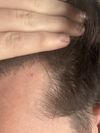
The user is experiencing hair thinning and shedding despite no family history of male pattern baldness. They are considering starting treatments like Minoxidil or finasteride.
A 42-year-old user shared positive results from using oral and topical Minoxidil, Finasteride, and weekly dermarolling for hair regrowth over three months. The community responded positively, noting significant progress and discussing treatment details and concerns.
Finasteride can affect hormone levels within two weeks, and a break of several weeks is recommended for baseline results. Monitoring E2 and testosterone is suggested to assess the risk of gynecomastia.
The user has been using finasteride for 15 months, minoxidil for 4.5 months, and estrogen monotherapy for 4.5 months. Their current regimen includes finasteride, minoxidil, alfatradiol, and estradiol gel.
A 23-year-old male used 1mg finasteride and topical minoxidil for 90 days, experiencing hair growth and side effects like watery semen and lethargy. He advises continuing medication for hair growth and adopting healthy habits.
A transgender woman experienced significant hair regrowth after 18 months of hormone replacement therapy (HRT) with estrogen and bicalutamide. The discussion notes HRT's effectiveness for hair regrowth but warns against its use for cisgender men due to feminizing effects.
The user experiences significant hair shedding during seasonal changes while using oral minoxidil 2.5mg and finasteride 1mg daily. They question if shedding miniaturized hairs is normal or if a stronger treatment is needed.
A user in their early 20s is concerned about minor hair thinning and is considering a hair loss regimen involving PRP sessions, mesotherapy with dutasteride injections, and low-dose finasteride. They dislike minoxidil due to its greasiness and prefer a routine that is easy to maintain.
The user experienced hair shedding after increasing minoxidil from 5% to 7% with latanoprost, possibly causing telogen effluvium. They are on HRT with Lupron, Estradiol, and Raloxifene, and are concerned about the shedding's duration.
Hair regrowth using estradiol, spironolactone, minoxidil, and finasteride, showing significant improvement over four years. HRT is not advised for cis men solely for hair loss due to feminizing effects.
After 4 months of using topical finasteride and minoxidil, blood tests showed increased E2, Test, and Prolactine levels. The user is concerned about potential side effects like gyno and is seeking advice on managing these values.
, you can find it online with a script
This user was discussing their progress with hair loss treatments including 5mg oral Minoxidil and combining 3mg oral Minoxidil with MTF HRT. They also discussed side effects of increased body hair in other parts of the body.
A person transitioning is using 2mg sublingual estradiol and 2.5mg oral minoxidil daily for hair regrowth, noting significant progress in three months. They plan to increase estrogen dosage and consider adding dutasteride, discussing the effects and challenges of transitioning.
A 33-year-old man shared his 9-month journey using minoxidil for hair loss, experiencing significant shedding after initial success. He is considering adding finasteride but is hesitant due to trying to conceive.
The conversation discusses using estradiol mesotherapy to replicate hormone replacement therapy results while minimizing systemic exposure. It also covers the use of Spironolactone cream, which reportedly has no systemic side effects, and the potential risks of using bicalutamide and Spironolactone in men.
A user's successful 6-month journey with Minoxidil, Finasteride and 0.05 Derma Rolling to regain their hairline, eyebrows, facial hair and overall youthful look. They also discussed the use of topical minoxidil for eyebrow thickening, as well as other skincare routines and healthy lifestyle habits.
A user's experience with hair loss treatments, specifically Minoxidil (topical) and Finasteride (oral), over a period of 1 year and 4 months. The user reported best results after 6 months, a significant hair shed 4 months ago, and current regrowth, while also using a 1.25mm dermastamp. The user adjusted Finasteride dosage over time and experienced high testosterone and nipple sensitivity.
A 21-year-old male is starting treatment for hair loss with 1mg Finasteride daily and 5% Minoxidil foam twice a day, along with other hair care products and supplements. He plans to document his progress monthly and is concerned about potential side effects from Finasteride.
The user experienced hair regrowth and improved hair quality using topical minoxidil on temples and oral finasteride daily. They also noted thicker eyebrows and some side effects like minor erectile dysfunction.
A female user is experiencing heavy hair shedding and receding temples, possibly due to low ferritin levels. She is using oral minoxidil, iron supplements, and ketoconazole shampoo, and is hesitant to start spironolactone.
A user shared their 3-month progress using Hims topical spray containing minoxidil and finasteride for hair loss, noting some improvement and stopping dermarolling. They hope for continued growth despite noticing some hair shedding.
A 35-year-old transgender woman experienced hair regrowth with feminizing HRT, adding dutasteride and bicalutamide, and plans a hair transplant for further improvement. Estrogen also improved skin appearance, and the user advises against cisgender men using feminizing HRT for hair regrowth.
The user experienced significant hair growth using topical finasteride and minoxidil but noticed nipple changes, suggesting early gynecomastia. They plan to stop the treatment and consider blood work to check hormonal balance.
The conversation discusses hair loss treatments, including finasteride, minoxidil, estradiol, and spironolactone, with a focus on their effects on hair regrowth and gender transition. The original poster shares their personal experience with these treatments, emphasizing that estradiol and spironolactone should not be used by those who want to maintain a masculine appearance.
Female experiencing hair loss for 10 years used 50mg Spironolactone and 5% minoxidil with decent results. Recently had massive shedding, but blood tests were fine and still taking original medications.
Pregnancy can temporarily reverse hair loss in women, but attempts to mimic pregnancy hormones with treatments like contraceptive pills, spironolactone, estradiol, progesterone, finasteride, and minoxidil have been ineffective. The discussion highlights the need for research into the hormonal mechanisms of pregnancy that affect hair regrowth.
User "Ant1pal" shares progress pictures of hair regrowth using Minoxidil, Estradiol valerate, and Spironolactone. Users discuss potential side effects and the possibility of localizing estrogen to hair follicles for better treatment.
The user experienced significant hair regrowth using 1mg of finasteride three times a week, with mild side effects like gynecomastia and breakouts. They are considering starting minoxidil.
User shared progress pictures after 9 months of using minoxidil, finasteride, spironolactone, and estradiol for hair loss. Significant regrowth was noted, especially after starting estradiol.
The conversation discusses hair regrowth after 100 days using 5mg Minoxidil and 0.5mg Dutasteride, focusing on changes in the temples and hairline. Users debate the effectiveness due to inconsistent photo comparisons.