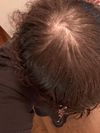
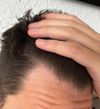
The conversation humorously discusses hair loss treatments, mentioning Minoxidil, finasteride, and RU58841. It jokingly suggests the creation of a new chemical called RU99999.
A user experienced significant hair regrowth from Xeljanz after severe alopecia but can no longer afford it. They are seeking ways to obtain the medication despite its high cost and potential side effects.
The user must stop minoxidil due to a heart murmur and is considering alternatives like nanoxidil or stemoxydine while continuing dutasteride. Suggestions include adding pyrilutamide and alfatradiol or switching to topical minoxidil at a lower concentration.
The conversation discusses how to mix pyrilutamide for hair loss treatment, suggesting a mixture of 500mg pyrilutamide with 70% ethanol and 30% propylene glycol, and a potential application dose of 1mL. The user has not personally used pyrilutamide but has researched its preparation and application based on others' experiences.
The user is considering adding an anti-androgen, RU58841, to their current hair loss treatment routine due to receding hair. They are also contemplating waiting for Breezula or Pyrilutamide to become more affordable.
A 24-year-old man is experiencing hair shedding after starting Minoxidil and Creatine, and is concerned about accelerated hair loss. A user suggests that Creatine does not increase DHT levels and recommends considering oral Dutasteride, low-dose oral Minoxidil, and Ciclopirox Shampoo, advising consultation with a doctor.
Creatine might speed up hair loss in those prone to male pattern baldness, possibly due to increased DHT levels. Some users experience no issues when using creatine with treatments like finasteride, minoxidil, or dutasteride.
The conversation is about sourcing gray market compounds, gt20029 and pp405, for hair loss treatment. The user is interested in these compounds despite their unproven status and potential risks.
Someone looking for solutions to their hair loss, who has tried and failed to tolerate anti-androgen treatments such as finasteride, CB-03-01, RU58841, and Eucapil. The user is seeking advice and understanding of their extreme sensitivity to these treatments.
The user started a new hair loss treatment regimen using topical finasteride and minoxidil, saw palmetto, sulforaphane, and apple extract supplements, while also trying to quit nicotine and fast food. They later cut out supplements due to cost, continued with topical treatment, and experienced improved hair health but faced issues with low libido.
An 18-year-old is using a high-dose treatment for hair loss, including 2.5 mg dutasteride, topical minoxidil, and injectable GHK-Cu, despite minimal hair loss. Many users suggest reducing the dutasteride dose due to potential side effects and recommend starting with finasteride instead.
The user has been using a hair loss treatment protocol including topical dutasteride, minoxidil with tretinoin, ketoconazole shampoo, microneedling, a laser cap, and vitamin D for 15 weeks, showing impressive progress. Feedback suggests continuing medical therapy for 12-24 months before considering a hair transplant.
The user had been using Minoxidil and Dutasteride with micro-needling but experienced hair loss after switching Minoxidil brands. Their doctor prescribed oral Minoxidil and Tretinoin, but the pharmacist suggested isotretinoin might be a more cost-effective alternative.
RT1640, a combination of cyclosporin A, minoxidil, and RT175, is discussed as a potential treatment for hair regrowth and repigmentation. The unique formulation aims to enhance hair follicle growth and restore hair pigment without the negative side effects of immunosuppressants.
The user "ajsr8" shared their story of hair loss despite being on treatments. They started using finasteride in 2019 and later tried topical minoxidil, but it didn't seem to work. They also experienced side effects from other treatments. They are considering cutting off their hair and stopping the medications if there is no improvement in three months. Other users suggested trying different treatments and getting a blood test to check for underlying conditions.
The user has been using topical 5% Minoxidil, 0.1% Finasteride, dermastamping, 2% ketoconazole, and a DHT-blocking shampoo with saw palmetto, caffeine, biotin, and argan oil for hair loss. Despite some baby hair growth on one side, the user is experiencing continued hairline recession and shedding, leading to distress.
The user is experiencing ongoing hair loss despite using a comprehensive treatment regimen including dutasteride, oral minoxidil, cyproterone acetate, transdermal estradiol, and topical bicalutamide. They suspect cyproterone acetate may be worsening their hair loss and are considering switching to injection monotherapy.
Gym and creatine can cause hair loss by increasing testosterone and androgenic activity. DHT blockers may help some, while others need androgen suppression with topical AA like RU or Pyri.
A user is considering a hair transplant in a "mohawk" pattern with scalp micropigmentation (SMP) on the sides and back, questioning its feasibility and appearance. Others discuss donor region quality, potential scarring, and alternative treatments like dutasteride and RU58841.
A user's experience with the hair loss treatment Pyrilutamide KX-826, which has resulted in some side effects and shedding. The conversation also includes advice for baseline pictures and trying treatments for at least 6 months.
Pyrilutamide is discussed as an effective hair loss treatment by some users, despite skepticism due to limited data and underwhelming trial results. Users compare it to finasteride, minoxidil, and RU58841, with some expressing interest in its potential as an adjunct treatment.
The user is experiencing hair loss and has been using RU58841 but is considering pyrilutamide and minoxidil, avoiding finasteride due to side effects. Another user suggests finasteride or dutasteride as essential, possibly in topical form, while dismissing saw palmetto as ineffective.
AltruisticBro's experience with Fluridil (Eucapil) as a hair loss treatment, and the current blood work results associated with it. They are not willing to take finasteride due to potential permanent side effects.
The conversation is about the potential effectiveness of a hair loss treatment called pyrilutamide. One person has been using it since September and reports positive results.
KX-826/pyrilutamide is undergoing an additional one-year safety and efficacy trial in China after a six-month study. Some participants speculate on the reasons for the extended trial and discuss the potential of other treatments.
A user experienced severe scalp itching with MPB and found Nizoral ineffective. A doctor diagnosed seborrheic eczema and prescribed Betacap, which relieved the itching.
OP wants to increase pyrilutamide concentration from 0.5% to 1% while already using finasteride. Users suggest waiting for a commercial 1% solution and caution against using grey market products.