Users discuss using high-strength Minoxidil, topical finasteride, and azelaic acid for hair loss. Some report success with higher Minoxidil percentages, while others express concerns about potential heart risks.
A 33-year-old man shares his positive hair regrowth results using 1mg finasteride daily, 5% topical minoxidil twice daily, and a 0.5mm dermaroller weekly. He feels more confident and encourages others to try the routine despite potential side effects.
The conversation discusses hair regrowth using dissolvable microneedles loaded with rapamycin and epigallocatechin gallate nanoparticles. Specific treatments mentioned include Minoxidil, finasteride, and RU58841.
This conversation is about a user's experience with low-dose oral Minoxidil for hair loss, and includes advice from other users who suggest trying finasteride or microneedling, as well as shaving off the remaining hair and seeking a hair transplant in Turkey. It was originally intended as satire but had to be clarified due to confusion.
A 37-year-old man achieved significant hair regrowth in five months using topical minoxidil 5%, rosemary oil massages, and Nizoral 2% shampoo. His impressive results led to disbelief and admiration, with some attributing his success to being a "hyper responder."
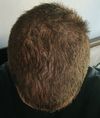
The user is questioning if they are experiencing hair regrowth after using topical Minoxidil for 4-5 months, noting increased body hair but uncertain head hair changes. Other users suggest the appearance is due to a natural cowlick rather than balding.
The user is using 5 mg of oral minoxidil, 1.25 mg of finasteride, and a dermaroller for hair loss, and plans to reduce the minoxidil dosage after a year. They have not experienced side effects like facial bloating and are considering the safety of long-term use.
The conversation is about mesotherapy for hair regrowth, with suggestions to use microneedling combined with minoxidil, finasteride, or dutasteride instead. Mesotherapy is considered an expensive gimmick with no proven results.
A woman using minoxidil for hair loss is trying hair fibers but finds they look like dandruff. Suggestions include using pomade, Derm Match, matte eye shadow, mascara, and spray applicators for a more natural look.
A 24-year-old woman experiencing hair loss due to low ferritin and iron deficiency is advised to correct these deficiencies before considering minoxidil. Minoxidil is not recommended for temporary hair loss caused by iron deficiency.
A 23-year-old woman with androgenetic alopecia (AGA) is using minoxidil, rosemary oil, and dermastamping for hair loss, and is concerned about the effectiveness of minoxidil. She follows a detailed hair care routine and takes supplements like inositol, magnesium, saw palmetto, iron, multivitamins, vitamin D, and B12.
Significant hair regrowth was achieved using 1mg finasteride and 5% topical minoxidil over 14 months, with only initial shedding and mild scalp irritation as side effects. Consistency and early treatment are recommended for optimal results.
A new product, Minoxidil booster, which enhances sulfotransferase enzyme activity in the scalp, is now available. The user has started using this product, applied before Minoxidil, to improve their hair loss treatment results.
Extended-release oral minoxidil (VDPHL01) shows promising results for hair growth with improved safety, achieving significant hair count increases and minimal side effects compared to placebo. The treatment is designed to maintain effective concentrations while reducing side effects, making it a safer option for those who cannot tolerate standard minoxidil.
The user is using topical finasteride, minoxidil, nizoral shampoo, and microneedling for hair regrowth but hasn't seen results after 2-3 weeks. They added tretinoin to their routine and are advised to wait a few months for potential changes.
The conversation humorously discusses hair loss treatments, including finasteride, dutasteride, minoxidil, and microneedling. The user shares progress and thanks the pharmaceutical industry, with comments on the effectiveness and side effects of these treatments.
A user is seeking a recipe to create a topical solution using Minoxidil tablets, rosemary, peppermint, and possibly coconut oil. They are asking for specific amounts and mixing instructions.
Noxidil from Zeemoreuncle appears legitimate based on a bleach test with oral minoxidil tablets. The test results showed an instant color change, suggesting the product's authenticity.
Kirkland Minoxidil 5% Foam is either sold out or very expensive, leading to frustration over limited options without propylene glycol. Alternatives like Rogaine and Foligain are discussed, with varying prices and ingredient differences.
This user "ateaninja" has been using finasteride and minoxidil for 14 months along with weekly micro-needling for the last 5 months to treat hair loss. They also have a trusted barber to make their existing hair look fuller.
Microneedling combined with minoxidil may promote hair regrowth, with some users reporting success using a 1.5mm dermaroller twice a week. Others have seen results with minoxidil alone or by increasing microneedling frequency.
A 17-year-old is experiencing genetic hair loss and is considering treatments like Minoxidil, Rosemary oil, or Finasteride. They have a vitamin D deficiency but believe it is not the cause of their hair loss.
A 24-year-old has been using finasteride, oral minoxidil, and microneedling for hair loss. They reduced minoxidil due to heartburn and are considering a hair transplant.
The user shared progress pictures after almost three months of using minoxidil with rosemary, topical finasteride with a dermastamp, biotin, and vitamin D3. They cut their hair shorter than in the first picture.
A user's progress with treating hair loss by using finasteride (1mg MWF) and minoxidil (5% once daily), occasionally using ketoconazole gel, and dermarolling 1.5mm every two weeks; other users' responses are positive and ask for more information about the treatment regimen.
The conversation discusses using 1.5mm microneedling to improve responses to Minoxidil for hair loss. One user humorously suggests more aggressive microneedling.
Microneedling, when combined with finasteride and topical minoxidil, can enhance hair regrowth for male pattern baldness, especially at the temples. Users report varying success with needle depths between 0.5mm and 1.5mm, with stamps preferred over rollers to minimize scalp damage.
The user saw hair improvement with minoxidil, finasteride, and a red light cap, noting better results after adding finasteride and stressing routine consistency.
The user shares progress on hair regrowth using topical Minoxidil twice daily, tretinoin at night, and oral finasteride daily, experiencing a second shedding phase but still seeing positive results. They seek advice from others who have experienced similar shedding.