Search
for
Sort by
Community Join
330-360 / 1000+ resultscommunity JPEGMafia Hair Transplant — Incredible Result
A user's successful hair transplant, with some people questioning the donor area regrowth, and others speculating that hair fibre may have been used to help fill in areas.
community Bleeding too much for other reasons
The user experienced excessive bleeding during microneedling after consuming caffeine and THC, and is unsure if they should continue with the same routine. They are seeking advice on whether the bleeding is a cause for concern.
community Pure Curiosity: Effects of increased testosterone blood levels because of Finasteride?
Finasteride may have positive effects by keeping testosterone levels higher, potentially maintaining youthfulness and physical performance as one ages. It could also help with conditions related to aging like andropause and sarcopenia without increasing estradiol levels.
community Reduced excessive hair shedding

community I need to advice on if microneedling with pen will help a norwood 2.5-3 frontal loss
Mike, 46, is experiencing hair thinning at the temples and frontal hairline. He plans to try microneedling with a pen and topical dutasteride after oral minoxidil and finasteride showed limited effectiveness and oral dutasteride caused side effects.
community 0-6 Months of Finasteride Results (20 M)
community 7.5 months post transplant results so far
The user shared their 7.5-month post-hair transplant results, mentioning they have been using finasteride and oral minoxidil. The conversation includes mixed reactions, with some users complimenting the results and others critiquing the hairstyle and presentation.
community Scalp tension and thickness of the galea aponeurotica, inflammation and potential treatment pathways
Scalp tension potentially affecting hair loss, and potential treatments for male pattern baldness such as Minoxidil, Finasteride and RU58841. Evidence from a study was discussed which suggests that the cause of MPB lies within the follicle itself and is not dependent on its surrounding environment.
community HairClone (UK) finally begins offering its Dermal Papilla Cell Hair Multiplication procedure to humans. In Guatemala.
HairClone is offering a Dermal Papilla Cell Hair Multiplication procedure in Guatemala, raising questions about its effectiveness and regulatory reasons for the location. Users express skepticism and curiosity about the treatment's success and potential costs.
community Stem cells hairloss in panama
community 4 months M26 Fin/Min/Keto/microneedle
A 26-year-old male shared progress pictures after 4 months of treating hair loss with finasteride (1.25 mg on Mondays, Wednesdays, and Fridays), topical minoxidil twice daily, ketoconazole shampoo twice weekly, and weekly microneedling at 1.5 mm. He is seeing hair growth improvement, especially in the front, and is considering hair grafts for the crown area if necessary for more density.
community Blood work results concerning ?? Finasteride
A 23-year-old male experienced nipple sensitivity after taking 0.5 mg finasteride for 2.5 months, with blood tests showing increased testosterone and estrogen levels. He stopped finasteride temporarily and seeks advice to prevent gynecomastia.
community 8 Month Update - Daily Topical Fin/Min, Weekly Microneedling, 40 y/o
User shared 8-month progress using daily topical Fin/Min, weekly microneedling, and supplements (biotin, zinc, saw palmetto, collagen). Others praised hairline regrowth and requested temple photos.
community 10 months of treatment what has changed
Minoxidil and finasteride have improved hair thickness and density, but temple areas remain stubborn. Continued use is recommended, with suggestions for topical minoxidil, microneedling, or considering a hair transplant for further improvement.
community Y'all, we have got to come to a consensus on the specifics of microneedling.
Microneedling can promote hair growth, but there is uncertainty about the best practices, including needle length, device, and session frequency. Users discuss using needle lengths between 0.5mm and 1.5mm, with some experiencing pinpoint bleeding, and emphasize the need for more reliable resources and guidelines.
community Increased adipose tissue (being overweight) in males may increase likelyhood of finasterde side effects
Being overweight may increase finasteride side effects due to higher aromatase activity converting testosterone to estradiol. Maintaining a healthy weight could reduce these side effects.
community Curious on your thoughts on this article i stumbled upon.
community mangifera indica (mango oil) inhibits dkk1, dht TYPE 2 and activate wnt signal in vivo
Mango oil may inhibit DKK1 and DHT, potentially aiding hair growth by activating the Wnt signaling pathway. A user plans to test mango leaves juice and other Ayurvedic products for hair regrowth.
community 3-month update on the microneedling-only project
A 3-month update on a microneedling-only project to treat hair loss, which has not had significant results in terms of thicker hair but may have seen some acceleration in hair growth and an increase in vellus hairs. The user plans to continue the journey for 6 months before making any changes, such as adding minoxidil or finasteride.
community Does microneedling need to be paired with other medicines to have better results?
The user discusses hair transplant results and questions the necessity of pairing microneedling with a special liquid, aside from minoxidil, for better hair thickening. They are skeptical about the doctor's recommendation and seek advice on whether the liquid is essential or a sales tactic.
community Severe copper deficiency, and also zinc deficiency. Looking for testimonials.
A 36-year-old man with androgenetic alopecia suspects copper and zinc deficiencies may be accelerating hair loss and is supplementing copper to address this. He is also monitoring blood sugar levels due to previous prediabetes concerns and plans to test for insulin resistance.
community Injured temple with derma rolling
OP injured their temple using derma rolling and tretinoin, causing peeling and potential hair follicle damage. Users suggest the injury might be permanent, possibly resulting in scar tissue where hair won't grow.
community Biotin/saw palmetto/pumpkin seed supplements and body fat
community Betamethasone dipropionate 0.05 (sernivo spray)
A user was prescribed betamethasone dipropionate spray for a receding hairline, which caused skin peeling and depigmentation. They stopped using it and are considering alternatives like BPC-157/TB-500 for healing.
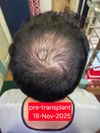
community 7 month crown transplant progress update | minoxidil since Jan, finasteride since June
A 28-year-old male shares his 7-month progress after a crown hair transplant, using topical minoxidil foam, finasteride, and microneedling. He seeks feedback on whether his crown's progress is typical and if further thickening is expected between months 7 and 12.
community 6 months progress topical min/fin (19)
The user is using a treatment of topical minoxidil 7% and finasteride 0.1% twice daily, along with a low-level laser therapy cap, biotin, and collagen supplements, and is seeing good progress on the hairline and temples but not the midscalp. They experienced initial shedding, saw results by month three, and are happy with the progress, though some users express concern about using finasteride at a young age.
community What factors cause more regrowth for MTF people with hormone replacement therapy?
Hair regrowth in transfems is more effective due to hormonal changes, specifically estrogen, which keeps hair in growth phase longer. Treatments mentioned include anti-androgens, sex hormones, and DHT blockers like finasteride.
community Split-scalp pilot study to evaluate effectiveness of Minoxidil 0.5% MMP® versus Topical Minoxidil 5% in the treatment of Female Pattern Hair Loss
Minoxidil 0.5% MMP® showed better results in parietal-vertex regions for less advanced female pattern hair loss compared to Minoxidil 5%. MMP® with Minoxidil can improve the quality of life for these patients.
community [27M] FUE 14 days recovery progress
A user shared their 14-day recovery progress after a 3450 graft FUE hair transplant in Turkey, noting faster healing possibly due to hydrolyzed collagen supplements. They asked if others had similar experiences with or without such supplements.