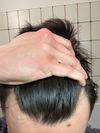
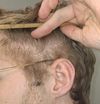
PP405, a topical LDH inhibitor, has shown to stimulate hair follicle stem cell proliferation in humans with moderate hair loss. They are advancing to more detailed trials this year.
A person started using finasteride, minoxidil, and dermarolling to regrow hair at the temples and is asking if it's possible. Some users report temple regrowth is possible with these treatments, while others find it challenging, and advise consistency and patience with treatment.
A user who didn't respond well to minoxidil and finasteride is considering the role of IGF-1 in hair loss treatment effectiveness. They discuss the potential of using HGH to improve hair growth and other health issues, referencing several sources that suggest IGF-1 levels may influence hair loss and treatment response.
Finasteride has been effective for maintaining hair density, but due to a slight dip in temple hair, the user switched to dutasteride as an additional measure. Users discuss varying experiences with side effects from finasteride, dutasteride, and minoxidil, highlighting that reactions can differ significantly among individuals.
The user experienced hair growth improvement using a 1.25mm microneedle weekly, oral finasteride, oral minoxidil, and rosemary oil. They plan to switch to generic finasteride and minoxidil for safety concerns.
The potential of verteporfin to heal wounds without scarring; however, despite its promising preclinical trials and coverage from a major media outlet, there is still no official clinical trial result and the drug has only garnered attention from hair loss communities.
Broccoli or sulforaphane supplements are unlikely to improve Minoxidil results due to the need for an unrealistically large dose. Tretinoin, micro-needling, and low-dose oral Minoxidil may be more effective for those lacking the necessary enzyme in the scalp.
The conversation discusses a topical hair loss treatment containing 0.1% dutasteride, 6% minoxidil, tretinoin, and ketoconazole. The user is asking for opinions on the effectiveness of this solution.
Before getting a hair transplant, it's crucial to research and understand that ongoing treatments like finasteride, dutasteride, or minoxidil are necessary to maintain results. Concerns were raised about Turkish clinics, including overharvesting grafts, lack of regulations, and discouraging finasteride use.
The conversation discusses a 24-year-old Korean man's progress with hair loss treatments over 8-9 months, with specific treatments not mentioned due to redacted information. Users are commenting on the effectiveness and inquiring if Asians have better results with hair loss treatments.
The conversation discusses hair regrowth using dissolvable microneedles loaded with rapamycin and epigallocatechin gallate nanoparticles. Specific treatments mentioned include Minoxidil, finasteride, and RU58841.
User discusses potential hair loss treatment SCUBE3 and shares mixed opinions on its effectiveness. One user reports positive results after applying SCUBE3 following microneedling.
The conversation discusses a patent filed by Shiseido for cloning Dermal Papilla (DP) cells to treat hair loss. The method involves using viral vectors to maintain the cells' growth-inducing properties, differing from Replicel's approach with Dermal Sheath Cup (DSC) cells.
Elevated liver enzymes were reported from taking finasteride and minoxidil. The doctor advised stopping oral minoxidil and taking finasteride every other day.
The conversation discusses how different factors can stimulate type 1 and type 2 isoforms of 5-alpha reductase, which are enzymes linked to hair loss. Specific treatments mentioned include oral Dutasteride and topical Finasteride.
A 35-year-old male experienced significant hair improvement using microneedling, finasteride, minoxidil, and keto shampoo. He adjusted his microneedling routine for better results.
A 28-year-old male experiencing diffuse thinning and miniaturization around the ears and back has tried finasteride, dutasteride, and both topical and oral minoxidil without success. He is seeking advice on identifying the type of hair loss and next steps since current treatments are ineffective.
Gut microbiota significantly influences androgen metabolism, impacting hair loss treatments like finasteride. Probiotics, dietary changes, and fecal microbiota transplants may help manage DHT levels and improve hair health.
Finasteride, Minoxidil, Bioneer CosmeRNA, Technoderma, Kintor, Hope, Breezula, and Follicum treatments showed increases in hair count, with Technoderma showing the highest increase at 24.3 hairs/cm². Amplifica has not yet published results.
Minoxidil and finasteride are being considered for hair loss due to seborrheic dermatitis and male pattern baldness. The user is also using ketoconazole and zinc pyrithione shampoo.
A new painless microneedle patch shows promise in reversing hair loss. The discussion focuses on potential new treatments beyond common options like Minoxidil, finasteride, and RU58841.
User shared 8-month hair loss treatment progress using topical fin/min, topical dut, mk677, RU, and microneedling. They experienced watery semen as a side effect but saw significant improvement in hair growth.
Verteporfin is being discussed for its potential to regrow hair and heal scars, possibly aiding hair transplants or replacing them. Some users are skeptical about its effectiveness, while others suggest combining it with microneedling for better results.
New hair loss treatments like stem cells, hair cloning, and gt20029 are unlikely to be available in the next 5-10 years, with some trials possibly starting by 2026. Current treatments like Minoxidil and Finasteride have been used for decades, and new developments depend on funding and successful trials.
A 28-year-old male has been using oral finasteride and minoxidil for over a year without seeing significant results in hair thickness, particularly in the front. He is considering adding dermastamping to his routine and is exploring whether topical treatments might be more effective.
GT20029 showed significant hair growth and safety in phase II trials, with no adverse sexual events. Users are hopeful but concerned about future costs and systemic effects.
User experienced severe brain fog and anxiety from oral dutasteride and is considering dutasteride injections with PRP for hair loss, while currently using finasteride and oral minoxidil. They seek others' experiences with dutasteride mesotherapy and its side effects.
Scalp tension may contribute to hair loss by increasing DHT levels, with potential solutions like scalp massages and Botox. Concerns about finasteride's side effects were discussed, and some users shared personal experiences with alternative treatments like scalp massaging and Botox.
Using finasteride and minoxidil for two months led to noticeable hair regrowth, especially at the temples, with minor side effects. Users discuss their experiences with these treatments, noting minimal sexual side effects and encouraging others to try them.