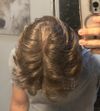
Hair loss treatments discussed include promising Pyr available online and Verteporfin dosing after FUE for follicle regeneration, but no updates on SCUBE3.
The user is using Minoxidil, RU58841, CB-03-01, WAY-316606, Ketoconazole, MK-677, and derma stamping to treat hair loss and has noticed new hair growth, especially around the temples and hairline. They apply different treatments at various times of the day and have seen improvements in skin condition and body hair texture.
Maintaining scalp hair and minimizing shedding, treatments used such as Procapil, supplements, topical caffeine, topical estrogen, and scalp massage; suggestions for anagen extenders or pharmaceuticals to help with a short anagen phase.
A user is considering dutasteride mesotherapy versus oral finasteride for hair loss, with concerns about side effects. Other users share experiences with both treatments, suggesting oral finasteride as more effective and cost-efficient, while also discussing the use of minoxidil, alfatradiol, and potential side effects like gynecomastia.
Minoxidil, finasteride, dutasteride, and microneedling are commonly used for temple regrowth, with varying results and timelines. Consistency and patience are emphasized, with some users seeing progress after several years.
Veradermics' oral minoxidil shows promise for hair regrowth, with some users reporting significant improvements, while Pelage's PP405 results are less convincing and lack transparency. There is skepticism about both treatments' long-term effectiveness and potential side effects.
Dutasteride mesotherapy involves micro injections every 3 months to reduce side effects compared to regular finasteride. The discussion focuses on its effectiveness and safety for hair loss treatment.
A 36-year-old male using dutasteride and minoxidil has seen significant hair regrowth, confirmed by a dermatologist and supported by before-and-after photos. He plans to increase his oral minoxidil dosage and add dermapen to his routine.
The user switched from finasteride to 0.5mg oral dutasteride and added 2.5mg oral minoxidil, along with occasional microneedling, to improve hair regrowth. They reported no side effects and are hopeful for continued progress, especially in the temple area.
The user "Segggs" shared their progress with hair loss treatments including 6 months of foam minoxidil, 3 months of finasteride, keto shampoo, and inconsistent microneedling. The replies were positive, with some users commenting on the regrowth in the temple area.
The conversation discusses skepticism about the effectiveness of scalp tension theory and scalp massagers for hair regrowth, contrasting it with treatments like finasteride and minoxidil, which have more user-reported results. Participants question the belief in scalp tension theory, suggesting it may be a marketing tactic, while others argue for a multifactorial approach to hair loss.
User shows temple area progress after hair transplant, using DUT every other day and oral Min 2.5 daily. Another user asks about number of grafts and cost.
Phase II for TDM-105795 for Androgenic Alopecia is set to begin in April 2023. The study aims to evaluate the efficacy and safety of TDM-105795 in male subjects.
A non-binary transfeminine person experienced significant hair regrowth after starting finasteride, minoxidil, microneedling, and hormone replacement therapy with estradiol. They encourage trans individuals concerned about hair loss to consider estrogen as it has greatly improved their hair condition.
Applying minoxidil and finasteride to the temples won't cause shedding elsewhere. Shedding occurs due to hair follicles resetting their growth cycle, not the application location.
A user shared progress pictures 1.5 months after a hair transplant of 3500 grafts, using oral finasteride, topical finasteride, minoxidil, and vitamins. They are concerned about potential shock loss and the thinning appearance.
The user experienced negative side effects from oral minoxidil, including cardiac issues and excessive sweating, and decided to switch to topical minoxidil while using other treatments like RU58841, Setipiprant, Azelaic acid, and latanoprost. Another user suggested splitting the oral minoxidil dose to reduce side effects.
Visible hair improvement after 10 weeks using minoxidil, estradiol enanthate, acetophenide algestone, and bicalutamide. The user is a 25-year-old male with reduced testosterone levels, expressing a preference for less masculinity.
Dutasteride might be better for hairline due to varying levels of 5AR activity in scalps. Genetic tests can determine if finasteride is enough or if dutasteride is needed.
Dihydrotestosterone (DHT) impacts various skin conditions, including Androgenetic alopecia and seborrheic dermatitis, by causing overactivity in sebaceous glands. Topical medications Tacrolimus and Clobetasol can reduce these inflammatory conditions, and treatments like RU58841, Minoxidil, and Finasteride may also be beneficial.
Female (37) experiencing hair loss for 5 years, tried max dose of spiro and oral + topical minox without success. Discovered low cortisol and low DHEA levels, seeking functional medicine practitioner for help.
Topical melatonin was found to significantly increase hair density and decrease scalp conditions like seborrheic dermatitis. The user is considering using it alongside finasteride and oral minoxidil for treating hair loss and scalp health.
A potential non-invasive topical treatment targeting the WNT Signaling Pathway for hair regeneration is being researched, with positive results on human hair follicle cells. Current effective treatments for hair loss include Minoxidil, finasteride, and hair transplantation.
The user shared progress pictures of their hairline improvement over two years using finasteride, minoxidil, and microneedling. Another user inquired about whether the minoxidil was used orally or topically.
The user is experiencing hair thinning and shedding despite no family history of male pattern baldness. They are considering starting treatments like Minoxidil or finasteride.
Norwood 7 hair loss is often excluded from trials to ensure treatments appear more effective and to reduce costs. Some believe treatments effective for Norwood 5 could work on Norwood 7, but companies prioritize market readiness.
The user experienced significant hair regrowth using oral minoxidil and dutasteride over several months. Many commenters praised the progress and suggested additional treatments like microneedling for further improvement.
Pelage is developing a topical hair follicle stem cell therapy, PP405, for non-scarring alopecias like androgenetic alopecia, with Phase III trials planned and a potential market launch by 2027. The treatment may not require continuous use after initial regrowth.
Dutasteride mesotherapy is discussed as a hair loss treatment, with opinions on its effectiveness compared to oral dutasteride. The treatment is noted for being expensive, potentially painful, and more popular in Europe, with some users questioning its advantages over traditional methods.