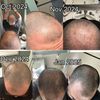
The user has been microneedling at 0.25mm once a week for 4 weeks and noticed further hairline recession. They are concerned about the impact of vitamin deficiencies, like biotin, on hair growth.
A user shared their positive experience using Fleava (copper peptides), minoxidil, and micro needling for hair regrowth, noting significant improvement in their hairline. Other users believe the success is primarily due to micro needling and minoxidil.
Minoxidil sulfate is considered for those unresponsive to regular minoxidil, with some trying a 10% formulation from Folligenz. Concerns exist about the product's stability and transparency, but some users report positive initial results.
The conversation is about using microneedling with minoxidil and finasteride for hair loss treatment. Users discuss the frequency and needle depth for microneedling, and the timing of minoxidil application, with varying opinions on the best practices.
The conversation discusses a person's hair loss treatment over 1.1 years with finasteride, 1.5 years with minoxidil, and 2 months of microneedling, noting less shedding since starting vitamin D3 a month ago. Commenters are impressed with the results.
Switching from finasteride and topical minoxidil to dutasteride and oral minoxidil caused a major hair shed, exacerbated by moving stress. Dutasteride may take months to fully integrate, and adding finasteride might help with hair protection during this transition.
Microneedling promotes hair growth by increasing circulation and collagen production, with gains potentially lasting longer than those from minoxidil. Some users report sustained results after stopping microneedling, unlike with minoxidil and finasteride.
The conversation discusses hair loss treatment options, focusing on finasteride and its potential effects on gynecomastia. The user is considering finasteride while managing hormone levels with supplements like boron, vitamin D, zinc, magnesium, and P5P, and is advised to consult an endocrinologist for further evaluation.
The user is using Minoxidil, Finasteride, microneedling, and plans to add low-level laser therapy (LLLT) to treat hair thinning. They shared progress pictures showing results from May 8th to June 7th.
ET-02, a PAI-1 inhibitor, is not proven to be more effective than Minoxidil for hair loss. Other treatments like finasteride, dutasteride, PP405, and AMP-303 are also discussed, focusing on cellular senescence and oxidative stress.
Oral minoxidil is considered effective for hair growth, and some users combine it with microneedling despite mixed opinions on its additional benefits. Concerns about microneedling include potential scarring and lack of conclusive evidence on its effectiveness when used with oral treatments.
User is experiencing hair loss and scalp dryness after using a topical solution containing minoxidil, tretinoin, finasteride, and hydrocortisone. They seek advice and personal experiences with this treatment.
Kintor's Pyrilutamide results for hair loss treatment will be released soon. The treatment may replace current treatments like finasteride and minoxidil without systemic side effects.
The user started taking 1 mg finasteride daily in September 2024 and began derma stamping twice a week, noticing progress initially but now experiencing increased scalp visibility. They are considering adding oral or topical minoxidil to their routine for further improvement.
After one month of treatment with finasteride, minoxidil, dermarolling, ketoconazole shampoo, hair vitamins, and vitamin D3, the user reports minimal visual progress and increased shedding, but notes stronger body hair and light fuzz on eyebrows. The user is inquiring about potential hair regrowth.
The user's hair has become brittle and falls out easily, especially in the shower. They shared before and after photos showing significant changes in hair texture and thickness.
LemonyBonobo started oral minoxidil a week ago, experiencing significant shedding, and is concerned about potentially worsening their hair condition. They also use dutasteride, topical minoxidil, and dermarolling. Elyktronix, who has been on oral minoxidil for 15 months, recommends it, noting that shedding can be a positive response and that results take time.
The user has been using topical minoxidil, finasteride, microneedling, and laser light therapy for 11 weeks to address hair thinning. They report difficulty applying the treatment due to increased hair thickness and are unsure if the results are significant.
Stopping oral minoxidil after five days due to heart issues likely won't cause noticeable shedding or permanent hair loss. The user is concerned and seeks reassurance.
The user has been microneedling for 4 weeks and using treatments like minoxidil and eclipta alba oil, seeing positive but slow results. They are considering peppermint oil as a potentially more effective alternative to minoxidil.
Fluorescent lighting makes hair look thinner, causing concern about appearance. Some users consider treatments like DUT, while others share experiences of hair looking better in different lighting or conditions.
User tried cheap hair fibers from Amazon, significantly improved appearance of thinning hair. Fixing spray recommended to prevent fibers from blowing off.
A 30-year-old woman with a history of anemia and low vitamin D experienced hair shedding, which improved after addressing nutrient deficiencies. Despite regrowth of terminal hairs, her dermatologist recommended treatments like minoxidil and spironolactone to prevent future bald spots, but she is cautious due to family history of hormone-related cancers.
The user experienced hair shedding with finasteride and found minoxidil helpful for regrowth but insufficient alone. They are considering dutasteride but are concerned about potential shedding similar to their experience with finasteride.
The user is using a topical solution with finasteride, minoxidil, and retinoic acid, which causes scalp residue and dryness. They seek advice on removing residue and keeping the scalp moisturized.
The conversation discusses using a dermastamp for microneedling to treat hair loss, focusing on needle length and frequency. Users share their routines, including applying minoxidil after microneedling, with some waiting 24 hours to avoid side effects.
A combination of pyrilutamide, minoxidil, and alfatradiol is proposed as an effective alternative to finasteride for treating mild to moderate hair loss, claiming to stabilize hair loss and improve thickness without finasteride's side effects. Some users are skeptical about the effectiveness and approval of these treatments, while others are interested in trying them due to finasteride's side effects.
Microneedling regimens for hair loss, with users discussing needle lengths and frequencies. One user reports noticeable improvement at the crown using 1mm weekly, while another uses Keto shampoo with dermastamping.