Search
for
Sort by
Community Join
210-240 / 1000+ resultscommunity Bile Acid-Mediated DHT Dysregulation Hypothesis
Elevated bile acids can inhibit the enzyme AKR1C2, leading to increased DHT levels, which may accelerate hair loss in those predisposed to androgenetic alopecia. Treatments mentioned include topical minoxidil and finasteride.
community New Preprint: Retinoic Acid Supports Verteporfin-Induced Regeneration
community Clascoterone - clearnet vendor
The conversation is about finding a clearnet vendor for clascoterone, also known as Winlevi, for hair loss treatment. The user is seeking recommendations via direct message.
community I’ve emailed MinoxidilMax and they’ve said they will try and make topical Procyanidin B2 within a month!
User TH1RT33N_DR34M shares that MinoxidilMax plans to make topical Procyanidin B2 within a month. Users discuss the legitimacy of the product, quality control, and potential results from using it for hair loss.
community Aromatase Upregulation along with DHT down regulation could possibly hold the cure
The post discusses the potential of upregulating aromatase to treat hair loss, suggesting that increasing CCL2 levels through Vitamin D or microneedling might help. The user questions why microneedling doesn't work for everyone, especially those with advanced hair loss.
community Potential role of TB-500 Thymosin Beta-4
The conversation discusses hair loss treatments, specifically mentioning Minoxidil, finasteride, RU58841, and TB-500 Thymosin Beta-4. It critiques the credibility of biohacking claims.
community Having Ru58841 mailed to my house
RU58841 can be ordered as a powder and compounded at home, but it should be stored at room temperature to avoid crystallization. Pyraulatmide may follow a similar principle.
community Zyrtec (Cetirizine) antihistamine for hair growth compared to Minoxidil NIH study
The conversation discusses the potential of topical cetirizine (Zyrtec) for hair growth in comparison to minoxidil, noting cetirizine's ability to reduce prostaglandin D2, which inhibits hair growth. Users share mixed experiences with cetirizine for allergies and scalp health, and there's a mention of the risk of dementia with long-term antihistamine use.
community biolabshop RU58841 source legit??
The conversation is about using Biolabshop's RU58841 product, which includes GHK-Cu and melatonin, to improve hair quality and combat hair loss. The user has previously used finasteride, minoxidil, and Anageninc’s RU58841 with success and seeks feedback on the new product, especially from those on anabolic steroids or hormone treatments.
community Replicel Info - Possible Info Date
Replicel's results were delayed, but Shiseido might share data at BioJapan on October 11. Users are hopeful for new treatments like RCH-01, potentially eliminating the need for finasteride or minoxidil.
community Black light diagnosis of folliculitis
community Korean scientists breakthrough in hair regeneration targeting CXXC5 protein and WNT Signaling Pathway
A potential non-invasive topical treatment targeting the WNT Signaling Pathway for hair regeneration is being researched, with positive results on human hair follicle cells. Current effective treatments for hair loss include Minoxidil, finasteride, and hair transplantation.
community MWC compounded Minoxidil + Tretinoin
A user is considering using compounded Minoxidil with Tretinoin from Medical Wellness Center to improve hair growth. They are also curious about the effects of higher Minoxidil doses and adding Tretinoin to their regimen.
community Looks like a real cure to the root of baldness (DHT-induced senescence) was proven earlier this year
A study that outlines the full model for androgenic alopecia (AGA) which links DHT to cellular senescence in dermal papilla cells, and suggests black chokeberry as a source of cyanidin 3-O-arabinoside polyphenol with potential anti-oxidant properties that could reverse this process. The post encourages reaching out to experts in anti-aging and longevity to research treatments involving the polyphenol.
community Where can I sign up for hair cloning clinical trials?
The conversation is about a user interested in participating in hair cloning clinical trials due to their fine hair and previous positive experience with clinical trials. They are seeking information on how to volunteer for such trials.
community Growing hair witch capsaicin and occasional topical minoxidil
A user shared their experience using capsaicin from chili peppers and occasional topical minoxidil to promote hair growth, noting noticeable improvements without significant side effects. They previously experienced side effects from dutasteride and minoxidil but found the new regimen effective and manageable.
community So what is the most compelling current research on a cure?
community European release of clascoterone
Clascoterone's European release is expected in Q4 2026, with FDA approval anticipated by mid-2027. The discussion includes questions about the approval timeline and potential acceleration due to unmet needs.
community HairClone developing cell replacement treatments for Hair Loss
HairClone is developing cell replacement treatments to rejuvenate and generate hair follicles, and has launched a crowdfunding campaign. A user expressed skepticism about the need for crowdfunding.
community Cassiopea Announces FDA Submission of New Drug Application for Clascoterone Cream 1%, the First New Mechanism of Action for Acne in Nearly 40 Years
The conversation is about a new acne treatment cream called Clascoterone Cream 1%, which is the first new mechanism of action for acne in nearly 40 years. One person joked about hoping their face will be as clean as their bald head after using the cream.
community Is DHT actually the cause of male pattern hair loss or just a correlating factor? Why I think the research is more complicated than we're told and why I've been looking into GHK-Cu
DHT is not the only cause of male pattern hair loss; genetic sensitivity, inflammation, and fibrosis also contribute. GHK-Cu, a copper peptide, is being explored as an alternative treatment to finasteride and minoxidil, showing potential in improving follicle health.
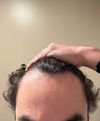
community M20 with Hair Loss - Clascoterone an Option?
A 20-year-old is experiencing hair thinning and is considering Clascoterone and Minoxidil as treatments, avoiding finasteride due to concerns about fertility and hormones. A suggestion was made to use Clascoterone for local DHT targeting and combine it with Minoxidil for maintenance and regrowth while avoiding systemic side effects.
community Cell senescence-targeted treatment for hair loss, has anyone tried any products/enzymes etc. that use this theory
DHT causes hair loss by driving cells into senescence, and a polyphenol in black chokeberry may reverse this. A product using this theory is being considered for use alongside finasteride, minoxidil, and microneedling.
community M 26, had to cut my hair short for mandatory military service and I saw a lot more of my vertex than I was anticipating.

community Eliminate/Confirm AGA based on blood report
A 19-year-old male with no family history of androgenetic alopecia (AGA) is experiencing hair loss and considering using a topical minoxidil and finasteride mixture. Despite low vitamin D levels and normal DHT serum levels, he seeks confirmation of AGA before starting treatment.
community Clascoterone study going on right now
A user is participating in a phase 3 trial for Clascoterone, a topical acne medication that may stimulate hair growth, and will share results after 6 months. They will have a section of their hair shaved and marked with a tattoo for the study.
community When is PP405 trial results medical meeting scheduled?
community When will HMI-115 second trail be over?
A clinical trial for hair loss treatments involving Minoxidil, Finasteride, and RU58841, and when the results of the trial will be available.