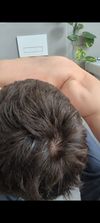
Minoxidil can cause dark, puffy undereyes. Users suggest using caffeine serum, retinol moisturizer, and Remescar eye bags cream to counteract this effect.
Oral minoxidil and finasteride can show results in 3-6 months, with peak results at 12-18 months. Finasteride is more effective for maintaining hair than regrowth, with significant regrowth in about 60% of users.
The user reports feeling more confident and happier after 4-5 months of using Minoxidil and Dutasteride for hair loss. Some users debate the effectiveness of the progress pictures, with differing opinions on visible hair density improvement.
Switching from topical to oral minoxidil caused heavy shedding and thinner, brighter hair. The user is seeking advice on whether hair can recover to its previous state.
Using a topical formula with 5% minoxidil and 0.01% retinoic acid is considered effective, as tretinoin can enhance minoxidil results and improve scalp health.
After quitting minoxidil 100 days ago, OP is experiencing significant hair shedding, which began a week after stopping and worsened in March. Suggestions include calming the scalp, ensuring adequate protein and iron intake, and consulting a doctor if shedding persists.
People shared their experiences with minoxidil for hair loss, noting varied timelines for seeing results, with some experiencing gains around 3-12 months. Some users also discussed using both oral and topical minoxidil, and one mentioned the need for combining treatments like finasteride for better results.
Using tretinoin on eyebrows while on oral minoxidil may not enhance growth, as some users report no difference with additional treatments like microneedling. Tretinoin can stimulate hair growth on its own, but its effectiveness varies.
The conversation is about a user who experienced hair growth after three months of using Minoxidil and plans to start Finasteride soon. The user is considering a hair transplant next year and is curious about the potential for further growth.
The conversation discusses hair loss treatments, specifically using finasteride, minoxidil, and microneedling. Recommendations for durable microneedling tools include the Derminator 2 and Dr. Pen.
The user switched from topical to oral Minoxidil and is experiencing hair shedding without significant regrowth, despite using Finasteride and Dutasteride. They are considering whether their body isn't responding to oral Minoxidil and are exploring options like dermarolling.
A 20-year-old male stopped oral Minoxidil (3mg) for a month due to health concerns and lack of significant results, while continuing topical Minoxidil (7%) with tretinoin and 1mg finasteride. He wants to resume oral Minoxidil but is worried about losing progress.
A 20-year-old stopped oral minoxidil (3mg) for a month due to health concerns and lack of significant results, while continuing topical minoxidil (7%) with tretinoin and finasteride (1mg). They experienced placebo side effects and are considering resuming oral minoxidil, seeking advice on potential setbacks.
The user is considering a hair transplant after a year on minoxidil without satisfactory results and is advised to use finasteride or dutasteride as a DHT blocker. Suggestions include using microneedling, tretinoin, and possibly needing 3000-4000 grafts for the transplant.
AB-103, a minoxidil sulfotransferase stimulant, is discussed as a potential hair loss treatment. Users inquire about effective boosters for hair growth.
Minoxidil can cause scalp itchiness, often due to propylene glycol, and users suggest alternatives like foam formulations without PG, using moisturizing oils, or reducing application frequency. Some recommend ketoconazole or zinc pyrithione shampoos to help with inflammation and itchiness.
The conversation discusses challenges and tips for applying liquid topical minoxidil twice a day, with users sharing their experiences and methods for managing greasy hair. Many users apply minoxidil once at night, and some combine it with finasteride for better results.
The conversation is about finding a reliable source to order Kirkland minoxidil in the U.S. The user is facing challenges with shipping restrictions and is seeking alternatives to Amazon and Costco.
Minoxidil, dutasteride, and copper peptides are used in a tattooing method for hair regrowth, with some users noting better results compared to oral treatments. Copper peptides are considered to have minimal impact, but the method may reduce side effects.
The user experienced chest pain and increased heart rate after microneedling while using topical minoxidil for hair loss. They are unsure if minoxidil is effective without microneedling.
The conversation discusses hair shedding after stopping topical minoxidil and considers switching to oral minoxidil as a treatment. Users share experiences with oral minoxidil, dutasteride, and the potential benefits of combining treatments to manage hair loss.
The user experienced significant hair improvement using finasteride, minoxidil, ketoconazole shampoo, and microneedling over a year, with no side effects. They used topical minoxidil and reported shedding phases, but no current shedding as of March 2026.
The "crunching" sound during microneedling is likely the needles penetrating the scalp's outer layers, not cutting hair. Users suggest using a derma stamp instead of a roller to avoid potential hair damage.
Tretinoin is discussed as a standalone treatment for hair loss, not just as a Minoxidil booster. Users mention using Tretinoin with Minoxidil and Finasteride, and consider applying it for eyebrow growth.
Mixing topical solutions like Morr F 10% (Minoxidil) and L'Oreal Seryoxyl (Stemoxydine) before application may not reduce their effectiveness. The goal is to apply treatments all at once instead of multiple times a day.
A user stopped using minoxidil due to severe side effects and experienced rapid hair loss. They also tried finasteride and dutasteride but faced adverse reactions, leading them to consider accepting hair loss and exploring options like oral minoxidil or a hair transplant.
The conversation discusses using microneedling with growth factor serum, PRF injections, dutasteride, oral and topical minoxidil, and topical exosomes to treat hair loss, particularly on the crown. OP plans to microneedle twice a month and seeks feedback on Korean growth factor serums.
A user in Poland created a homemade "oral topical minoxidil" using 2% topical minoxidil, propylene glycol, and vodka due to difficulty obtaining oral minoxidil. They shared a recipe and sought feedback, emphasizing caution and safety in dosing.