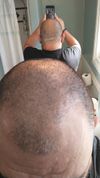
Baby hairs can mature with long-term DHT reduction, and Minoxidil can aid this process. Dutasteride mesotherapy is effective and preferable to oral pills, as it directly targets tissues.
The user reported noticeable hair improvement over four months using 1 mg of finasteride and weekly microneedling. Progress photos from October 2024 to January 2025 show positive changes.
Microneedling for hair loss, with concerns about potential scarring and hair breakage. Recommendations include using 0.5-0.8mm needles, opting for dermastamps or pens, and limiting frequency to twice a month.
The user switched from finasteride to DIY dutasteride mesotherapy and topical minoxidil due to side effects. They report improved well-being and no hair loss worsening after stopping finasteride.
The user is using 0.5 mg finasteride, 2.5 mg oral minoxidil, topical minoxidil, and 1.5mm microneedling with topical dutasteride for hair loss treatment. They report hair thickening without side effects, except for temporary water retention, and are considering increasing finasteride dosage and microneedling frequency.
The user "Expliced" shared their progress pictures after using finasteride, minoxidil, and microneedling for 1 year and 3 months. Another user mentioned that using a high-definition camera with flash and sharpening the photo can show new hairs appearing sooner.
Microneedling is more effective when combined with minoxidil, especially for temple regrowth, but is considered near-useless on its own. Users suggest combining microneedling with oral minoxidil and dutasteride for better results, while some caution against potential scalp damage.
Microneedling may enhance hair regrowth by transferring stem cells to dormant follicles, improving the effects of minoxidil. Users discuss using microneedling with needle lengths around 1.5mm to stimulate hair growth.
Dutasteride tablets are less effective than softgel capsules because they require a fat-based environment for proper absorption. Softgel capsules, like Avodart, are designed to maximize bioavailability, while powdered tablets may result in significantly lower DHT suppression.
The conversation discusses creating a customized minoxidil formulation with tretinoin, azelaic acid, and caffeine, but there are concerns about foam stabilization due to acidity. The user seeks advice on the best formulation for effective results.
Microneedling alone is not effective in maintaining minoxidil results for hair growth. Combining microneedling with minoxidil and finasteride may enhance results, but microneedling by itself is not a reliable treatment.
The conversation discusses the use of a derma roller versus a derma stamp for microneedling to prevent hair loss. The user has been using topical minoxidil for 2 months without results and seeks advice on needle length.
The conversation is about whether taking 0.5mg of finasteride daily is as effective as 1mg for hair regrowth and if there are long-term studies supporting the lower dose. The user is considering the lower dose to save money and reduce concerns about side effects.
Combining 0.5 mg oral finasteride with topical finasteride and minoxidil during an Enclomiphene cycle may help manage increased DHT levels. Monitoring for side effects is advised.
A 35-year-old user shared their 4-month progress using Minoxidil, Finasteride, microneedling, and vitamins to treat hair thinning. They reported increased hair density, thicker strands, and deeper color, especially in the crown area.
A 26-year-old shared their 2-month progress using finasteride, minoxidil, microneedling (1mm weekly), and vitamin D3 for hair loss. They are pleased with the results.
Microneedling for hair loss, with users recommending a derma stamp over a roller to avoid scalp damage. Cleaning the derma stamp with rubbing alcohol is suggested for maintenance.
Microneedling is discussed as a method to improve hair growth, with users sharing their experiences and results using different needle depths and frequencies. Treatments mentioned include minoxidil, finasteride, rosemary oil, and saw palmetto supplements.
The user experienced positive hair growth results using microneedling with rosemary and mint oil, without Minoxidil, Finasteride, or RU58841. They switched from a dermaroller to a microneedling pen and targeted different scalp areas weekly.
A female user is experiencing minimal regrowth and miniaturized hair after 6 months of treatment with oral minoxidil, spironolactone, and topical minoxidil. She seeks advice on whether she can restore her remaining follicles.
A person had success with micro-needling for hair growth but stopped and noticed hairline recession. They plan to restart treatment at age 40, using micro-needling, oral minoxidil, finasteride, a laser cap, topical minoxidil with tretinoin, collagen, and other supplements.
User asks about using eucapil/fluridil with Minoxidil and how to space out application to avoid ineffectiveness. Also inquires about microneedling timing.
Improving hair health involves not only using treatments like finasteride, minoxidil, and ketoconazole but also focusing on a healthy lifestyle, including diet, exercise, and stress management. A balanced approach enhances treatment effectiveness and overall well-being.
The conversation is about a user's 3-month hair regrowth progress using finasteride, minoxidil, and a 0.5mm dermaroller, with recent addition of caffeine shampoo. Users are responding positively and inquiring about application methods.
Microneedling's effectiveness for hair growth is debated, with some users reporting positive results when combined with minoxidil and finasteride, while others experienced scarring and no benefits. Needle depth and frequency vary, with some suggesting 0.5-1mm as effective, but caution is advised to avoid overuse and potential harm.
A dental technician claims malocclusion causes pattern hair loss due to poor scalp circulation. Users debate this, noting treatments like finasteride, minoxidil, and microneedling focus on DHT and blood flow.
The 6 month progress of a 40 year old user using topical Finasteride and Minoxidil and weekly Microneedling to treat hair loss, with other users offering advice and asking questions.
The conversation is about a user considering reducing their dutasteride dose due to side effects like lower libido and watery semen. They plan to use dutasteride mesotherapy every three months to maintain hair while reducing systemic DHT suppression.