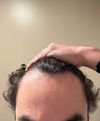
People who experience diffuse thinning of their hair and how they cope with going swimming. People discussed wearing a swimming cap, making jokes out of it and accepting that it's genetics.
Topical minoxidil being a difficult product to apply, with users considering finasteride, RU58841, and oral minoxidil as alternative treatments for diffuse thinning hair. Other advice includes shaving the head in the first 3 months of using minoxidil and finding ways to apply it without saturating the hair.
A 28-year-old male has been using 5% minoxidil, derma stamping weekly, and daily scalp massages to address hair loss. He is hesitant to use DHT inhibitors like finasteride or dutasteride despite suggestions from others.
A user's successful hair regrowth over 33 months using daily finasteride and minoxidil, microneedling 2-4 times per month, and maintaining a healthy lifestyle. The user's progress has inspired others to consider similar treatments for hair loss.
This user experienced improvements in their hair density and texture through the use of finasteride (1.25mg) and minoxidil (5%) applied topically once a day over 8 months, with no reported side effects other than slightly lowered libido.
The conversation is about using scalp massaging and Theramid copper peptides for hair loss, with OP reporting slight improvement after four months. OP applies the peptides once daily and massages the scalp twice a day.
The user is experiencing aggressive hair loss and has been using minoxidil with initial success but is now seeing thinning again. They are considering starting finasteride and dermarolling while waiting for a dermatologist appointment.
Using liposomal solutions with dutasteride, minoxidil, and tretinoin worsened hair loss due to buildup and scalp issues. Consulting a professional and returning to simpler treatments like finasteride and minoxidil improved the situation.
The user started using topical minoxidil and derma stamping for hair regrowth, along with multivitamins, biotin, and saw palmetto. Many suggest adding finasteride for better long-term results, but the user is hesitant due to potential side effects.
Microneedling may risk scarring, potentially complicating future hair transplants. Alternatives like tretinoin with minoxidil are suggested for better hair growth.
A female experienced hair loss due to low iron and an undiagnosed thyroid issue, specifically Hashimoto's, and saw improvement after starting thyroid medication, iron supplements, and making lifestyle changes. She emphasizes the importance of addressing the root cause and shares her journey to regrowth and emotional recovery.
The conversation is about using a 0.5 mm dermaroller for microneedling alongside finasteride and minoxidil for hair loss treatment. The user seeks advice on different dermarollers and how often to replace them.
A human trial of verteporfin, a drug that can inhibit wound healing by scarring and promote regeneration of original tissue and hair follicles to provide an unlimited source for hair transplants; people discussed the potential of this drug and how it could be rolled out in mainstream with more doctors getting on board.
Thin, short hairs often appear in areas of hair loss but may not grow fully despite treatments like finasteride. Some users consider additional treatments like microneedling or hair transplants.
The user is experiencing hair thinning and is considering using minoxidil. They are concerned about the progression of hair loss and whether it will lead to complete baldness.
The user reports regrowth after 5 months using Minoxidil, finasteride, microneedling with a derma stamp, Nizoral shampoo, multivitamins, and biotin, and has shared progress pictures. They apply treatments daily, microneedle twice a week, and exercise regularly, noting an improvement in their mental well-being.
A 20-year-old is experiencing hair thinning and is considering Clascoterone and Minoxidil as treatments, avoiding finasteride due to concerns about fertility and hormones. A suggestion was made to use Clascoterone for local DHT targeting and combine it with Minoxidil for maintenance and regrowth while avoiding systemic side effects.
A user shared progress pictures claiming significant hair regrowth using topical minoxidil, finasteride, and weekly microneedling, but faced skepticism and accusations of using someone else's photos. The user clarified that both they and a friend used these treatments, with the friend showing results in the pictures.
The conversation is about using topical tazarotene with minoxidil for hair loss treatment. A user suggests using a lower strength than 0.025% for daily application.
The user experienced noticeable hair regrowth after using finasteride for 2 years, oral minoxidil for 1 year, and recently starting dermarolling. The right temple shows significant improvement, while the left remains similar.
A user received a prescription for a topical solution with Minoxidil 7%, Finasteride 2%, and Tretinoin 0.01%, to be used twice daily for three months. They are concerned about the safety of these dosages compared to commonly recommended lower dosages.
The conversation is about a user sharing their positive progress with hair regrowth using oral minoxidil, biotin, finasteride, and other supplements. The user also mentions using a HIMS oral fin/min combo and receives advice and encouragement from others.
User shared progress pictures after 3 months of using 1mg finasteride, 5% minoxidil, a dermaroller, and castor oil. They humorously commented on their results.
A user with diffuse thinning experienced no hair regrowth with finasteride or Avodart but slowed hair loss with Avodart. They are considering trying Minoxidil and are seeking advice on whether to use foam or liquid, and if combining it with other treatments could be beneficial, excluding micro-needling due to scalp irritation concerns.
Microneedling with needle lengths of 1.5mm to 2.5mm to stimulate hair follicle stem cells for potential hair growth. Using needles longer than 2.5mm is not recommended due to risk of puncturing veins in the scalp. A dermastamp is suggested over a roller.
The user has been using oral dutasteride and topical minoxidil for 8 years, added oral minoxidil 6 months ago, but continues to experience hair thinning despite reduced shedding. They are considering checking iron levels, switching medication brands, and exploring other treatments like RU58841.
Hair loss may be caused by calcification of capillaries in the scalp, restricting blood flow to hair follicles. A daily treatment regimen including high doses of Vitamins D and K, Magnesium, and Nattokinase could potentially decalcify these capillaries, improving blood flow and hair growth. However, some users warn against excessive Vitamin D intake and emphasize the need for medical consultation.
User seeks participants for Verteporfin group buy. Verteporfin, FDA approved, may regenerate hair follicles and sweat glands through heavy microneedling.
The user shared progress pictures after 2 months of using Minoxidil 5%, Forcapil, and dermarolling 1.5mm. They experienced initial shedding but noticed slow hair regrowth.
A user's 15 month progress with finasteride and minoxidil treatments, which have produced great results. Microneedling depth and frequency were discussed in the replies.