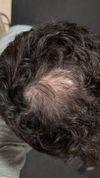
Dr. Bloxham's 9-month update on FUT scar revision with Verteporfin shows promising results. Excitement is high for FUE, which appears highly effective based on Dr. Barghouthi's findings.
The conversation discusses using minoxidil and finasteride for hair loss, with concerns about absorption and considering adding tretinoin for better results. Microneedling is suggested as a method to improve absorption, with varying depths and frequencies recommended.
The user had a hair transplant of 3400 grafts, primarily focusing on the hairline, and is happy with the results four months post-surgery. They used topical minoxidil, oral minoxidil, finasteride, and topical dutasteride, along with microneedling and Nizoral, and the procedure cost around $12,000.
Verteporfin reduces scar tissue in hair transplants but doesn't significantly regrow hair follicles. More testing is needed to determine its effectiveness.
The user has been using topical finasteride and minoxidil for two years with decent regrowth and recently added microneedling to their routine. They are questioning if the small hairs observed are new regrowth from microneedling or just vellus or miniaturized hairs.
A user suggests that deeper microneedling with Verteporfin injections might help regrow hair in areas with scar tissue, alongside a DHT blocker. Another user explains that hair loss might be due to reduced Wnt/β-Catenin signaling and suggests that treatments like Minoxidil, Finasteride, and microneedling could potentially reverse it.
Exploring the potential of using Verteporfin to grow follicles in combination with microneedling, as well as the cost of administering a single injection and the possibility of combining it with minoxidil.
The conversation discusses concerns about microneedling potentially causing damage before a hair transplant, with users sharing their experiences and techniques. Specific treatments mentioned include using a dermapen at various depths and speeds, with some users advising against self-treatment.
A hair restoration case involved injecting four different doses of Verteporfin into the mid scalp and using Scalp MicroPigmentation (SMP) around the extraction areas. Photos were taken and an update will be shared soon.
User had minor hair transplant in 2020, used Fin since 2008, Min since 2014, and added microneedling in 2022. Routine was irregular with no severe effects.
The conversation discusses the potential for Verteporfin to reduce scarring, making hairline lowering surgeries more viable for men with mild hair loss. The user suggests that if scarring can be minimized, men might opt for hairline lowering instead of using grafts for other areas.
A user had a 2250 graft hair transplant using both FUT and FUE methods, and is currently using finasteride, minoxidil, multivitamins, and biotin. Opinions vary on the effectiveness and appearance of the procedure, with some suggesting additional treatments or considering alternative options like shaving or using a hair system.
The conversation discusses hair transplants, including the use of techniques like FUE and the importance of a good donor area to avoid visible bald patches. It also touches on alternative treatments like Minoxidil, Finasteride, and Pyrolutimide, and debates the idea of embracing baldness versus seeking treatments.
The user has been using Minoxidil, finasteride, and a dermaroller for a year with little effect on hair loss. They are considering a hair transplant and are questioning the number of grafts needed and the feasibility of transplanting onto a partially bald scalp.
Microneedling before a hair transplant may harden the scalp and affect blood circulation, potentially impacting graft growth. Some users report successful transplants after microneedling, while others advise caution and consulting with a surgeon.
The conversation discusses the delay in bringing FAK inhibitors and Stanford's hydrogel to market for hair transplants, with a preference for FAK inhibitors over Verteporfin due to their superior potential in preventing scarring. The user expresses frustration over the slow progress and hopes for faster development by companies like FAKnostics.
A person had three hair transplant surgeries using 7,600 grafts from scalp, beard, and chest, along with finasteride and minoxidil. Reactions are mixed, with suggestions for alternatives like hair systems or scalp micropigmentation.
A human trial of verteporfin, a potential treatment for hair loss, with some users noting potential improvements in scarring and overall healing compared to control areas.
The conversation discusses using minoxidil and microneedling to potentially thicken small hairs on the forehead after a hair transplant. It also mentions the importance of using an oral DHT blocker for hair growth.
The use of tropoelastin injections and verteporfin for hair transplant recipients to help regrow donor area hairs, as well as research done on tropoelastin injections restoring elastin in scarred heart tissue and skin. There are discussions about why it is taking so long to get cosmetic mass produced tropoelastin injectables on the market.
The user is considering minoxidil, clascoterone, and fluridil for hair loss, avoiding finasteride and RU58841. They are also contemplating a hair transplant and exploring the resilience of transplanted hair without finasteride.
A user shared their positive experience with a hair transplant at Wimpole Clinic, performed by Dr. Malkani, and discussed using finasteride at a reduced dose due to side effects. They also mentioned avoiding minoxidil due to heart pain and taking supplements like biotin, marine collagen, viviscal, and krill oil.
A user shared their experience with hair loss, using finasteride and minoxidil, and eventually undergoing a hair transplant of 1800 grafts. They regret not starting finasteride earlier and mention that despite the transplant, their scalp is still visible under strong light.
A user shared their experience with a beard-to-scalp hair transplant, noting no visible scars and improved hair density using finasteride and minoxidil. The conversation discusses the differences between beard and scalp hair, potential changes in hair texture, and the use of beard hair for increased scalp coverage.
Follica's preferred microneedling protocol for hair growth, which includes needle depth, frequency and movement parameters as well as the use of topical treatments such as minoxidil and finasteride.
Verteporfin might be a potential cure for hair loss and could heal scars, which may lead to natural-looking results when combined with hairline lowering surgery. One person suggests waiting to see if verteporfin actually works as claimed.
Microneedling combined with tretinoin is discussed for its effectiveness in treating hair loss. Minoxidil, finasteride, and RU58841 are also mentioned as potential treatments.