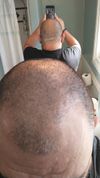
A dermatologist prescribed a topical solution with 7% minoxidil, 0.1% finasteride, and 0.015% tretinoin from Medrock pharmacy. The user is asking if anyone has tried it and if it contains alcohol.
Musely sells a hair topical solution containing latanoprost, which degrades in 6 weeks, yet they market it as a 3-month supply. Concerns are raised about the product's effectiveness and the company's sales strategy.
A user shared their successful hair regrowth journey using 1mg finasteride daily, 1ml minoxidil nightly, and weekly 1.5mm microneedling. They reported some side effects like reduced semen thickness but are satisfied with the results and recommend topical minoxidil over oral.
The conversation discusses the use of vasodilators like Minoxidil, L-arginine, and Niacin for hair regrowth, with Minoxidil causing intolerable side effects for the original poster. It also highlights that certain medications, including Lisinopril, antidepressants, and statins, can cause hair loss.
Pregnancy can temporarily reverse hair loss in women, but attempts to mimic pregnancy hormones with treatments like contraceptive pills, spironolactone, estradiol, progesterone, finasteride, and minoxidil have been ineffective. The discussion highlights the need for research into the hormonal mechanisms of pregnancy that affect hair regrowth.
The conversation discusses using minoxidil foam as a solvent for topical finasteride. Ingredients of minoxidil foam include butane, cetyl alcohol, glycerin, and purified water.
KX-826 is undergoing trials for hair loss treatment, showing similar effectiveness between 0.5% and 1.0% dosages, with mild side effects compared to finasteride. Users discuss combining KX-826 with other treatments like minoxidil and clascoterone for better results.
The user experienced significant hair regrowth using a combination of oral minoxidil (5mg) and dutasteride (0.5mg) along with monthly mesotherapy injections. Despite the progress, the user plans to proceed with a hair transplant to address a receding hairline that hasn't fully responded to the treatment.
PP405 is a potential hair loss treatment undergoing trials, with discussions on its effectiveness and comparison to existing treatments like finasteride and minoxidil. There is skepticism about its status as a cure, with hopes for future advancements in genetic treatments like CRISPR.
The user is exploring topical Saw Palmetto as a milder alternative to microdosing topical Finasteride for hair loss, aiming to minimize systemic DHT impact. They plan to experiment with this herbal remedy for a year to assess its effectiveness on their mild androgenetic alopecia without significant side effects.
The conversation is about hair loss treatments, specifically using finasteride, minoxidil, and biotin, with a focus on the effectiveness of Hims products. Users discuss the results, potential side effects, and the role of biotin in the treatment.
The user reported significant hair growth progress after 6 months using 5mg oral minoxidil, 0.1mg dutasteride, 1.1mg finasteride, and 1mg biotin. They experienced some hair shedding but no noticeable side effects, and they regret not starting the treatment earlier.
Minoxidil should be applied first, allowed to dry, then emu oil can be applied. Emu oil is recommended for daily use, but it may not need to be washed off daily.
The conversation is about a 23-year-old man's positive experience with hair regrowth using oral finasteride (1mg daily) and topical minoxidil (twice daily), with initial side effects including zero libido and watery semen that resolved except for the semen consistency. He also used dermarolling initially but stopped due to brittleness.
A 19-year-old in France is experiencing hair loss after COVID-19 and is using Minoxidil, considering Finasteride but facing challenges in obtaining it. Users discuss Minoxidil's effectiveness, potential issues like crystallization, and alternative products like Foligain.
The user is frustrated with their dermatologist's refusal to prescribe oral Minoxidil and Finasteride for hair loss, despite starting Finasteride recently. They consider discussing oral Minoxidil with their primary care doctor and exploring telehealth options.
Using topical Minoxidil, Finasteride, and Tretinoin, along with low-dose Accutane, may enhance hair growth. Tretinoin is believed to improve Minoxidil absorption.
The user discusses using Minoxidil for hair loss and is considering RU58841 to reduce excessive oil production. They seek advice on RU58841's effectiveness in blocking sebum production.
The user added melatonin to their 5% minoxidil solution for hair growth, using a concentration of 0.0033%, which equates to roughly 2mg for a 60ml bottle. They later reported no significant difference and planned to continue the treatment for a few more months before potentially stopping to observe any changes in shedding.
The conversation discusses hair loss treatments, specifically the progress made with Pyrilutamide over 15 months. One person suggests using oral Minoxidil or Dutasteride, but another mentions experiencing negative side effects from oral Finasteride.
The user is seeking Malassezia-safe treatments for hair loss and currently uses a baby shampoo, a scalp tonic with antifungal ingredients, and aloe gel. They consider using Kirkland Minoxidil 5% drops and possibly consulting a doctor about Finasteride.
The user has been using finasteride for 10 months with no significant regrowth but no further hair loss and is considering adding oral minoxidil despite concerns about side effects. Other users suggest combining finasteride with minoxidil for better results, as finasteride prevents further hair loss while minoxidil aids regrowth.
The conversation discusses a hair loss treatment regimen involving minoxidil, finasteride, RU58841, JXL069, and nizoral shampoo. The user reports seeing new black dots in areas where hair hasn't grown in years, suggesting potential regrowth.
The user shared progress pictures after using Minoxidil and oral Finasteride for eight months to treat hair loss. They experienced significant hair regrowth, and the discussion includes various opinions on the necessity and effectiveness of these treatments.
Retinoids, like Retin-A and retinol, can be beneficial when used with minoxidil for hair loss. Retin-A is the strongest and requires a prescription, while retinol is over-the-counter.
Adipose-derived stem cell secretome showed significant improvement in hair density and growth, especially when combined with minoxidil, suggesting a synergistic effect. The study had limitations, including a small sample size and potential bias.
Minoxidil can prevent hair follicle miniaturization, not just stimulate hair growth. Finasteride and dutasteride don't work for everyone, suggesting DHT may not be the sole cause of hair loss; hair loss could be due to multiple factors, including autoimmune conditions.
The conversation discusses hair loss treatments, specifically Setipiprant, finasteride, and bimatoprost. Setipiprant is suggested for maintenance, while bimatoprost is for regrowth, and combining them with dermarolling is recommended for better results.
User experienced 6 months progress using dut 0.5 daily and oral Minoxidil 5mg daily, with some side effects. Others congratulated and shared similar experiences, giving hope.