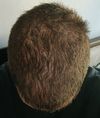
Sprocketshead asks if pyrilutamide can be applied with minoxidil, and inquires about its consistency and odor. They want to know if it's more high maintenance than topical minoxidil.
Topical minoxidil being a difficult product to apply, with users considering finasteride, RU58841, and oral minoxidil as alternative treatments for diffuse thinning hair. Other advice includes shaving the head in the first 3 months of using minoxidil and finding ways to apply it without saturating the hair.
A 28-year-old male shared his 2.5-month progress using 1 mg finasteride every other day, minoxidil daily, and occasionally castor oil and dermarolling. He also stopped using hair products daily.
Oral minoxidil combined with isotretinoin may improve hair loss treatment effectiveness. Tretinoin is known to increase the absorption of topical minoxidil.
A user stopped using finasteride and switched to a mix of essential oils in jojoba oil to treat hair loss, which reduced itching and hair shedding significantly. They shared their experience, noting that dermatologists were not helpful.
Finasteride and minoxidil do not negatively interact with multivitamins, omega-3 fish oils, biotin, magnesium glycinate, or collagen peptides. Users report no issues taking these supplements alongside their hair loss treatments.
An 18-year-old woman experiencing hair loss due to stress, possible PCOS, and low vitamin D is concerned about starting 5% minoxidil foam, prescribed by her doctor, due to potential facial hair growth. She is also using a topical steroid for scalp sensitivity and pain.
The user is experiencing hair fall and is using a nonsulfate Maui Hibiscus shampoo and conditioner, washing twice a week, and applying a warm mixture of castor and olive oil. They seek advice on a proper haircare regime and product recommendations for low porosity hair.
A user is seeking recommendations for a minoxidil and tretinoin topical solution, including dosage and purchase locations in the US. They are looking for effective hair loss treatments.
The conversation discusses creating a mix of essential oils for hair regrowth, questioning the proper mix ratio for single or multiple oils. It also mentions using finasteride and minoxidil for hair loss treatment, alongside oils, shampoos, and microneedling to improve scalp conditions for hair regrowth.
A user reported hairline regrowth after two weeks on a treatment including finasteride, peppermint and rosemary oils, emu oil, magnesium oil spray, apple cider vinegar, and dermarolling, while avoiding shampoos and conditioners. They believe DHT contributes to hair loss but also suggest follicle fibrosis is an issue.
A double-blind clinical study that found ingestion of tocotrienols resulted in a 34.5% increase in hair regrowth compared to the placebo group, and discussion about potential side effects and cost of supplementation with vitamin E pills. The conversation noted that it may be more effective than commonly used treatments like minoxidil and finasteride.
Minoxidil, finasteride, and dutasteride are effective for hair loss. Alternative treatments like oils and supplements are less effective and more costly.
Rosemary essential oil, particularly cineole, is considered by some to be beneficial for hair growth, though its effectiveness compared to minoxidil is debated. Finasteride, minoxidil, and ketoconazole shampoo are recommended treatments, while oils like rosemary and peppermint are seen as supplementary for scalp health.
Microneedling with finasteride, minoxidil, DMSO, and black seed oil shows mixed hair regrowth results. There are concerns about DMSO's safety and effectiveness.
An 18-year-old experiencing balding since age 15 is seeking alternatives to minoxidil for hair regrowth, currently using rosemary oil and a 0.5mm derma roller. They are unsure about the proper use of these treatments.
The conversation is about the effectiveness of a hair loss treatment product containing 0.01% Latanoprost, with the user considering trying it as a vehicle for RU58841. The user questions whether the dosage is too low to be effective.
The user noticed a significant improvement in hair loss after 3.5 months using a topical treatment of 7% Minoxidil, 0.1% Finasteride, and 0.025% Tretinoin, which was prescribed and shipped from a pharmacy in Indiana. Other users discussed alternative products with varying concentrations of Minoxidil and Finasteride.
A user is seeking suggestions for a custom hair lotion mix containing minoxidil, finasteride, caffeine, niacinamide, and biotin. Another user suggests adding tretinoin, topical valproate, and bimatoprost.
Switching from topical to oral minoxidil and whether to continue microneedling. Users suggest using a derma stamp instead of a roller for better results and safety, and some recommend combining it with oils like rosemary.
A 24-year-old shared their three-month hair regrowth progress using Minoxidil 5% liquid and a natural hair oil, while considering finasteride and other treatments. Users discussed the effectiveness of various treatments, including topical finasteride, nizoral, and the importance of addressing DHT as a cause of hair loss.
A user is asking about the effectiveness of "Minoxidil tincture 5% Purified Water" compared to other Minoxidil 5% products. They experienced itching and redness with other Minoxidil products and suspect they might be allergic.
The conversation discusses experimenting with Sandalore for hair loss and concerns about its authenticity compared to sandalwood oil. Minoxidil, finasteride, and RU58841 are also mentioned as treatments.
A 25-year-old is using vinpocetine to enhance the absorption of topical Minoxidil for hair loss. They also use a hair tonic and supplement with Glycine, Taurine, Creatine, and Citrulline.
Exosomes, cetirizine, melatonin, latanoprost, and caffeine are discussed as potential hair loss treatments. There is skepticism about the effectiveness of exosomes, especially in topical form, but some users report positive results.
Liposomal formulations of finasteride and minoxidil may enhance drug delivery to the skin and hair follicles more effectively than traditional solutions, potentially improving treatment outcomes. However, more human clinical trials are needed to confirm these benefits.
The user is seeking advice for frizzy hair, having tried coconut oil without success and considering Olaplex products. They are looking for effective product recommendations.
A 17-year-old is experiencing genetic hair loss and is considering treatments like Minoxidil, Rosemary oil, or Finasteride. They have a vitamin D deficiency but believe it is not the cause of their hair loss.
Hair fall has stopped, but growth is slow after 4 months of using topical minoxidil and finasteride, along with weekly rosemary and peppermint oil. No side effects have been experienced so far.