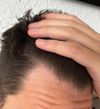
A user trying various treatments for hair loss, such as minoxidil, stemoyxidine, alfatradiol, and microneedling, with plans to add tretinoine and finasteride.
The conversation is about treatments for androgenetic alopecia, focusing on hyperresponders. Treatments include Minoxidil, finasteride, RU58841, leg training, and cold therapy.
The user is taking Dutasteride, Finasteride, Estradiol, Spironolactone, and Progesterone for hair regrowth and is considering adding Minoxidil and rosemary oil. They are experiencing some hair regrowth and are consulting a dermatologist to avoid a hair transplant.
Low-dose oral minoxidil shows mixed results, with some users experiencing hair regrowth and others seeing no significant change. Finasteride is also commonly used, often in combination with minoxidil, and is generally considered effective with a low rate of side effects.
A 20-year-old with thinning hair has low vitamin D and normal testosterone. They are prescribed oral minoxidil and vitamin D, and are questioning if finasteride is also necessary.
Topical spironolactone 5% is being discussed for its effectiveness in treating hair loss, specifically receding temples. The user is inquiring if it works similarly to finasteride as a testosterone blocker.
The user is experiencing hair loss and has been using RU58841 but is considering pyrilutamide and minoxidil, avoiding finasteride due to side effects. Another user suggests finasteride or dutasteride as essential, possibly in topical form, while dismissing saw palmetto as ineffective.
The user has been using oral minoxidil and topical finasteride for over a year with good results but is considering adding mesotherapy with dutasteride due to concerns about side effects and is seeking advice. Another user suggests continuing with oral finasteride or dutasteride, while another supports mesotherapy for its benefits and professional oversight.
An 18-year-old woman experiencing hair loss due to stress, possible PCOS, and low vitamin D is concerned about starting 5% minoxidil foam, prescribed by her doctor, due to potential facial hair growth. She is also using a topical steroid for scalp sensitivity and pain.
The conversation is about the effectiveness of a hair loss treatment product containing 0.01% Latanoprost, with the user considering trying it as a vehicle for RU58841. The user questions whether the dosage is too low to be effective.
A user's experience with using 5AR inhibitors (Finasteride and Dutasteride) in combination with Minoxidil foam and microneedling, which resulted in substantial improvements to their crown density and hairline, despite high systemic levels of testosterone and dihydrotestosterone.
Latanoprost is discussed as a potential hair loss treatment, noted for its synergy with minoxidil and 5-AR inhibitors, but concerns include its effectiveness on scalp hair, cost, and potential skin darkening. Some users express interest in trying latanoprost or bimatoprost despite limited real-world evidence.
A 52-year-old male with Multiple Sclerosis is considering using Finasteride and Testosterone Replacement Therapy (TRT) for hair loss but is advised to lose weight first to avoid side effects. He is currently focusing on diet, weight loss, and using Rogaine and microneedling for hair treatment.
A user on dutasteride and oral minoxidil for two years has experienced worsening hair loss and an itchy scalp. Suggestions include increasing medication doses, trying other treatments like RU58841, getting a scalp biopsy, and addressing potential inflammation through diet and topical treatments.
User explores no-finasteride hair loss treatments, considering compounds like Minoxidil, Eucapil, Alfatradiol, Stemoxydeine, Azelaic Acid, Retinol, and Ketoconazole Shampoo. They ask about mixing compounds, application schedules, and potential side effects.
Dutasteride is preferred over finasteride for hair loss due to fewer side effects. Combining dutasteride with minoxidil and RU58841 is effective for hair regrowth, even during steroid use.
A user shared their 11-year experience with spironolactone and nearly 5 years with finasteride for hair loss, recently adding oral minoxidil and stopping birth control. Various treatments were discussed, including organic options, checking for underlying health issues, considering dutasteride, and the potential role of progesterone in hair loss.
The user is seeking advice on which treatment to add to their current regimen for male pattern baldness. They have previously tried Dutasteride, Nizoral, and oral Minoxidil, but experienced continued hair loss. They are specifically asking for experiences with RU58841, Stemoxydine, or Alfatradiol.
The user experienced side effects from finasteride and is considering adding Alfatradiol or Fluridil to their regimen, which includes Minoxidil, dermarolling, and ketoconazole. Fluridil is noted to be more effective than Alfatradiol but less effective than finasteride, with mild side effects reported.
The user tried finasteride for a year without success, then switched to dutasteride and oral minoxidil for 10 months, still experiencing hair loss. Adding RU58841 and topical minoxidil seemed to improve their condition, with new hair growth observed.
The user reports that their hair loss treatment with oral minoxidil, dutasteride, finasteride, topical minoxidil, ketoconazole shampoo, and microneedling has plateaued, with no significant additional regrowth. They have stopped using creatine to simplify their regimen and are relieved with the current state compared to before treatment.
A man in his 40s treating his slow balding with a daily regimen of 2.5% spironolactone topical solution and Piroctone Olamine Shampoo. Despite initial hair shedding, he experienced no side effects and plans to continue the treatment for at least a year.
The user has been using finasteride and oral minoxidil for hair loss, but experienced increased hair loss after using testosterone steroids without post-cycle therapy. They are considering switching to dutasteride and have added ketoconazole shampoo to their routine, but are concerned about side effects and the ongoing hair loss.
The conversation discusses using tretinoin as an additional treatment for hair loss alongside minoxidil, with plans to test its effectiveness by applying it to only one side of the scalp. The user intends to start this experiment after using minoxidil for a year.
The user is using RU58841, Minoxidil, and weekly microneedling for hair loss, having stopped finasteride due to side effects like low libido and depression. They are considering dutasteride as an alternative but are cautious due to past experiences with DHT blockers.
The user has been using minoxidil daily, finasteride three times a week, and ketoconazole 1-3 times a week for a year to treat hair loss, resulting in noticeable hair regrowth at the hairline and temples, with minor side effects like itching and dandruff. They started with minoxidil a month before the other treatments and experienced an initial shedding phase for about six weeks.
A user is concerned about using more minoxidil than prescribed to cover their hair loss area and mentions taking spironolactone pills. Another user advises against men taking oral spironolactone due to significant hormonal effects.
The conversation discusses whether using pyrilutamide would interfere with minoxidil's ability to regrow hair, considering pyrilutamide is seen as a maintenance drug that stops shedding, while minoxidil promotes hair growth but causes initial shedding.