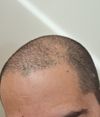
KX-826 shows promise for hair maintenance at higher doses with minimal side effects, despite failing Phase III trials. The user believes it is more effective than Minoxidil, Finasteride, and RU58841.
A user is considering switching from finasteride to dutasteride after minimal success with finasteride, minoxidil, and other treatments. Another user reports positive results with dutasteride after switching from finasteride.
The user has been using finasteride for over four years with minimal side effects, successfully stopping hair thinning and achieving some regrowth. They shared progress photos, but some commenters requested clearer pictures of the crown to better assess the treatment's effectiveness.
A user has been on finasteride for over a year with minimalhair regrowth and is considering stopping it, despite no side effects. They are also planning a hairtransplant and seeking additional hair growth treatments, while managing high testosterone and scalp issues like dandruff and oiliness.
Topical finasteride with hydroxypropyl chitosan shows significantly less serum absorption and minimal DHT reduction compared to oral finasteride. Users need the specific chitosan formulation to avoid side effects seen with regular ethanol+PG solutions.
Hair loss discussion includes topical Spironolactone's effectiveness and minimal side effects. Community members share personal experiences and opinions on its use.
Finasteride is effective for treating male pattern baldness (MPB) with minimal side effects, and topical finasteride is similarly effective. Dutasteride is also effective but less understood, and Minoxidil is less effective than Finasteride.
The conversation discusses hairtransplants, including the use of techniques like FUE and the importance of a good donor area to avoid visible bald patches. It also touches on alternative treatments like Minoxidil, Finasteride, and Pyrolutimide, and debates the idea of embracing baldness versus seeking treatments.
Use minoxidil and finasteride for 1-2 years to promote regrowth and stabilize hair loss before a transplant. Long-term use of these medications is needed to maintain results and prevent further loss.
A 20-year-old experiencing hair loss since age 16 is using finasteride and minoxidil and is considering future hairtransplants. Discussions include the potential for multiple transplants, the use of body hair for coverage, and the importance of treatments like dutasteride and scalp micropigmentation for maintaining hair density.
A 20-year-old is using minoxidil, finasteride, tretinoin cream, and microneedling for hair loss but sees no improvement in the crown area and is considering a hairtransplant. Users advise patience with finasteride and suggest trying a low-dose oral minoxidil if no progress is seen.
The user has been using topical 5% minoxidil for six months with minimal results and is worried about greasy hair and potential side effects of adding finasteride. Others suggest combining minoxidil with finasteride for better results, while discussing potential side effects like erectile dysfunction.
An 18-year-old experiencing hair loss is considering using minoxidil and finasteride after minimal growth with a serum containing procapil, redensyl, rosemary, anagain, and aminexil. A suggestion was made to consult a doctor and consider using finasteride and minoxidil if androgenetic alopecia is diagnosed.
The conversation discusses using a low dose of topical finasteride to achieve hair benefits with minimal systemic exposure. Users share experiences and opinions on dosing, systemic buildup, and side effects of both topical and oral finasteride.
The user has been on Finasteride and oral Minoxidil for hair loss and experienced minimal side effects. They suggest that a healthy lifestyle, including good sleep, exercise, diet, skincare, and mental health care, may help reduce the perceived side effects of Finasteride, although another user disagrees, emphasizing that side effects can vary and may not be mitigated by lifestyle alone.
A user who decided to shave their head after trying PRP for hair loss with minimal results, and the replies which commended them on how good they looked without it.
The conversation is about someone considering a hairtransplant due to ineffective hair loss treatments, with suggestions ranging from trying a hairpiece to continuing with medications like finasteride and minoxidil, and waiting for new treatments. Some advise against a transplant due to the extent of hair loss and the cost, while others share different views on the effectiveness of transplants and non-surgical options.
The user is considering a hairtransplant to increase hair density after using finasteride and minoxidil for two years. They prefer a natural hairline and are unsure if a transplant is suitable for overall thinning.
A 22-year-old had a 3,500 graft hairtransplant to restore his original hairline and improve density, while using dutasteride and oral minoxidil to manage hair loss. He believes being proactive with medication prevented further loss and allowed for a successful transplant.
The conversation discusses GT20029, a drug in Phase II trials that targets androgen receptors with minimal systemic effects, and TDM-105795, a growth stimulant with a different mechanism than minoxidil that may revive papilla stem cells. Both are potential new treatments for hair loss.
The user had a hairtransplant in Toronto to restore their hairline and crown, using 2400 grafts in the first procedure and is happy with the results. They are using Minoxidil and finasteride, and note that their hair is thinner on the back and sides due to graft removal.
A user is excited about scheduling a hairtransplant for July 1st, after 2 years of using Minoxidil, finasteride, and RU58841 with no regrowth. The transplant will cost €2500-€3000 for 1000-1200 grafts, and the user chose to have it done locally rather than traveling abroad to save money.
The user is considering a hairtransplant for crown hair loss but is anxious about recovery and results. They are debating whether to try oral minoxidil for 6-12 months before surgery and whether to address their hairline during the transplant.
The user is considering a second hairtransplant or scalp micropigmentation to address thinning in the crown area and hide scars from a previous transplant. They have been using finasteride and minoxidil for three years but are concerned about the appearance of their donor area and the effectiveness of scalp micropigmentation.
A user shared their positive experience with a hairtransplant surgery, detailing the process and results, including the use of 2800 grafts and post-surgery treatments like PRP. They also mentioned using finasteride, minoxidil, and supplements to maintain hair growth.
A 30-year-old shared their successful hair restoration journey using liposomal topical finasteride and minoxidil, vitamins, and a second hairtransplant in Greece, which significantly improved their hair density without side effects. The transplant cost $7500 and involved filling an old scar, with the user expressing gratitude for the life-changing results.
Body hairtransplants can be a last resort for hair loss, using body hair to fill scalp gaps, though it may not match scalp hair in texture or length. Minoxidil and finasteride are discussed as treatments, with varying effectiveness and side effects.
A 55-year-old man shared his successful hairtransplant results, using 9,100 grafts from his scalp and beard, and is also using minoxidil, finasteride, and multivitamins. The discussion includes opinions on the necessity of DHT blockers and the effectiveness of the transplant, with some users questioning the need for such procedures at an older age.