Search
for
Sort by
Community Join
180-210 / 1000+ resultscommunity Fin/Min/Keto/Biotin - New Spray Topical
A user shared their hair loss treatment routine, which includes minoxidil, finasteride, ketoconazole, biotin, dutasteride, and RU58841. They recommend starting with topical sprays and mentioned using a new combo spray from Hims UK.
community ChatGPT might've created a new chemical (RU99999)? 😏 jk
The conversation humorously discusses hair loss treatments, mentioning Minoxidil, finasteride, and RU58841. It jokingly suggests the creation of a new chemical called RU99999.
community My slick bald temples ( for about 7-8 years ) FIN MIN KETO MICRONEEDLING 2 months +
A user sharing their progress after using Fin, Minoxidil, keto diet, and microneedling for two months to attempt to regrow hair on bald temples. Other users replied with advice and support.
community starting my fin, topical min, keto shampoo + dermaroller journey today
Hair loss discussion includes treatments like hinoki tree oil and procyanidin b2. Experiences and effectiveness of these treatments are shared.
community minoxidil without propylene glycol?
Minoxidil without propylene glycol is sought to avoid dermatitis, with Rogaine foam and Tecflox suggested as alternatives. Users discuss using foam to prevent irritation and suggest heating it for easier application.
community 5 months (.015% fin topical, 5% min, Microneedle .75mm) - How's the Progress?
User is using a homemade topical treatment with .015% finasteride, 5% minoxidil, and microneedling at .75mm depth. They also use 2% ketoconazole shampoo, various oils, and are considering increasing finasteride concentration due to mixed results.
community (Almost) 3 months on fin+min & microneedle.
The user has been using 1mg finasteride every other day, 5% minoxidil daily, and microneedling every two weeks for three months to treat hair loss. They are happy with the progress and considering adding ketoconazole shampoo to their routine.
community HMI-115: What We Know So Far. HMI-115 (also known as BAY1158061) is a new pharmaceutical drug developed by a biopharmaceutical company called Bioinvent and licensed by Bayer
HMI-115 is a new drug developed by Bioinvent and licensed by Bayer, with mixed opinions on its potential effectiveness. Some users are skeptical and prefer proven treatments like Minoxidil, finasteride, and RU58841.
community Mixing minox with stemoxydine? As in mixing the solutions into one
Mixing minoxidil and stemoxydine is not recommended due to potential dilution and reduced effectiveness. Applying them separately with a time gap is suggested.
community Alternatives to Minox for pet safety
The conversation discusses alternatives to minoxidil for beard growth, focusing on a product called Neofollics Beard Growth Serum, which claims to be effective without using minoxidil. Concerns are raised about its ingredients and effectiveness, especially considering pet safety.
community Mixing fast drying minoxidil with Kirkland minoxidil?
A user is considering mixing fast-drying minoxidil with Kirkland minoxidil to reduce greasiness and drying time. They also use liquid minoxidil to apply RU58841 powder.
community Anybody here making his own oral minoxidil from minoxidil powder?
The conversation discusses making oral minoxidil from minoxidil powder as a backup plan due to the unavailability of packaged oral minoxidil in Turkey. The user has a capsule machine and some chemistry knowledge but lacks professional equipment.
community I am trying to buy pyrilutamide from this Chinese company, i found on website echemi, they told me 25gram/180 dollar, and this lab result they provided. Does this look legit to you guys ?
Hair loss discussion includes treatments like hinoki tree oil and procyanidin b2. Experiences and effectiveness of these treatments are shared.
community Pyrilutamide cease and desist from Kintor
Considering a hair transplant, using Pyrilutamide, the potential availability of CosmeRNA, and the significance of taking Minoxidil and Finasteride for long-term results.
community fin-min-keto-derma did not work for me. 24 yo
A 24-year-old tried minoxidil, finasteride, keto shampoo, and derma-rolling for hair loss but saw no improvement and is now at Norwood 5. They feel there's nothing more they can do and are considering going bald despite not liking the look.
community Hair Regrowth by Transdermal Dissolvable Microneedles Loaded with Rapamycin and Epigallocatechin Gallate Nanoparticles - PubMed
The conversation discusses hair regrowth using dissolvable microneedles loaded with rapamycin and epigallocatechin gallate nanoparticles. Specific treatments mentioned include Minoxidil, finasteride, and RU58841.
community KX-826 Phase 3 Results Are Out
KX-826 shows promising results for hair growth with fewer side effects, offering an alternative to finasteride and minoxidil. Users discuss combining it with minoxidil, dermarolling, and Nizoral for improved results.
community 3 months on topical Fin/Min spray
User shared progress pictures after 3 months using 5% topical minoxidil in the morning, 0.3% and 6% minoxidil topical spray in the evening, and Nizoral once a week. Photos show improvement in hair density.
community 2 months on topical fin/min ...
The user has been using a combination of 0.3% topical finasteride, minoxidil, ketoconazole, and microneedling once a week for two months with positive results and no side effects. They apply the treatment daily using a spray and have short hair, which makes application easier.
community 4 months of topical min, fin, keto, dermastamp, rosemary and peppermint oil
The conversation discusses a person's 4-month hair loss treatment regimen using topical minoxidil, finasteride, ketoconazole, a dermastamp, and rosemary and peppermint oils. Progress pictures are shared to show the results.
community Selling KY19382 powder a novel activator of Wnt/β-catenin signaling Product
Selling KY19382 powder, a novel activator of Wnt/β-catenin signaling, and Kolliphor EL liquid for vehicle formulation. KY19382 is a growth agonist.
community switching to Kirkland Min from Online Pharmacy min?
The user is considering switching from an expensive topical hair loss treatment containing 8% Minoxidil, 0.3% Finasteride, Retinoic Acid, and Hydrocortisone to a cheaper Kirkland brand Minoxidil. They are concerned about the effectiveness of the lower concentration and the absence of additional ingredients.
community 6 months of microneedling, minox, 1% keto, & biotin. Time for fin?
User experienced hair growth after 6 months using microneedling, minoxidil, ketoconazole, and biotin. Commenters suggest adding finasteride to treatment for better results and preventing further hair loss.
community Trichosol, polyethylene glycol, and DMSO
The user experiences irritation from alcohols in minoxidil and is considering alternatives like trichosol mixed with polyethylene glycol or DMSO. They seek advice on the best nonirritating option.
community Regrowth Progress. Nuclear Stack. Dut, Min, RU, Keto, Monthly Microneedling 30M.
The conversation is about hair regrowth progress using a combination of treatments: dutasteride, minoxidil, RU58841, ketoconazole, and monthly microneedling. The user reports that microneedling and topical minoxidil had the most impact on their hairline.
community 4 month progress/ RU58841,topical Min, ketoconazole shampoo, micro-needling
The conversation discusses a 4-month hair loss treatment progress using RU58841, topical Minoxidil, ketoconazole shampoo, and micro-needling. The user shares progress pictures taken at the start, after 1 month, and the current state, all under the same conditions.
community 3 months in, min/fin/microneedle
A user's progress with using Minoxidil, finasteride, and microneedling to treat hair loss; another user mentioned a Japanese study that found better results for hairy individuals on finasteride.
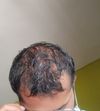
community 4 months of topical min/fin plus micro needling
The user has been using a topical solution of minoxidil 5% and finasteride 0.025% daily, along with dermastamping every two weeks and ketoconazole shampoo twice a week for four months. The treatment is for hair loss.
community Topical Min (Liquid) Ingestion
A user inquired about safely ingesting topical 5% Minoxidil due to the unavailability of oral Minoxidil in their country. They seek advice on diluting it to match the equivalent of 1mg oral Finasteride.