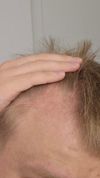
The user healthydudenextdoor starting a new topical anti-androgen hair loss treatment, Pyrilutamide, and discussing their current regimen of finasteride and minoxidil.
A user's progress with treatments for hair loss, including Dutasteride, Finasteride, Minoxidil, and RU. Other members of the conversation provided tips such as using Microneedling and Tretinoin to increase regrowth and wounding areas of the scalp that are thinning in order to fill them in.
A user's positive experience with finasteride for hair loss treatment, and another user's experience with minoxidil. They discuss the potential side effects of finasteride and the success they have had in regrowing baby hairs after several months of use.
The conversation discusses using T3 (triiodothyronine) as a topical treatment for hair growth, with some users noting it showed promising results in studies but lacked follow-up. Users express interest in trying T3 due to its potential effectiveness compared to Minoxidil.
Kintor's Pyrilutamide results for hair loss treatment will be released soon. The treatment may replace current treatments like finasteride and minoxidil without systemic side effects.
A YouTuber named Kevin, also known as Rider_Of_Roach, who deleted his YouTube channel due to personal attacks and controversy surrounding his views on hair loss treatments. He advocated for FDA-approved treatments like finasteride and minoxidil but faced backlash from those who disagreed with him. The conversation also discusses his past trolling behavior and a lawsuit he filed against a website that published false information about him. Despite some disagreements, many viewers appreciated his research-based content and hope to see him return in the future.
User discusses a promising topical Procyanidin B2 treatment for hair loss. Users share mixed experiences and mention effective treatments like finasteride, minoxidil, and LLLT.
Hair loss treatments, specifically, discussing the effectiveness and side effects of finasteride, minoxidil, and RU58841 in various microdoses. It also includes an updated graph which provides information on how different doses affect DHT levels, scalp skin and serum androgen levels, as well as hair count.
A user who has had positive results from using a regimen of microneedling, finasteride, minoxidil, peppermint oil, keto shampoo and DHT organic shampoo for hair growth. The conversation also addressed whether to use .5mg or 1mg of finasteride and the difference between dermapens and rollers.
A 24-year-old male experienced unexpected hair growth and improved skin and nails after adding daily vegetable juices, including carrot, spinach, celery, and beet, to his diet. He is not using any other treatments like minoxidil, finasteride, or RU58841.
The user experienced severe dandruff and hair loss, trying various treatments including oils, vitamins, and minoxidil. They found success by simply dampening their scalp with water twice a day, which improved their hair's appearance and eliminated psoriasis.
A 26-year-old is considering embracing baldness after mixed results and side effects from using dutasteride, minoxidil, and finasteride for hair loss. Suggestions include trying new hairstyles, considering a hair transplant, or focusing on self-acceptance.
A permanent hair loss solution could involve reprogramming hair follicles to resist DHT using mRNA and siRNA. However, high costs, safety concerns, and the pharmaceutical industry's preference for ongoing treatments over one-time cures are major obstacles, with finasteride and minoxidil remaining standard treatments.
A 35-year-old man had a 6400 graft hair transplant in Turkey after years of baldness, using finasteride, oral and topical minoxidil, and scalp micropigmentation. He is satisfied with the progress and plans further SMP touch-ups to enhance results.
The conversation critiques the influence of "Clavicular" on young men regarding hair loss treatments, highlighting the dangers of following unscientific advice and the rise of body dysmorphia. It emphasizes the importance of safe, medically advised treatments like minoxidil, finasteride, and dutasteride, while warning against reckless experimentation and early surgeries.
Topical Clascoterone showed a 539% improvement in hair count compared to placebo, but its effectiveness and safety are debated. Users compared it to minoxidil and finasteride, with mixed opinions on its potential release in 2026 or 2027.
PP405 is ineffective for miniaturized, fibrosed hair follicles in androgenetic alopecia. AMP303 may activate hair follicle stem cells, but minoxidil and finasteride are still the main treatments.
The user is experiencing a receding hairline and is considering treatments. They are seeking advice on whether to use finasteride, minoxidil, or both for hair preservation and potential regrowth.
Concerns about finasteride affecting sperm quality and embryo abnormalities during IVF. The user plans to stop finasteride for 6 months and use minoxidil, microneedling, a red light cap, and saw palmetto shampoo to manage hair loss.
The user is generally happy with their hair transplant results but has concerns about graft density and placement, particularly on the left temple and hairline. They are using finasteride and minoxidil inconsistently, plan to add Priorin, and are considering microneedling and PRP sessions for future care.
Oleic acid and ethanol are being considered for hair regrowth, with some users planning to self-experiment. There is skepticism about their effectiveness, and ongoing use of treatments like finasteride and minoxidil is mentioned.
The user is experiencing hair loss with possible causes including chronic telogen effluvium, diffuse alopecia areata, and androgenic alopecia. They have tried treatments like Nizoral shampoo, minoxidil, and finasteride, and are considering a biopsy for further clarity.
The user received 1600 hair grafts but is dissatisfied and plans a second transplant for better coverage. They use minoxidil and finasteride and are considering adding dutasteride.
Derma rollers may cause scarring alopecia, leading some to prefer dermastamps or dermapens for microneedling. Combining minoxidil with microneedling is effective, but proper technique and healing time are essential to prevent damage.
Dutasteride may not be effective for everyone due to underlying issues, suggesting scalp biopsies for further diagnosis. Users discuss using higher doses of dutasteride, topical treatments, minoxidil, and pyrilutamide for hair loss management.
Stopping finasteride often restores sexual function, with many experiencing improved libido and erections. Some users switch to minoxidil or topical finasteride to manage side effects while maintaining hair health.
KX-826 initially improves hair growth but declines after 24 weeks, with mild itching as a side effect. Combining it with minoxidil and finasteride may improve results, but long-term effectiveness is uncertain.
The conversation discusses why the difference between donor and balding hair isn't studied more to find a cure for hair loss. Treatments mentioned include Minoxidil, finasteride, and RU58841.
A user shared their positive hair transplant experience at Hairtran Clinic in Thailand, costing about $3600 for 3545 grafts, and mentioned being on oral finasteride and minoxidil for six months. Other users confirmed good results with the same clinic, noting it takes around six months to see significant improvement.