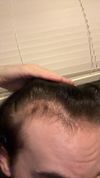
Hair loss treatments discussed include promising Pyr available online and Verteporfin dosing after FUE for follicle regeneration, but no updates on SCUBE3.
The conversation discusses hair loss treatments, specifically Minoxidil, finasteride, and RU58841. Concerns are raised about the lack of studies on RU58841 and its potential effects.
A user shared their 11-month hair regrowth progress using 1mg finasteride daily and topical minoxidil, noting significant improvement despite initial shedding. They advise continuing treatment through sheds and suggest starting finasteride before minoxidil if anxious about hair loss.
Replicel's results were delayed, but Shiseido might share data at BioJapan on October 11. Users are hopeful for new treatments like RCH-01, potentially eliminating the need for finasteride or minoxidil.
OP experienced side effects from finasteride and is considering using RU58841 to prevent hair loss during a testosterone cycle. They have also used minoxidil, Nizoral, alfatradiol, and fluridil successfully.
A 22-year-old has been using minoxidil and finasteride for four years with limited success and recently added microneedling to their regimen. They have seen some hair regrowth and are advised to continue using minoxidil alongside microneedling and consider lifestyle factors like diet and stress.
GT20029 and KX826 are promising hair loss treatments, with GT20029 increasing hair count and KX826 showing significant results. KX826 may be a good alternative for those who can't use finasteride or dutasteride, though results vary.
User 74775446 shares successful hair regrowth results using dermaroller/pen and minoxidil. Others discuss their experiences and concerns about finasteride side effects.
DLQ01, a prostaglandin F2α analog, shows promise for hair growth by directly stimulating PGE2/PGF receptors without needing conversion, and can be combined with minoxidil and retinoids like tretinoin for enhanced effectiveness. Minoxidil's efficacy may be reduced by COX-1 inhibitors, but using prostaglandin analogs like Latanoprost or Bimatoprost can help maintain its effectiveness.
The conversation discusses hair loss treatments, including Minoxidil, finasteride, and RU58841. It also mentions ongoing human trials for hair multiplication/cloning at Yokohama National University, with skepticism about the timeline.
Visible hair improvement after 10 weeks using minoxidil, estradiol enanthate, acetophenide algestone, and bicalutamide. The user is a 25-year-old male with reduced testosterone levels, expressing a preference for less masculinity.
A user underwent a hair transplant at Moart Clinic in Seoul, receiving 1100 grafts in the crown area after Dutasteride and oral Minoxidil failed to improve a stubborn bald spot. The procedure was successful, with minimal pain and good post-op recovery, costing $6900 USD before a tax refund.
A user discovered CosmeRNA, a new hair loss treatment with clinical research backing, set to release soon. The conversation revolves around its potential effectiveness, cost, and how it compares to existing treatments like Minoxidil and Finasteride, with some users expressing hope for a side-effect-free option.
PP405 increased hair density by 20% in 31% of participants, but results are considered underwhelming. Minoxidil and finasteride are seen as more effective treatments.
A 27-year-old is experiencing hair thinning and receding, currently using finasteride and planning to start minoxidil. They seek advice on hairline treatment options, including styling, PRP, peptides, and micro-needling.
The conversation is about the release timeline for clinical trial results and the availability of Breezula, a hair loss treatment. The user is not comfortable buying it as a research drug from China.
A person is microdosing estrogen for hair loss after finasteride and dutasteride failed, risking feminizing effects. Alternatives like minoxidil, RU58841, or hair transplants are suggested.
The conclusion of the conversation is that the user has experienced significant hair regrowth using a combination of medications, including dutasteride, RU58841, and minoxidil. They have not experienced any noticeable side effects and are considering a hair transplant in the future.
The user "jsonparquet" shared their 11-month progress using a combination of finasteride, minoxidil, microneedling, and Nizoral for hair loss. Other users expressed amazement and suggested waiting another year before considering a hair transplant. One user shared their own experience of slow but steady gains over 3 years using a regimen of topical finasteride and minoxidil.
A user inquired about purchasing KX-826 for hair loss if approved in China. Another user provided links to purchase it without waiting for U.S. approval.
The conversation discusses the effectiveness of RU58841 for hair loss compared to pyrilutamide, which failed to show significant hair regrowth in trials. Some users report personal side effects with RU58841 and question the criteria for success in hair loss treatments.
Microneedling may enhance hair loss treatment by increasing the effectiveness of topical minoxidil, especially for those lacking the necessary enzyme to activate it. It might also work by triggering growth factors and improving topical absorption.
Phase II for TDM-105795 for Androgenic Alopecia is set to begin in April 2023. The study aims to evaluate the efficacy and safety of TDM-105795 in male subjects.
A user experienced side effects from finasteride and switched to using GHK-Cu for hairline improvement, noticing some positive changes after three months. They used a 2mg daily dose via subcutaneous injections and reported increased hair density and baby hairs, though results were not dramatic.
The GT20029 tincture, a topical androgen receptor degrader, showed significant hair growth and good safety in a China Phase II trial for male androgenetic alopecia (AGA), with the 1% dose twice weekly identified as optimal. The company plans to initiate Phase III trials in China and Phase II in the U.S., and the treatment also shows promise for acne.
PP405 is being discussed as a potential hair loss treatment, possibly more effective than minoxidil. There are concerns about its effectiveness and product contamination, but some users report early signs of hair regrowth.
This post and conversation are about the molecular mechanisms triggered by microneedling, specifically its effects on inflammation, tissue remodeling, epithelial proliferation, differentiation, and collagen synthesis. The discussion highlights the potential benefits of microneedling for hair loss treatment.