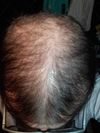
The post discusses the completion of the HMI-115 Australian Phase 1 Trial for hair loss treatment. The user speculates about the potential early release of the trial results.
A 30-year-old is seeking advice on hair loss treatment, currently using oral minoxidil, finasteride, mesotherapy, and a supplement. They are experiencing shedding and are anxious about the effectiveness of the treatment, asking if they should continue or consider other options like topicals or microneedling.
Exploring different treatments for hair loss, such as cosmeRNA and HMI-115 which are small interference messenger RNA that inhibits the DHT receptor and an antibody that binds to the prolactin (PRL) receptor respectively; and researching mechanism and environment of hyperresponders.
A 30-year-old man shared his 3-month progress using dutasteride, minoxidil, ketoconazole shampoo, and tretinoin cream for hair loss, reporting no side effects. He also takes supplements like Vitamin D3, Calcium, Magnesium, and Zinc, and plans to add Biotin.
The conversation discusses the potential of a new hair loss treatment, GT20029, which targets androgen receptors in the scalp and is in phase 1 trials in China. Users express hope that this treatment will be more effective than current options like Minoxidil and Finasteride.
A 52-year-old man has been using 5% Minoxidil twice daily for 30 days to treat hair loss, alongside 2.5mg Finasteride, which he reduced from 5mg despite his doctor's advice. He has a history of hair loss due to testosterone treatment and hopes to see improvement in the crown area of his scalp.
The conversation discusses why CB-03-01, a potential hair loss treatment, isn't widely discussed despite evidence of its effectiveness and safety. Some users mention other treatments like melatonin, procianidin b2, and RU58841, debating their effectiveness and safety.
PP405 and GT20029 are new hair loss treatments with different mechanisms from traditional options like Minoxidil and Finasteride. PP405 targets hair follicle stem cells to reactivate growth, while GT20029 works as an androgen receptor deleter, both requiring ongoing use for effectiveness.
The potential availability of a new hair loss treatment called HMI-115, which has shown promising results in experiments on monkeys but is not yet available to the public. Replies cautioned against using unproven substances from shady labs.
The conversation discusses hair loss treatments, specifically Minoxidil, finasteride, and RU58841. It also inquires about the timeline for the GT20029 phase 3 trial by Kintor.
A Phase 1 update for the HMI 115 clinical trial, which involves 16 participants and is expected to end in July 2023; as well as changes to the recruitment process, including treatment protocols with Minoxidil, Finasteride, and RU58841.
A 30-year-old male is experiencing hair regrowth after almost three months using 0.5mg finasteride, topical minoxidil once daily, and weekly microneedling at 0.5mm. The user follows a dermatologist's advice and is hopeful about the results.
CB-03-01, also known as Breezula, is being considered as an alternative to DHT blockers for hair loss. Users are discussing its effectiveness, potential regrowth, side effects like scalp irritation, and hormonal impacts.
A 28-year-old male started a hair loss treatment with 2.5mg oral minoxidil daily, 1mg finasteride every other day, and a 1.5mm dermaroller once a week. After two months, he believes he sees some progress.
The trial for TDM-105795 has been completed, and it was in phase 2A. The discussion seeks input on the next phases, 2B or 3, based on safety and efficacy.
Chime Biologics and Hope Medicine are speeding up the launch of a first-in-class antibody drug, HMI-115, for endometriosis and androgenic alopecia. The treatment involves a series of subcutaneous injections, has shown promising results in phase 1, and continues to promote hair regrowth even after the treatment is stopped.
The conversation is about the timeline for Kintor's phase 3 trials for GT20029 and the potential release of the product in three years. It also mentions treatments like Minoxidil, finasteride, and RU58841.
The user is currently using finasteride and minoxidil and is considering adding microneedling and either RU58841 or Pyrilutamide for potential hair regrowth. They previously used microneedling, RU58841, and oral minoxidil before their hair transplant.
User shared 15-month progress using Oral Dutasteride and Sublingual Minoxidil for hair loss. Treatment improved hair density, now considering hair transplant with fewer grafts.
A 46-year-old male shared his 3-week progress using HIMS serum with Finasteride 0.3% and Minoxidil 6%, showing improvement without noticeable shedding. His routine includes vitamins, a healthy diet, and specific hair care practices like microneedling and using caffeine solution.
The conversation is about when GT20029, a hair loss treatment, might be available on the grey market, with users discussing the challenges of compounding it and speculating it might be available after phase 2 results, similar to pyri. Specific treatments mentioned are pyri, RU58841, and GT20029.
Significant hair regrowth was achieved using RU58841, minoxidil, and microneedling during a high-dose steroid cycle. The user reported no side effects from RU58841 and plans to continue the regimen.
HMI-115, a newly discovered hair loss treatment that could potentially be effective for those with diffuse thinning and telogen effluvium. It is based on prolactin receptor antagonist signaling and has already undergone Phase I trials in women, with potential commercialization by 2027.
A user shared their one-month progress using Minoxidil and RU58841 for hair loss, noting significant shedding after micro-needling and seeking opinions on their regrowth. They stopped micro-needling and added RU58841 to their treatment.
GT20029 shows promising results for hair loss treatment, with potential approval in China by 2026 or 2027, but U.S. approval may take longer. It could serve as an alternative to finasteride, with a potentially better side effect profile.
A 30-year-old male shared his hair transplant experience after being diagnosed with Norwood grade 5 baldness, receiving 4000 grafts, and considering another 3000 grafts due to gaps. He is using minoxidil, RCP serums, multivitamins, anti-hair fall shampoo, a derma roller, and rosemary oil, but some users suggest he should have used finasteride or dutasteride earlier.
FCE 28260 (PNU 156765), an under-explored 5α-reductase inhibitor, showcases promising results in research by Giudici et al., outperforming well-known treatments like Finasteride in reducing the conversion of testosterone to DHT. Its superior efficacy, demonstrated through lower IC50 values in both natural and human recombinant enzyme studies, suggests it could offer more effective management of DHT-related conditions. Additionally, its lower molecular weight hints at better potential for topical application, potentially offering advantages in treating conditions such as androgenic alopecia. Despite its potential, it has not advanced in development, possibly due to financial limitations, leaving its therapeutic prospects and side effect profile largely unexplored.