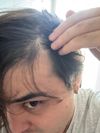
User hears aunt's comment on hair loss during Easter gathering. Others discuss handling rude comments and share experiences with hair loss treatments like Minoxidil and Finasteride.
A female, aged 17-18, is experiencing significant hair loss, feeling hopeless despite trying various treatments like leave-in conditioners, omega-3s, supplements, sulfate-free shampoo, and biotin. She is distressed as her hair continues to thin, affecting her body image and self-esteem.
The user experienced significant hair regrowth after 2.5 years of using Minoxidil 5% and hormone replacement therapy (HRT) with Lupron, despite initial scalp irritation. Finasteride was ineffective for them.
A user is using a trichosol-based minoxidil solution to avoid scalp irritation and is asking if it should smell like ginger beer. They like the scent and want to confirm they have the correct product.
The conversation discusses using hormones like pregnenolone and tongkat ali to counteract sexual side effects from hair loss medications such as finasteride, dutasteride, ketoconazole, and minoxidil. The user stopped the other medications but continues using minoxidil while seeking advice on maintaining libido.
A user shared their positive experience of embracing baldness after years of trying treatments like Minoxidil and finasteride. They found happiness and confidence by shaving their head, despite some social challenges, and encouraged others to focus on their attitude and seek therapy if needed.
The conversation discusses hair loss treatment options, focusing on finasteride and its potential effects on gynecomastia. The user is considering finasteride while managing hormone levels with supplements like boron, vitamin D, zinc, magnesium, and P5P, and is advised to consult an endocrinologist for further evaluation.
Hair loss is often misunderstood by those not affected, leading to frustration for those who research treatments like Minoxidil, finasteride, and hair transplants. Many people offer well-meaning but uninformed advice, while those knowledgeable about hair loss focus on proven treatments.
A 21-year-old is experiencing hair thinning and is using oral finasteride and topical minoxidil, considering adding oral minoxidil. They are unsure if the condition is androgenetic alopecia (AGA) or telogen effluvium (TE) and are advised to continue treatments and get a blood test.
The conversation discusses using finasteride, dutasteride, minoxidil, and RU58841, along with a 10,000 graft hair transplant, to prevent magpies from targeting bald men. The title humorously references an eight-year-old's survey on magpies swooping bald men.
Hopeful treatments for hair loss, including Verteporfin, Androgen Receptor Degradation, and SCUBE3. These treatments offer potential solutions to slow or stop the effects of androgens on the scalp.
The user switched from finasteride to DIY dutasteride mesotherapy and topical minoxidil due to side effects. They report improved well-being and no hair loss worsening after stopping finasteride.
The conversation discusses using finasteride, dutasteride, RU58841, and testosterone to combat hair loss and block DHT, with some users expressing concerns about side effects and vegan options for medication. The discussion also touches on personal experiences with hormone treatments and the desire to maintain a youthful appearance.
Visible hair improvement after 10 weeks using minoxidil, estradiol enanthate, acetophenide algestone, and bicalutamide. The user is a 25-year-old male with reduced testosterone levels, expressing a preference for less masculinity.
.
This conversation is a satire post about a user who appears to have an abundance of hair, with other users commenting and asking questions about the treatments they use for their hair loss. Treatments discussed include minoxidil and finasteride.
People discussed their experiences with anti-androgens for hair loss, mentioning side effects like chest pains with RU58841 and skepticism due to lack of safety data, while considering Fluridil as a potential addition to treatment. Some users expressed reluctance to use these chemicals.
A user has been using topical minoxidil and finasteride for hair loss but is considering switching to oral minoxidil due to the inconvenience of topical application. Another user cautions that switching forms may cause shedding and that oral minoxidil may have different side effects and results.
Finasteride can affect hormone levels, potentially causing symptoms like puffy nipples and testicular pain, and may result in elevated prolactin and high testosterone. The user is seeking interpretation of these changes after taking finasteride.
The user experiences irritation from alcohols in minoxidil and is considering alternatives like trichosol mixed with polyethylene glycol or DMSO. They seek advice on the best nonirritating option.
The conversation discusses the potential benefits and risks of using Methionine and Glycine for hair loss, with concerns about cancer risk if not balanced properly. The user seeks opinions on these amino acids for hair health and overall benefits.
The conversation discusses the effectiveness of anti-androgens for hair loss, with a preference for topical treatments like RU58841 over oral options due to better scalp concentration and fewer side effects. Topical finasteride at 0.1% may provide some results, especially when combined with a topical androgen receptor antagonist like RU58841.
The conversation discusses switching from topical to oral minoxidil, using oral minoxidil daily and topical minoxidil only on microneedling days. The user also mentions using finasteride and tretinoin but has not seen results after two months.
A 22-year-old male uses dutasteride, a serum with 10% minoxidil and 0.5% finasteride, and microneedling for diffuse androgenetic alopecia. Progress pictures show changes from July 2025 to February 2026.
The conversation is about a user experiencing hair thinning potentially due to excessive microneedling while using finasteride and minoxidil. Many suggest reducing microneedling frequency and considering alternative treatments like dutasteride or a hair transplant.
Dutasteride mesotherapy in women with metabolic syndrome accelerated hair loss after initial regrowth, while women without metabolic syndrome saw continuous regrowth. The user with mild insulin resistance is hesitant to try topical dutasteride and seeks experiences from others with insulin resistance.
The conversation humorously discusses hair loss, focusing on the envy of an older man, Massimo Cacciari, who has a full head of hair. Treatments mentioned include finasteride, minoxidil, RU58841, and hair transplants, with some users expressing dissatisfaction with baldness and considering various solutions.
Dutasteride and finasteride for hair loss, with dissatisfaction expressed about dutasteride and consideration of switching back to finasteride. Users share varied experiences, noting individual responses to treatments differ.
Taking proactive steps to manage hair loss such as using finasteride, minoxidil, and a derma pen; having hobbies, paying attention to those around you, exercising, and doing more good than harm.