Men with early male pattern baldness (MPB) may have hormonal abnormalities similar to those in women with PCOS. Specific treatments mentioned include Minoxidil, Finasteride, and RU58841.
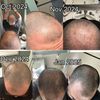
User shared 9-month progress with finasteride and microneedling, and 2-year progress with minoxidil for hair loss. Others asked about microneedling tools, routine, and suggested micro fibers for improvement.
A user shared progress pictures after 50 days of using a compound with 10% minoxidil, 0.1% finasteride, and biotin, expressing satisfaction with the results. Another user commented positively on the progress.
A 16-year-old diagnosed with male pattern baldness (MPB) was prescribed hair vitamins, vitamin D, a non-ketoconazole shampoo, and redenysl + serum, with a suggestion for GFC or IHRF treatments. Some users recommended minoxidil, ketoconazole, and derma stamping, while others advised against certain treatments until the age of 18.
Post Finasteride Syndrome (PFS) may result from epigenetic changes and gut microbiota alterations. Supplementing with Allopregnanolone might protect against these adverse effects.
A product called HairMDL includes Minoxidil, Dutasteride, Latanoprost, caffeine, Tretinoin, and Triamcinolone. Users are curious about its effectiveness and safety, particularly regarding the topical steroid Triamcinolone.
The conversation discusses a user's six-month progress in treating hereditary hair loss using a regimen that includes minoxidil, finasteride, dutasteride, and other medications. Opinions vary on the effectiveness and logic of the treatment, with some users suggesting additional methods like microneedling.
Pyrilutimide and CB-03-01, two treatments for hair loss, have similar clinical trial results despite different binding affinities to androgen receptors. Factors other than binding affinity, like the time a drug stays bound to the receptor, may influence their effectiveness.
The user started taking 1 mg finasteride daily in September 2024 and began derma stamping twice a week, noticing progress initially but now experiencing increased scalp visibility. They are considering adding oral or topical minoxidil to their routine for further improvement.
User shared 13 months of progress using finasteride, microneedling, vitamins, and scalp care, and recently started stemoxydine. The post includes before and after photos.
Hair loss discussion mentions treatments like Finasteride, Dutasteride, and Minoxidil. Users share experiences, side effects, and advice on using these treatments.
A user shared their 20-week progress using topical minoxidil (5%) and finasteride (0.1%) with a 1mm dermastamp, showing significant hair regrowth from NW5 to between NW3V and NW4. They experienced no side effects and plan to update at 12 months.
The user is experiencing diffuse thinning and inflammation despite using 2.5mg dutasteride daily, ciclopirox, and ketoconazole shampoos. They are considering treatments like hydroxychloroquine and JAK inhibitors due to suspected scarring alopecia and have faced challenges in obtaining a scalp biopsy.
The user is seeking opinions on whether their hairline changes indicate regrowth or hair loss, using treatments like Rogaine, finasteride, microneedling, and Nizoral. They mention inconsistent finasteride use, scalp massages, and lifestyle factors like caffeine, nicotine, stress, and high sugar intake.
Pyrilutamide is a selective AR antagonist with a high binding affinity, making it effective in competing with DHT for androgen receptors. The 1% concentration is more effective than the 0.5%, but the latter may suffice for mild hair loss; the drug is considered a good option for those avoiding 5AR blockers due to side effects.
The conversation is about identifying nutritional factors that should be checked and supplemented to address diffuse hair loss, including Vitamin D, Biotin, Vitamin C, Vitamin B, Iron, Zinc, Protein, and Omega-3. No specific treatments were mentioned.
Tretinoin alone has led to hair regrowth in the temples and hairline. The user is considering oral minoxidil or dutasteride but prioritizes health first.
Researching whether pyri and enza, which are stereoisomers of each other, share the same features related to CNS penetration/GABA Inhibition; safety and efficacy when used topically at 0.5-1%; and cost comparison between the two treatments.
A user is seeking a Minoxidil Response Test kit in the EU without bundled consultations. They mention alternatives like oral minoxidil and tretinoin but prefer the test alone.
Kintor Pharmaceutical's stock rise suggests potential positive news about Pyrilutamide, a topical anti-androgen. GT20029 may also compete with existing treatments like finasteride and dutasteride.
HMI 115 did not work as expected for hair regrowth in humans, unlike in macaque monkeys. There is anticipation for further research on prolactin's role in hair loss, with expectations that pharmaceutical companies will likely solve this before universities.
Hope Medicine's HMI-115 is expected to be released in 2027, with phase 3 trials currently recruiting. Concerns include the safety of targeting prolactin and the potential cost of the treatment.
User "cheekykevin" shared 15-week progress using minoxidil and dermarolling, with positive results. Others suggested using ketoconazole for dandruff side effect.
A 35-year-old male experienced significant hair improvement using microneedling, finasteride, minoxidil, and keto shampoo. He adjusted his microneedling routine for better results.
Discussing results, side effects and potential sources of pyrilutamide for hair loss treatment alongside RU58841 and other treatments such as Minoxidil and finasteride.
Hair loss treatments discussed include cosmeRNA, minoxidil, finasteride, RU58841, and pyrilutamide. Users debate effectiveness, side effects, and upcoming treatments, with some expressing skepticism and others optimism.