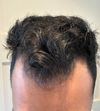
After 2 months of using Minoxidil and finasteride, OP noticed fuller hair, confirmed by their wife's observation. OP is pleased with the progress, though the change isn't drastic.
The user is experiencing a second hair shedding phase and increased flaking and itching while using minoxidil 5% nightly and microneedling every two weeks, with needle length increasing over time. Other users suggest the hair loss may continue without the use of finasteride.
GT-20029 is discussed as a potential hair loss treatment, with concerns about its safety and systemic absorption compared to finasteride. Users express skepticism about its effectiveness and safety, noting that it may not surpass existing treatments like finasteride and minoxidil.
A user's 2 year experience using Minoxidil and Finasteride combined with 20,000mcg of biotin daily and dermarolling for 1 year. The results included thicker hair with some regrowth closer to the hairline, although peak results have not been achieved yet.
Procyanidin B2, a compound derived from Annurca apples, as a potential treatment for pattern hair loss. Several clinical studies were mentioned, which found that procyanidin B2 could increase hair growth, density, and keratin content. Other treatments such as Minoxidil, Finasteride, and RU58841 were not discussed.
The user started using finasteride, minoxidil, and biotin for hair loss and believes they are a hyper responder, noticing significant changes in hair thickness. They regret not starting earlier and mention using oral minoxidil.
Hair loss treatment with latanoprost, minoxidil, and biotin showed progress. Latanoprost, a glaucoma drug, stimulates anagen phase and increases conversion of vellus hair to terminal hair.
A 27-year-old male has been using 1mg finasteride and 2.5mg oral minoxidil daily for androgenetic alopecia, seeing good results in 3 months but experiencing thinning and density loss. He seeks advice on his Norwood scale level and when density might return.
A new drug, PP405, is being discussed as a potential cure for baldness, with hopes it could be more effective than Minoxidil and Finasteride. Users are skeptical about its effectiveness and the need for lifelong use.
The user experienced hair regrowth after 4 months of using 2.5 mg finasteride every other day and topical minoxidil 3-4 times a week, with occasional dermarolling. They feel their hair has returned to 2023 levels, and the scalp heat that led to thinning is gone.
A 22-year-old male uses dutasteride, a serum with 10% minoxidil and 0.5% finasteride, and microneedling for diffuse androgenetic alopecia. Progress pictures show changes from July 2025 to February 2026.
PP405 is a potential new hair loss treatment that might replace finasteride and minoxidil, but it is still in clinical trials and may not be available until 2028-2031. There is skepticism about its effectiveness, with only a 20% increase in hair density observed in some participants.
A user's 2.5 months of finasteride, oral minoxidil, and dermarolling treatments for hair loss, with various users giving their opinion on the progress made.
A 30-year-old female with telogen effluvium and androgenetic alopecia is using spironolactone, oral minoxidil, vitamin D, iron sulfate, and a hairmax laser band. She seeks recommendations for a dermastamp or derma roller, advised to use no higher than 0.5 mm.
PP405 is discussed as a potential alternative to finasteride, but its effectiveness and market availability are uncertain. Users share experiences with finasteride, minoxidil, and topical treatments, noting side effects and application techniques.
A 42-year-old male shared his 1.5-year hair regrowth progress using 1.25mg finasteride daily and regular doses of minoxidil twice a day, and recently started using the Derminator 2. He also mentioned his battle with cancer and Cushing's syndrome, which affected his weight and hair.
A user shared an 8-month update on hair regrowth using HIMS fin/min spray and dermastamping every two weeks, showing significant improvement. Others commented on their own progress and hopes for similar results.
A 20-year-old male experienced significant hair regrowth and reduced shedding after four months of using 2.5mg oral minoxidil, 1mg oral finasteride, and weekly 1.5mm derma stamping. He reported no side effects from the treatments and noted increased hair growth in other areas of his body.
A 26-year-old is starting a hair loss treatment using 1mg oral finasteride daily, 5% topical minoxidil foam twice daily, 2% ketoconazole shampoo weekly, and microneedling once a week. They noticed worsening hair loss over the past year and are seeking advice.
PP405 is a potential hair loss treatment that may work by blocking signals that cause hair cells to stop growing, requiring daily application for effectiveness. It could serve as an alternative to minoxidil and finasteride, but it is not yet available on the market and may take several years to be released.
The user had a failed hair transplant in 2018, didn't use medication, and experienced severe depression from further hair loss. They started treatment in 2022 with 0.5mg daily finasteride, 2.5mg oral minoxidil, 1ml daily topical minoxidil, and are considering low dose RU58841 and dermarolling.
The user's 42 month experience using finasteride for hair loss, their opinion on minoxidil use and the potential of pyrilutamide and another Chinese drug as treatments.
A 36-year-old male has been using finasteride, 5% minoxidil foam, and microneedling with a 0.75mm dermastamp or Dr. pen for three months. He notices thicker hair and reduced hair loss, with high testosterone and normal DHT levels, while managing prolactin levels with vitamin B6.
Amplifica's progress on Scube3 is unclear, with no recent updates. The conversation also mentions Minoxidil, finasteride, and RU58841 as hair loss treatments.
The conversation discusses the potential effectiveness of a Sult1a1 enzyme booster in enhancing the results of minoxidil for hair loss. Users express interest in the booster, hoping it will improve the effectiveness of oral minoxidil, especially for those who struggle with topical application.
ET-02 showed significant hair growth in five weeks, outperforming minoxidil, with a non-hormonal mechanism that avoids side effects of treatments like finasteride. A phase 2 trial is planned to further assess ET-02's efficacy and safety.
User shared progress pictures of hair density improvement using 1mg finasteride and topical minoxidil, but expressed concern about recent hairline miniaturization and treatment effectiveness. Another user complimented the results and inquired about initial shedding.
A user is experiencing uneven hair thinning and has tried topical minoxidil without success and finasteride with adverse effects. They are considering microneedling and PRP treatments while avoiding finasteride, and another user suggests trying dutasteride as an alternative.
A user shared their positive experience with a 5% minoxidil and 0.1% finasteride topical serum for hair loss, noting improvements in hair density and new growth within 2.5 months. They also mentioned using red light therapy, vitamin D+K2 supplements, and an all-natural shampoo.
High frequency ultrasonography and HR-MRI can help identify hair shedding causes like inflammation and fibrosis. The conversation discusses the potential of using these technologies to evaluate treatments like Verteporfin for hair regeneration.