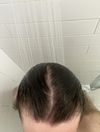
Hair loss progress after 12 months using minoxidil, finasteride, and microneedling. Goal is to maintain and improve hair until old enough for hair transplant.
A 21-year-old male has been using dutasteride, minoxidil, ketoconazole shampoo, and microneedling for hair loss, with plans to increase minoxidil dosage. He is experiencing no side effects and is planning a trichoscopy to assess hair regrowth.
A user shared their 6-month progress using 1mg finasteride, daily minoxidil, 1.5mm microneedling twice a week, biotin, and Nizoral shampoo, showing significant hair regrowth. Other users were impressed, noting the regrowth resembled a hair transplant.
A user shared their 4-month progress using 2.5mg minoxidil, 1mg finasteride, and 10mg biotin, noting slight testicular discomfort initially but no significant hairline changes yet. Another user reported similar treatment results, with hair darkening at the scalp center and small temple hairs.
A user shared their impressive hair regrowth progress after 5 months using 1mg oral finasteride every other day, 2.5mg oral minoxidil daily, weekly dermastamping, and daily scalp massages. They reported no side effects and began seeing improvement after 2.5 months.
User shared progress pictures after 2.5 months of using minoxidil twice daily on eyebrows and temples, along with dermarolling 1-2 times weekly with a 1.5 mm roller. They discussed noticeable improvements in hair growth.
A South Korean company, Therazyne, has developed a promising hair loss treatment using a WNT chain surrogate that binds to Frizzled 7, with human follicle testing expected soon. Current treatments like minoxidil and finasteride are not seen as cures, and while optimism exists for future solutions like PP405, approval processes are lengthy.
A 23-year-old experienced reduced hair loss after three months of using oral minoxidil and dutasteride. The user reported no side effects and plans to continue the treatment.
A user shared a 3-month hair regrowth progress using minoxidil and microneedling. They also use rosemary oil and plan to continue treatment for at least 6-9 more months.
A user shared progress pictures after 6 months of using minoxidil twice daily and 0.25mg finasteride once daily for hair loss. The conversation includes comments on the user's posture in the photos and slight improvements in hair fullness.
The user switched from Finasteride to oral Dutasteride 0.5mg and oral Minoxidil 2.5mg, along with microneedling and Nizoral shampoo, to combat hair thinning. They report progress but note limited improvement in the temples.
A 51-year-old woman switched from Minoxidil to Maneup, a copper peptide treatment, experiencing initial hair loss but later regrowth with different hair texture. Users debated Maneup's effectiveness, with some considering it alongside finasteride.
The user experienced hair recovery using oral dutasteride 0.5 mg and oral minoxidil 5 mg daily, considering increasing dutasteride dosage but concerned about cost and effectiveness. They noted progress and discussed alternatives like hair transplants and other medications.
User shared 12-month hair loss progress using oral minoxidil, oral dutasteride, and 2% ketoconazole shampoo. They detailed their medication regimen and dosages.
A user reports significant hair density increase and new growth at the temples after two months of using finasteride, minoxidil, ketoconazole, dermarolling, MK-677, zinc, and vitamin D3, with shedding stopping a week ago. They recently added MK-677 to their regimen.
The user experienced severe hair shedding despite using oral finasteride, minoxidil, dutasteride, and RU58841, and was diagnosed with Non-Alcoholic Fatty Liver Disease (NAFLD). They are considering switching to topical treatments due to the ineffectiveness of their current regimen.
A 25-year-old male shared progress pictures after 50 days of treating hair loss with minoxidil and dermarolling. He previously tried finasteride but stopped due to side effects.
GT20029 is a new hair loss treatment in Phase 3 trials in China, using PROTAC technology to target androgen receptors, potentially with fewer side effects than finasteride and minoxidil. VDPHL01, a second-generation minoxidil, is also mentioned as potentially more effective.
A 26-year-old male started minoxidil treatment for male-pattern baldness and saw significant regrowth in three months. He is considering finasteride but is hesitant due to potential side effects.
A 33-year-old male is documenting his hair regrowth progress using minoxidil, red light therapy, copper peptides, and micro-needling, with noticeable improvement in hair thickness and coverage. He plans to add a topical finasteride/minoxidil spray and aims for a shadow on his scalp rather than a full head of hair.
The user experienced hairline improvement using microneedling once a month with a 12-pin set at 1.5-2.0mm and taking Tru Niagen, alongside a heavily modified diet. They attribute the slow hairline improvement to environmental factors, particularly diet, rather than solely genetic factors.
The user has been using oral minoxidil 2.5 mg for 9 months and oral finasteride 1 mg for 4 months, along with microneedling, and has noticed more baby hairs and longer eyelashes but no extra overall thickness. They are considering increasing the minoxidil dose but are concerned about safety due to potential side effects.
Hope Medicine's HMI-115 is expected to be released in 2027, with phase 3 trials currently recruiting. Concerns include the safety of targeting prolactin and the potential cost of the treatment.
P-1075 is a more potent hair growth agent than Minoxidil, but it poses significant heart risks, making it unsafe for use. Despite promising results in macaques, concerns about its cardiotoxicity in rats have halted its development.
A user shared their 8-month progress using dutasteride 0.5 mg and oral minoxidil 2.5 mg for hair loss, expressing disappointment with the results and considering increasing the dosage. Other users advised patience, suggesting that improvements can continue over time, and recommended consulting a dermatologist before making changes.
Microneedling with 5% minoxidil improves hair growth for hair loss patients. Best protocol: 1.5mm dermaroller weekly for 12 weeks or 0.6mm dermapen every 2 weeks for 12 weeks, skipping topicals for 24 hours.
The user has been using finasteride and minoxidil for over a year and is seeing thin hair regrowth with some 1cm hairs still growing. They are considering a hair transplant and are taking zinc to manage side effects.
PP405 is moving to late-stage trials, showing potential for hair regrowth, with 31% of male patients experiencing a 20% increase in hair density. Veradermics is developing an oral minoxidil version, and there is interest in combining treatments for better results.
A user shared a two-year update on their hair loss treatment using dutasteride (0.5mg/day), minoxidil (Kirkland topical foam 2x/day), a 1.5mm derma roller every other week, and a daily multivitamin with biotin. They reported significant hair regrowth with no side effects, emphasizing the importance of consistency and a healthy lifestyle.