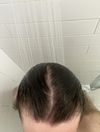
Melatonin is being explored as a hair loss treatment, with one user mixing it into minoxidil but not seeing results. The conversation discusses experimenting with melatonin concentrations.
Discussion on hair loss treatments, focusing on pp405, with skepticism about its effectiveness and concerns about its association with the cosmetic industry. Users also mention treatments like Minoxidil and Finasteride.
A 36-year-old experienced slow, diffuse hair thinning over 15 years and saw significant improvement using 5% topical minoxidil alone for 3 months, without finasteride or microneedling. The user is pleased with the results, noting increased hair density and no visible scalp, and plans to continue monitoring progress without using hormone-affecting treatments.
The user has been using 1mg Finasteride and 5% topical Minoxidil for 9 months with little improvement and is now switching to 5mg oral Minoxidil, continuing microneedling, and adding Anagenil Complex. They are seeking advice on whether to stop topical Minoxidil and the effectiveness of Anagenil Complex.
After 2.5 years of using 1mg finasteride daily, 5% minoxidil foam twice daily, and weekly micro-needling, the user reports thicker, healthier hair without further loss. They noticed initial regrowth at 3 months, with significant improvement up to 18 months, and no negative side effects from the treatment.
Exploring potential treatments for hair loss, such as Minoxidil, Finasteride, RU58841 and Pyrilutamide. The user is looking for feedback on whether KX-826 can be used successfully as a single therapy to stop the miniaturization process.
A 25-year-old shared progress in hair regrowth after 7 months using dutasteride, minoxidil, and microneedling, noting some baby hair growth on the temples. The user plans to continue this treatment, having found it effective despite some initial shedding and challenges with styling due to topical minoxidil.
Liposomal formulations of finasteride and minoxidil may enhance drug delivery to the skin and hair follicles more effectively than traditional solutions, potentially improving treatment outcomes. However, more human clinical trials are needed to confirm these benefits.
The user has been using finasteride and topical minoxidil for 8.5 months, with initial progress slowed due to stopping microneedling. They plan to resume microneedling and consider a hair transplant in the future.
The conversation discusses a user's 4-month progress using topical minoxidil and 1.5-month use of topical finasteride, along with almost weekly microneedling, for hair loss. Some responses indicate noticeable improvement and encourage continued use, while others suggest it's too early to judge effectiveness and mention the possibility of a hair transplant.
A user shared their 7-month progress on hair regrowth using a regimen of dutasteride, minoxidil, stemoxydine, microneedling, and keto shampoo. They noted significant improvement, particularly in vellus hair growth, and discussed the potential addition of RU58841, though they experienced side effects with it previously.
A Phase II clinical trial for TDM-105795 has started recruiting in the US, and it might be a promising treatment for hair loss. Many hair loss drugs, including this one, originate from China.
The user has been using 1mg finasteride and 5% minoxidil daily for three years and added microneedling a year ago to treat hair loss. They shared progress pictures and are open to further suggestions to improve results.
The user has been using a topical combination of finasteride and minoxidil for six months, with some progress noted. They also use Nizoral twice a week and plan to start microneedling.
Applying Minoxidil takes users between 10 seconds to 20 minutes, with most finding quicker methods more efficient. Techniques vary from using foam, liquid, or spray, with some users recommending buzz cuts for easier application.
A user's progress with treating hair loss using finasteride, minoxidil and microneedling over the course of 7 months. Other comments suggested additional treatments such as toppik to help hide it in the meantime.
A user shared their 20-week progress using topical minoxidil (5%) and finasteride (0.1%) with a 1mm dermastamp, showing significant hair regrowth from NW5 to between NW3V and NW4. They experienced no side effects and plan to update at 12 months.
A user discusses a hair loss treatment combining minoxidil and tretinoin, noting it may enhance absorption. Some users express interest and share positive experiences, while others question its effectiveness without medical evidence.
A 43-year-old male has been using oral minoxidil, finasteride, and dutasteride for hair loss, with some stabilization and thin hair growth but no significant cosmetic improvement. He is considering increasing microneedling frequency and exploring other options, as he is concerned about the lack of terminal hair growth.
Microneedling with minoxidil significantly boosts hair growth, even for non-responders to minoxidil alone. The routine includes a 1.5mm dermaroller weekly and minoxidil twice daily, with some users adding finasteride and tretinoin.
A user shared their impressive hair regrowth progress after 5 months using 1mg oral finasteride every other day, 2.5mg oral minoxidil daily, weekly dermastamping, and daily scalp massages. They reported no side effects and began seeing improvement after 2.5 months.
A 10 month update on the effectiveness of a hair loss treatment regimen involving minoxidil, finasteride, dermarolling and nizoral. Questions were asked about using minoxidil alone, dermaroller length, age, and when results were seen.
The conversation discusses natural methods for addressing male pattern baldness, with the original poster using a plant-based diet, herbs, scalp massages, pumpkin seed oil, and dermapen treatments, while avoiding pharmaceuticals like minoxidil and finasteride due to concerns about side effects. Other users suggest that pharmaceuticals like finasteride may be necessary for significant hair loss, but the original poster remains committed to natural approaches.
The user has experienced significant hair regrowth using finasteride, oral minoxidil, microneedling, keto shampoo, an LLLT helmet, vitamins, and supplements. They note progress but hope for further improvement in a specific area.
The conversation discusses the effectiveness of Minoxidil (Min) for hair loss treatment. It concludes that applying a 5% solution once daily is sufficient, and applying it twice daily doesn't provide much more benefit. However, if a higher concentration is beneficial, it can be achieved by more frequent application.
If treatments like finasteride, minoxidil, PRP, microneedling, and exosomes fail, opinions differ on using a hair system or shaving. Some choose shaving for simplicity, while others consider hair systems despite maintenance concerns.
A 20-year-old using 1 mg finasteride, 2 ml topical minoxidil, tretinoin, and microneedling for hair loss shows progress after three months, with thicker hair and temple regrowth. No side effects reported, and the user is considering switching to oral minoxidil.
Microneedling for hair loss is discussed, with users mentioning using 0.6mm needles twice a week. Treatments like Minoxidil, finasteride, and RU58841 are implied but not directly mentioned.
The conversation discusses the potential of a new hair loss treatment, GT20029, which targets androgen receptors in the scalp and is in phase 1 trials in China. Users express hope that this treatment will be more effective than current options like Minoxidil and Finasteride.
User regrew lost hair using microneedling, minoxidil, finasteride, Nizoral, fish oil, and collagen peptide. Progress was slow but constant, and patience was important.