Search
for
Sort by
Community Join
570-600 / 1000+ resultscommunity 6 Months topical 5% minoxidil twice a day.
The user has been using topical 5% minoxidil for six months with minimal results and is worried about greasy hair and potential side effects of adding finasteride. Others suggest combining minoxidil with finasteride for better results, while discussing potential side effects like erectile dysfunction.
community Help me figure out the confusing difference between regrowth and hair loss indicators
The user is seeking opinions on whether their hairline changes indicate regrowth or hair loss, using treatments like Rogaine, finasteride, microneedling, and Nizoral. They mention inconsistent finasteride use, scalp massages, and lifestyle factors like caffeine, nicotine, stress, and high sugar intake.
community 2-deoxy-D-ribose (2dDR), a sugar molecule, was found to be 80%-90% as effective as minoxidil in promoting hair growth and neovascularization in androgenic alopecia models, showing promise for alopecia treatment.
2-deoxy-D-ribose, a sugar molecule, is found to be 80%-90% as effective as Minoxidil in promoting hair growth, showing potential for alopecia treatment. Concerns include high cost, lack of human studies, and possible side effects like diarrhea and nausea.
community 3 Month Update – Topical Min (6%), Topical Fin (0.3%), 1.5mm Microneedle Weekly, 40 y/o
A user's 3-month update on their hair loss treatment, which consists of topical Minoxidil (6%), topical Finasteride (0.3%) and microneedling 1.5mm weekly; other users shared positive feedback and asked about the specifics of the treatments being used, such as product/brand, frequency, side effects and areas for microneedling.
community Why does hairloss look great one day and regression the next?
Hair appearance fluctuates due to factors like styling, product buildup, and humidity, causing frustration for those with diffuse thinning. Treatments mentioned include minoxidil, finasteride, ketoconazole shampoo, and RU58841, with mixed results.
community L'Oréal Serioxyl Vs Garnier fructus stemoxydine
L'Oreal Serioxyl and Garnier Fructus Stemoxydine are compared for effectiveness in hair loss treatment. The user considers switching from Serioxyl to the cheaper Garnier Fructus but is unsure about its effectiveness and stemoxydine percentage.
community 5 months 1mg Fin 4 month 5% Min
A 27-year-old user shared their 5-month progress using 1mg finasteride daily and 5% minoxidil twice a day for hair loss, reporting improved hair growth despite initial shedding and experiencing only minor side effects like watery semen. They also use Nizoral shampoo, take a multivitamin, and plan to start microneedling if progress slows.
community 5 Months Progress Topical Fin/Oral Min
User shared progress pictures after 5 months using 5 mg oral minoxidil, a topical formula with 8% minoxidil, 0.1% finasteride, and 0.01% tretinoin, and a 1.5 mm Dermapen every other week. The conversation discusses the effectiveness of this regimen for hair loss.
community tretinoin 0.025 or 0.05 to mix with minoxidil
Mixing tretinoin with minoxidil for hair loss is discussed, with a recommendation for using 0.025% tretinoin.
community I can tolerate having MBP, but other than that having Sebderm is just really bad luck.
The conversation discusses managing seborrheic dermatitis (sebderm) and male pattern baldness (MPB) with treatments like finasteride, coal tar shampoo, Nizoral, and oral minoxidil. Users suggest dietary changes, regular shampooing, and using antifungal products to control sebderm before considering minoxidil.
community Kirkland Minoxidil 5% Foam Canada Issue
Kirkland Minoxidil 5% Foam is either sold out or very expensive, leading to frustration over limited options without propylene glycol. Alternatives like Rogaine and Foligain are discussed, with varying prices and ingredient differences.
community 31Yr, by Any hope I have been on min 5mg and fin 1mg from last 4 months and recently I have added tretinoin.05% 3times a week…
A user is using minoxidil, finasteride, and tretinoin for hair regrowth. They are advised to be patient for results and to check for vitamin deficiencies.
community The Breezula 539% headline is doing a lot of heavy lifting right now.
Breezula shows promising results for hair loss, with one trial showing a 539% improvement and another 168%, but lacks combination data with treatments like minoxidil or dutasteride. Its mechanism differs from finasteride, potentially offering fewer side effects by blocking receptors locally at the follicle.
community Musely's topical hair solution
The conversation discusses a topical hair loss treatment containing 0.1% dutasteride, 6% minoxidil, tretinoin, and ketoconazole. The user is asking for opinions on the effectiveness of this solution.
community Been using minoxidil 6%, finasteride 0.3%, and tretinoin 0.025% for about 2 and a half months and micro needling 2 times a week
User has been using minoxidil 6%, finasteride 0.3%, tretinoin 0.025%, and microneedling twice a week for 2.5 months. They are considering switching to oral treatments.
community Hair Loss & Lipids: Why you have sebderm, folliculitis, LPP, inflammation, etc...
Excess sebum rich in cholesterol and triglycerides can lead to hair loss through inflammation, with treatments like Ciclopirox shampoo, Benzoyl Peroxide shampoo, and Clindamycin gel recommended for managing conditions like seborrheic dermatitis and folliculitis. Pioglitazone is suggested for Lichen Planopilaris, while Omega-3s and reducing processed foods may improve sebum quality, though genetic factors play a significant role.
community How much difference hair fibers and mousse make
The user applies Rogaine foam, Toppik hair fibers, and Tresemme mousse to improve hair appearance and has restarted finasteride after a year off. They are considering a hair transplant and are working on self-esteem related to hair loss.
community 28M , 40 days on Oral minoxidil 2.5mg , 1mg finasteride and 5% topical minoxidil once per day.
The user is discussing their hair regrowth progress after 40 days of using oral minoxidil 2.5mg, 1mg finasteride, and 5% topical minoxidil daily. They are seeking feedback on their progress.
community I found the solution for the Minox dandruff problem
A user found a solution for Minoxidil-induced dandruff by using a custom NRF 11.121 mixture from a local pharmacy, which includes ingredients like Isopropyl palmitate and Cremophor RH 40. This formulation prevents dryness and allows better penetration when using hair shaders.
community What to expect switching from 2% to 5% minoxidil?
A user switched from 2% to 5% minoxidil, alongside using finasteride and dermarolling, to address hair thinning and is curious about potential shedding. They have not experienced noticeable hair loss or shedding since starting the treatment.
community 6-month Minoxidil progress update
A 29-year-old shared a 6-month update on using 5% topical minoxidil and occasional dermarolling, reporting improved hair density and a fuller crown. They are considering adding finasteride to their routine but are concerned about side effects.
community Mintop Yuva 5 Review
Dr. Reddy's Mintop Yuva 5 Minoxidil uses benzyl alcohol instead of ethyl alcohol or propylene glycol. The user is inquiring if this formulation causes dandruff or skin peeling and if its efficacy is affected.
community Confused re RU58841 checkout options
The conversation is about using RU58841 for hair loss, discussing the stability of the powder form and the need for a carrier solution like KB or PG + ethanol. The user is advised to mix RU58841 with stemoxydine and store it properly, while also considering safety precautions.
community Minoxidil formulation change has worsened my scalp flaking
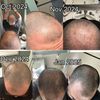
community Am I shedding? Cooked? Progress seems to be regressing
The user started taking 1 mg finasteride daily in September 2024 and began derma stamping twice a week, noticing progress initially but now experiencing increased scalp visibility. They are considering adding oral or topical minoxidil to their routine for further improvement.
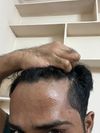
community Male, 1 Year on Topical Minoxidil - Assessing Progress with Photos
The user has been using topical Minoxidil twice daily for a year and is seeking feedback on whether their hair condition is improving, maintaining, or worsening. They provided photos for comparison from last year and this year.
community Shedding from hair oil usage during showering?
Using a mix of castor, rosemary, and peppermint oils may cause increased hair shedding during washing, possibly due to the need for more rigorous cleaning. The user experiences no irritation but notices more hair fall when using these oils.
community [26M] Min 5 month progress, worse skin?
A user experienced skin irritation and acne while using Minoxidil foam, but after stopping both the foam and a sea salt spray, their skin improved. They plan to try oral Minoxidil, suspecting the sea salt spray, not Minoxidil, was the main cause of their skin issues.
community Testosterone and DHT levels through the roof yet has better hair than the majority of guys who are “healthy” genetics are everything
The conclusion of this conversation about hair loss is that genetics play a significant role in determining hair loss, and specific treatments like finasteride may not be effective against certain compounds like masteron and trenbolone.