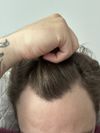
Microneedling at .25 depth may not be as effective as other depths for hair loss treatment. Minoxidil and tretinoin are used, but DHT blockers are also recommended for better results.
The conversation discusses choosing between different dosages of finasteride (1.25mg or 0.8mg) and minoxidil (5mg or 2.5mg) for daily use in treating hair loss.
Deoxyribose sugar gel is discussed as a potential hair loss treatment, but it lacks human trials and credible evidence. Users express skepticism and humor about its effectiveness compared to established treatments like minoxidil and finasteride.
TDM-105795 showed better efficacy and safety in trials for hair loss, with a higher hair count improvement compared to GT20029 and HMI 115, but it's not as widely discussed. The user is questioning why this is the case.
The user experiences irritation from alcohols in minoxidil and is considering alternatives like trichosol mixed with polyethylene glycol or DMSO. They seek advice on the best nonirritating option.
A 28-year-old is assessing their hair loss on the Norwood scale, considering adding topical minoxidil and dermastamping to their current regimen of oral finasteride and minoxidil. They feel their hair loss is worsening and seek opinions on their condition.
Minoxidil was applied to a single miniaturized hair follicle over four months, resulting in less miniaturization but not yet terminal growth. The user used a 5% minoxidil solution, specifically the Regaine brand, and observed changes using a handheld WiFi microscope.
User has been using Minoxidil twice daily for a year with good results and is considering adding a 1.5mm titanium derma roller for better hair regrowth. They seek advice on the best derma roller size and frequency of use, suggesting once a month or every 3-4 weeks.
The user has been using topical minoxidil and dutasteride but is experiencing significant hair shedding, including smaller hairs. They are concerned if this shedding indicates the treatment is working.
The user is considering switching from a topical minoxidil and finasteride solution to oral minoxidil to improve hair growth, while maintaining oral finasteride. They are concerned about potential shedding and whether they can maintain any new growth.
2.5mg oral minoxidil can be effective for hair regrowth, but 5mg often shows more dramatic results. Users at Norwood 2 using 1mg finasteride may see modest regrowth with 2.5mg, and it's suggested to give it a proper trial.
GT20029 and CosmeRNA are both potential hair loss treatments; GT20029 breaks down the androgen receptor, while CosmeRNA prevents its production. Continuous use is needed, but less frequently than current treatments like Minoxidil and Finasteride.
Oral minoxidil is generally more effective than topical minoxidil, despite higher side effect risks. Topical minoxidil can achieve higher bloodstream levels in some individuals, but effectiveness depends on conversion and scalp response.
HMI 115 is being discussed as a potential hair loss treatment, with skepticism due to past disappointments like cosmeRNA, brezula, and pyrilutamide. The user is questioning if they should be hopeful for new developments in the next six years.
The conversation is about a 27-year-old male using 1mg of finasteride and 5mg of minoxidil daily for hair loss, noticing slow improvement. He is unsure if using a dermaroller will help while on oral minoxidil.
The conversation is about a person asking for help on how to mix 0.1% tretinoin into a 60ml bottle of minoxidil for hair loss treatment. They are unsure about the correct amount of tretinoin powder to add.
The user is experiencing hair loss despite using oral dutasteride for 7 months and topical minoxidil for 3 months. They are concerned about miniaturization and question if the current minoxidil application is less effective without the previous finasteride mix.
A user is seeking recommendations for purchasing 1mm to 1.5mm derma rollers in the U.S. for better hair growth results, as they are currently using a 0.25mm roller.
A 35-year-old male experienced significant hair improvement using microneedling, finasteride, minoxidil, and keto shampoo. He adjusted his microneedling routine for better results.
Minoxidil may inhibit collagen synthesis at high concentrations, with anecdotal reports of skin aging but limited research. Dermatologists and other specialists show little interest in studying minoxidil's side effects.
Topical finasteride concentrations are likely much higher than necessary for effective follicular DHT suppression, with current standards being 100-1000 times above the theoretical minimum. Lower concentrations (0.001-0.0025%) might still work locally while minimizing systemic exposure.
1 mg of finasteride is commonly prescribed because it is more effective for a larger number of people compared to lower doses, despite only slightly reducing serum DHT more than 0.2 mg. Serum DHT and scalp DHT are different, and 1 mg is believed to reduce scalp DHT more effectively, contributing to better hair growth results.
The conversation discusses whether finasteride's reduction of DHT and increase in scalp testosterone contribute to hair follicle miniaturization. Some participants argue testosterone does not cause miniaturization, while others suggest that even with reduced DHT, other androgens like testosterone may still contribute to hair loss.
The user plans to make a hair loss treatment combining minoxidil, finasteride, and melatonin, and wants to dilute it for a larger coverage area. They are seeking advice on how to dilute the solution and where to purchase the diluting agent.
A minoxidil solution with only ethanol and minoxidil may not be properly absorbed without additional ingredients like propylene glycol or vegetable glycerin. It's suggested to use a reputable brand and test the product for authenticity.
Minoxidil's effectiveness varies due to genetic differences in the SULT1A1 enzyme, affecting how well it converts to its active form, minoxidil sulfate. Hyper-responders may experience rapid hair growth and increased side effects, such as pericardial effusion, even at low doses.