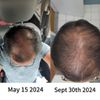
The conversation discusses hair loss treatments, specifically using Minoxidil, microneedling, and finasteride. The user is concerned about worsening hair loss and is advised to consider finasteride.
A user is asking if they can make topical finasteride using just water or isopropyl alcohol, as they don't have access to minoxidil or other ingredients. They have 1mg finasteride pills and are seeking advice on how to use them topically.
Minoxidil and finasteride may affect digestion, potentially causing issues like GERD, constipation, and inflammation. The user plans to stop minoxidil for a month and consult a nutritionist about diet changes.
The user experienced significant hair quality and thickness improvement using a daily topical treatment of 0.3% finasteride and 6% minoxidil, with noticeable regrowth in the last few months. Minoxidil can darken hair by increasing pigmentation.
Laser caps are found to be more effective than 5% minoxidil for treating hair loss, and when combined with minoxidil, they are even more effective. Some users report positive results with laser treatments, while others see no change; the devices are FDA approved, but opinions on their efficacy vary.
Potential treatments for hair loss, specifically the combination of liquid minoxidil and pyrilutamide, with some suggesting that adding finasteride may be beneficial.
A user is seeking advice on creating a homemade finasteride foam similar to over-the-counter Minoxidil foam, due to issues with glycerin and propylene glycol in their current solutions. They are considering using a mixture of ethanol/alcohol and water for the foam.
The conversation discusses DHT blocking treatments for hair loss, specifically mentioning Minoxidil, Finasteride, and organic flaxseed oil containing omega-3 fatty acids. It highlights skepticism about alternative treatments and emphasizes the proven effectiveness of Finasteride and Dutasteride.
The conversation discusses hair loss treatments, including finasteride, microneedling, minoxidil, and PTD-DBM. The user has not noticed significant regrowth and is considering cost-effective options like valproic acid.
The conversation discusses the use of low-dose oral minoxidil for hair loss and its potential effects on skin aging. Users shared experiences, with some noting side effects like puffy eyelids and dark circles, but no conclusive evidence of significant collagen depletion or increased wrinkles.
User asks about Redensyl as a substitute for Minoxidil due to side effects. Another user suggests trying Ordinary Hair Serum with dermarolling for improved hair quality.
The conversation is about making a 20mg/ml RU58841 solution for hair loss treatment using ethanol and propylene glycol. The user receives advice on calculating the correct amount of RU58841 powder needed.
OP is using 5% minoxidil and a needler to regrow hair after chemotherapy-induced hair loss. Another user mentions using finasteride and topical minoxidil, noting some improvement in hair density.
A user experimented with applying pure rosemary oil to a single hair strand twice daily, observing increased thickness and pigmentation, but questioned if the oil or the application method caused the change. Some users noted rosemary oil might be as effective as 2% minoxidil for hair growth, though others warned about potential harm from using undiluted oil.
The conversation jokes about a well-preserved mummy having more hair than living people, with comments on male pattern baldness and humorous speculation on the mummy's hair loss treatment, possibly using Minoxidil and Finasteride.
The conversation discusses creating a personalized topical treatment for hair loss, with ingredients like finasteride, minoxidil, tretinoin, melatonin, caffeine, and others. Users share their ideal formulations, including combinations of minoxidil, finasteride, tretinoin, adenosine, and other compounds, while also discussing the importance of managing inflammation.
The conversation is about recommendations for hair loss treatments, including minoxidil, nizoral shampoo, castor oil, a dermapen, and tocotrienols. Users discuss different minoxidil brands, with some preferring Kirkland despite concerns about irritation and dilution.
Use retin-a cream and maintain a good skincare routine to counteract skin issues caused by topical minoxidil. Taking sublingual minoxidil can also be beneficial.
A user experimenting with quitting using Minoxidil and replacing it with Finasteride and Stemoxydine in order to keep hair loss gains, but other users warning the original poster of potential shedding. Another user suggested phasing out Minoxidil and replacing it with Finasteride and microneedling instead.
The conversation discusses using a multimodal approach to treat androgenic alopecia, including substances like gamma-linolenic acid, DHA, sulforaphane, melatonin, cetirizine, astaxanthin, fisetin, apigenin, curcumin, limonene, genistein, and berberine. Users also mention using ketoconazole, minoxidil, and low-level laser therapy (LLLT) as part of their hair loss treatment regimens.
Topical minoxidil can cause increased body hair due to systemic absorption, varying by individual skin sensitivity. The user seeks experiences and solutions to prevent this side effect.
The conversation discusses hair loss treatments, focusing on finasteride, dutasteride, and minoxidil. The user is considering adding minoxidil to their regimen after using finasteride and dutasteride without significant results, while others suggest minoxidil is essential for diffuse thinning.
The conversation is about future hair loss treatments. Current treatments mentioned include finasteride, minoxidil, and RU58841, with potential future treatments like GT20029, TDM-105795, JW0061, and follicle cloning.
The conversation discusses treatments to counteract skin wrinkles caused by Minoxidil use. Suggestions include Retinol-A and Zinc, but users seek specific products that have effectively halted wrinkling.
Whether Finasteride can keep alive the hair gained by Minoxidil after quitting it, and why beard hairs are not as susceptible to miniaturization. It is suggested that scalp hair may be dependent on Minoxidil and that DHT could be countered with Finasteride to some extent, but there is no definitive data proving this.
Using a microdose of finasteride on the scalp with minoxidil as a carrier may have positive effects with minimal side effects. The user is also considering the effects of sulforaphane or broccoli sprouts on hair loss.
.
This conversation is about a user's progress while using minoxidil and finasteride to treat hair loss, with emphasis on taking oral finasteride at night before bed for optimal results. They also discuss the brand of medication being used (Morr F 5%) and the importance of taking a generic version of the same drug.
The conversation discusses preparing a topical dutasteride solution for hair loss, with mentions of using alcohol, propylene glycol, and Avodart. Users also discuss the concentration of dutasteride and compare it to finasteride and minoxidil treatments.