Search
for
Sort by
Community Join
30-60 / 1000+ resultscommunity Male 17 - Thinning hair and crown
community MicroRNA science breakthrough? Softening stem cells
community 37m 2 month progress. Looks promising?
community Is it normal for scalp texture and appearance to change where hair is lost?
The conversation discusses changes in scalp texture and appearance in areas of hair loss, with concerns about the suitability of these areas for hair transplants. Users mention issues like fibrosis, inflammation, and thinner skin, advising caution and consultation with clinics before proceeding with transplants.
community The Hormonal Profile of MPB/AGA
Men with early male pattern baldness (MPB) may have hormonal abnormalities similar to those in women with PCOS. Specific treatments mentioned include Minoxidil, Finasteride, and RU58841.
community 12 week progress with HIMS & Micro-needling & Biotin
User reports 12-week progress with HIMS spray, Minoxidil, micro-needling, and biotin. Notable baby hairs on crown and temples, hoping for further improvement.
community Am I making some progress? Topical Fin., Hair Filler therapy, Bioscalin & Omega 3
The user is using topical finasteride, Bioscalin, Omega 3, and hair filler therapy for hair loss. There is some progress noted, but varying photo angles and lighting make it hard to assess fully.
community Mature hairlines in general and defining them
A "mature hairline" is subjective and may not indicate future stability. Finasteride and minoxidil are suggested treatments for hair loss.
community Oral fin and topical min 6 months update… what NW am I now?
User shared 6-month progress of hairline recovery using oral finasteride and topical minoxidil, asking for current Norwood scale rating. Responses praised impressive results, with estimates ranging from Norwood 1.5 to 3.
community 8-9 Month Update. 24M Korean Diffuse Thinner
The conversation discusses a 24-year-old Korean man's progress with hair loss treatments over 8-9 months, with specific treatments not mentioned due to redacted information. Users are commenting on the effectiveness and inquiring if Asians have better results with hair loss treatments.
community Am i showing signs of regrowth/stabilisation???
The user has been taking oral minoxidil, dutasteride, and biotin for 3 months and noticed changes in hair texture, suggesting potential regrowth or stabilization. Baby hairs and increased hair density are seen as positive signs.
community (23M) 4-month hair progress. Hard to judge myself
A 23-year-old male shares his 4-month hair regrowth progress using oral minoxidil, oral finasteride, collagen, biotin, keto shampoo, and dermarolling. He notices fuller hair but minimal visible change, and considers adding topical minoxidil despite concerns about consistency.
community Is this regrowth at the temples? 20M
community 3.5 Months (18M) Thoughts? Oral Fin + Topical Min. 1.5 Derma etc
A user shared their 3.5-month progress using oral finasteride, topical minoxidil, biotin, and weekly 1.5mm derma rolling. Another user commented that the original poster's hairline has improved significantly.
community Ultrasound can show you if your hair will ever grow back
Ultrasound imaging can non-invasively detect active and inactive hair follicles, inflammation, and fibrosis, potentially reducing unnecessary biopsies. It may help assess hair growth potential and diagnose scalp issues, but some users believe in trying treatments regardless of ultrasound results.
community Assembling a list of exceptional Norwood 6/7 cases, open for your contributions.
The conversation is about people with advanced hair loss (Norwood 6 or 7) who have seen significant hair regrowth using treatments like finasteride, minoxidil, microneedling, and RU58841. Nine cases were collected to motivate others to try these treatments despite advanced hair loss.
community 3 month progress pictures RU fin and OM
The user shared progress pictures after three months of using RU58841, finasteride, and OM (oxidative stress modulators) for hair loss treatment. They haven't noticed much change but are seeking feedback on their results.
community Does my HT look like 3200 Grafts? AFRO HAIR (NHT) 19 days post
community opinions on my progress and thickening and regrowth pls
The user has been experiencing hair loss since having COVID and has low vitamin D levels; they are seeing some improvement in their crown and hairline after starting vitamin D supplements. Commenters suggest the hair loss pattern is consistent with male pattern baldness (MPD) and varies by individual.
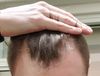
community Determining My Norwood Level with Photos
The conversation is about determining the Norwood level of hair loss. Treatments mentioned include Minoxidil, finasteride, and RU58841.
community *16 month update* Comparisons 16 months apart.. 1st pic is front view. 2nd pic top view wet hair. 3rd pic is top view damp/dry hair. Last pic is trying out an undercut look I’ve never done before.
A user shared their 16-month progress using a minoxidil and finasteride spray combo, showing significant hair regrowth. The discussion includes praise for the results, questions about treatment specifics, and debates on the effectiveness of topical versus oral finasteride.
community 20M NW6 diffuse —> NW1 Fin/Dut
A user shared progress pictures showing improvement from NW6 diffuse to NW1 after 5 months of finasteride and 2 months of dutasteride. Another user asked if these treatments affected beard or body hair thickness.
community trichoscopy: for those of you with microscopes
The conversation discusses using USB microscopes for scalp photos and provides a link to an overview of trichoscopy. Treatments mentioned include Minoxidil, finasteride, and RU58841.
community 7.5 months of oral finasteride 1mg(Dec13). Is this regrowth?
community Can HMI-115 reverse miniaturization?
HMI-115, a potential treatment for hair loss that can reverse miniaturization and make individual hairs thicker, as evidenced by data from macaques given the treatment and one subject in the phase I trial.
community *9 month update* 1st slide 2020 at my worst vs today. 2nd slide 9 months ago vs today. 3rd, wet hair. 4th, hairline. 5th, damp hair. 6th crown view. 7th, brushed back. 8 & 9, hair in high Summer humidity. 10th, no lighting.
User shared 9-month hair regrowth progress using a Fin/Min spray from HIMS, with additional microneedling. Other users praised the results and discussed the effectiveness of topical treatments.
community Will Pelage include Norwood 7 hair loss in PP405 phase 3 trials to see its true regenerative potential?
Norwood 7 hair loss is often excluded from trials to ensure treatments appear more effective and to reduce costs. Some believe treatments effective for Norwood 5 could work on Norwood 7, but companies prioritize market readiness.
community Is this a good sign of progress on my corners, could this be indicative of my whole head?
A 23-year-old male is using topical minoxidil and oral finasteride for hair regrowth, noticing some progress on his temples and seeking advice on whether this indicates overall scalp improvement. Users suggest patience, as regrowth can take time, and advise against a hair transplant, noting that the current treatment seems effective.
community Micronutrient testing, deficiencies, etc.
Micronutrient testing and deficiencies related to hair loss, particularly androgenetic alopecia (AGA). Discussion includes the impact of iron, selenium, zinc, copper, folate, B12, vitamin E, vitamin D, amino acids, and fatty acids, alongside treatments like dutasteride or finasteride.