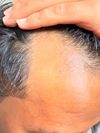
Considering a switch from finasteride to dutasteride for hair loss treatment, and the use of minoxidil as a last resort due to its effects on hair texture.
A 40-year-old male has been using 5% minoxidil foam and 1mg finasteride for 2.5 months, noticing darker and thicker hair. Users encourage him to continue the treatment, as results can take 6-9 months or longer.
The user started using finasteride 1.5 months ago and minoxidil 3 months ago, with dermarolling 3 times a week. They report healthier, thicker, and stronger hair, with minimal side effects.
The user switched from oral finasteride to dutasteride with minoxidil, but saw no results. They then tried topical finasteride and noticed some potential improvement after four months, theorizing that the topical application bypasses liver metabolism.
Finasteride was intentionally developed to treat BPH and later approved for male pattern baldness (MPB) due to its 5AR inhibition effects. The delay in MPB approval was due to concerns about off-label use for female hirsutism and the prioritization of treating a more debilitating condition.
A 36-year-old male has been using finasteride, 5% minoxidil foam, and microneedling with a 0.75mm dermastamp or Dr. pen for three months. He notices thicker hair and reduced hair loss, with high testosterone and normal DHT levels, while managing prolactin levels with vitamin B6.
The user has been using 2.5 mg oral minoxidil and 0.5 mg dutasteride after 14 months on finasteride with no significant regrowth observed. They are considering increasing the dutasteride dosage and adding topical minoxidil with tretinoin to potentially improve hair growth.
The user shared a 6-month update on using topical minoxidil 5% twice daily and dutasteride 0.5 mg weekly, reporting improved hairline and temple regrowth with no side effects. Microneedling was also mentioned as a helpful addition to the treatment.
The user is asking about the difference between a dermaroller and a dermastamp for hair loss treatment, noting that the dermaroller tangles and pulls out hair. They are seeking advice on which tool is better for long hair.
Hmi115, a prolactin receptor blocker, showed promise for hair growth, but results from Phase 2 trials have not been published. ABS-201, an AI-based analog, is expected to begin trials in December 2025, while commercialization of treatments like PP-405 is anticipated around 2027.
A 25-year-old shared progress in hair regrowth after 7 months using dutasteride, minoxidil, and microneedling, noting some baby hair growth on the temples. The user plans to continue this treatment, having found it effective despite some initial shedding and challenges with styling due to topical minoxidil.
The user has been using 1 mg finasteride daily for 3 months, with recent additions of 2.5 mg oral minoxidil and microneedling, and is seeing some hair regrowth. They are seeking opinions on their progress and discussing treatment options with others.
The user shared progress pictures showing significant hair regrowth after three months using 5% foam minoxidil, 0.3% dutasteride, microneedling, pumpkin seed oil, and rosemary oil. The user reported no side effects and chose topical treatments to avoid them.
The conversation discusses hair loss treatments, focusing on alternatives to Minoxidil, such as Bimatoprost and Latanoprost, and the use of Finasteride, Dutasteride, RU58841, and microneedling. The user plans to add Latanoprost to their regimen, which already includes oral and topical Minoxidil and Finasteride, Ketoconazole shampoo, and microneedling.
User shared progress pictures after 3 months of using Minoxidil 5% and dermarolling, noting significant shedding but positive results. They plan to continue and may add finasteride.
The user is using a solution of 5% minoxidil and 0.1% finasteride with micro-needling and is considering adding 1mg oral finasteride. They notice small hairs on their forehead and are questioning if these indicate potential regrowth.
A 28-year-old shared surprising hair regrowth progress after 20 days using topical minoxidil, micro needling, GHK-cu, and BPC-157 injections. The user noted a significant reduction in their bald spot and overall hair improvement.
The user has been using minoxidil foam and a dermaroller for three months to combat hair loss, with noticeable progress. They are seeking finasteride but face difficulties obtaining it in Germany.
Potential treatments for hair loss, specifically the combination of liquid minoxidil and pyrilutamide, with some suggesting that adding finasteride may be beneficial.
Topical dutasteride with microneedling and mesotherapy dutasteride injections are effective treatments for androgenetic alopecia in both men and women. These methods offer promising alternatives to oral therapies with potentially fewer systemic side effects.
A 28-year-old male shared his 2.5-month progress using 1 mg finasteride every other day, minoxidil daily, and occasionally castor oil and dermarolling. He also stopped using hair products daily.
A user shared progress pictures after using finasteride and minoxidil for two years, showing significant hair improvement. The user started treatment at age 20 and reported no side effects.
The conversation is about using a 0.5 mm dermaroller for microneedling alongside finasteride and minoxidil for hair loss treatment. The user seeks advice on different dermarollers and how often to replace them.
The user shared a four-month update on their hair regrowth journey using 1mg daily finasteride, 5mg daily oral minoxidil, and weekly dermarolling, noting significant improvement in hair thickness and uniform growth. They reported no side effects from minoxidil except increased hair growth on arms, fingers, and eyelashes.
Exploring the idea of transplanting miniaturized hair follicles to healthier areas to potentially reverse hair loss, with concerns about DHT sensitivity and scar tissue formation. The conversation also humorously considers using mice for hair growth experiments.
miR-205, a tiny RNA, can stimulate hair growth by softening aging hair follicle stem cells in mice. Future tests aim to see if this can work in humans.
User shared progress pictures after 2 months of using 5% topical minoxidil, microneedling, and recently adding 0.01% topical finasteride. The minoxidil solution also contains caffeine, azelaic acid, retinol, adenosine, biotin, and niacinamide.
For male pattern baldness in Orange County, treatments include 2.5mg of dutasteride daily, oral minoxidil 2.5mg twice daily, and derma stamping. Users discuss the effectiveness of these treatments and seek recommendations for clinics and techniques.
Using a combination of micro-needling and exosome injections as a potential treatment for male pattern baldness, which could result in 50% or more regrowth.
A user's 15 month progress with finasteride and minoxidil treatments, which have produced great results. Microneedling depth and frequency were discussed in the replies.