Search
for
Sort by
Community Join
870-900 / 1000+ resultscommunity Month 2 vs month 6 progress. 1mg fin only (daily)
A user shared their hair regrowth progress after using 1mg of finasteride daily for six months, with a break of two weeks due to knee surgery. Some suggest adding minoxidil for better results, while others discuss finasteride's effectiveness in promoting hair growth, which can be slower but significant.
community Setipiprant study updated on ClinicalTrials - anticipated May 9th completion
The conversation discusses hair loss treatments, specifically Setipiprant, finasteride, and bimatoprost. Setipiprant is suggested for maintenance, while bimatoprost is for regrowth, and combining them with dermarolling is recommended for better results.
community Are these vellus hair or just normal body hair ?
community ORAL MIN ,DERMAROLLING AND RU58841 PROGRESS 3 months (18,M)
The conversation is about an 18-year-old's progress with hair regrowth using oral Minoxidil, dermarolling, and RU58841 over three months, starting treatment after beginning to lose hair at 16. Participants are impressed with the improvement and encourage continued treatment.
community RU58841 vs. KX-826 vs. CB-03-01
community scrap fin/dut, it's time for handstands
The conversation humorously suggests that doing daily handstands can regrow hair by improving blood flow to the scalp, dismissing traditional treatments like finasteride and minoxidil. It satirically claims that gravity is the real cause of hair loss, with users joking about the effects of gravity on hair growth.
community Signs of life. Ru, topical fin/min, mk677, micro needling
The conversation discusses using RU58841, topical finasteride/minoxidil, MK677, and microneedling as treatments for hair loss. MK677 is mentioned as a growth hormone that improves hair health and recovery from microneedling.
community M30 | Sharing my 15 month progress with ya'll!
A user shared their 15-month hair regrowth progress using finasteride, minoxidil, biotin, increased protein intake, and derma rolling. They also improved their lifestyle by working out, quitting smoking, drinking less, and getting better sleep.
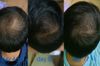
community 2 months progress on fin 1mg
User shared progress pictures after 2 months of using 1mg finasteride for hair loss. They are seeking feedback on any improvement.
community TGF-Beta. Good or Bad? Help for treatment investment
TGF-B affects hair growth, both causing stem cell division and death depending on amounts. Amplifica's treatment injects Scube3 to increase TGF-B for hair growth.
community UPDATE: now 5 months on Dut and continuing to regress aggressively
The user is experiencing significant hair loss after switching from finasteride to dutasteride for five months. Suggestions include that the hair loss might be a normal shedding phase, with some recommending continuing the treatment for up to 24 months or considering alternatives like RU58841.
community Extremish regimen - dermarolling too hard?
The user is using a hair loss treatment regimen that includes RU58841, minoxidil mixed with finasteride, adenosine, dermarolling with lidocaine cream, and biotin. They are questioning if they are dermarolling too aggressively and are willing to accept baldness if no improvement is seen in 6 months.
community Binding affinity does not equal potency for anti androgens? Comparing pyrilutimide to cb-03-01
Pyrilutimide and CB-03-01, two treatments for hair loss, have similar clinical trial results despite different binding affinities to androgen receptors. Factors other than binding affinity, like the time a drug stays bound to the receptor, may influence their effectiveness.
community Any experiences with pyrrolidinyl diaminopyrmidine oxide (marketed as triaminodil, nanoxidil, vividine, but NOT aminexil/kopexil, it's something different) when compared to minoxidil?
The conversation discusses the use of pyrrolidinyl diaminopyrmidine oxide (triaminodil) compared to minoxidil for hair loss treatment. The user is considering switching from 5% minoxidil to a product containing 5% triaminodil.
community I am doing an experience with RU58841
The conversation discusses a user experimenting with RU58841 for hair regrowth by ingesting it, which others find concerning. There are mentions of potential side effects and comparisons to other treatments like minoxidil, finasteride, and flutamide.
community Infection from micro needling even with medicated shampoos and sanitation
The conversation discusses scalp itching and tenderness after microneedling, despite using medicated shampoos and proper sanitation. The user plans to see a dermatologist and is concerned about possible infection or allergic reaction.
community almost 60 days on fin and min, regrowth or too soon?
community Hope Medicine's HMI-115 could be out in 2027 per Company Founder
Hope Medicine's HMI-115 is expected to be released in 2027, with phase 3 trials currently recruiting. Concerns include the safety of targeting prolactin and the potential cost of the treatment.
community Anyone know when phase 2 of the American trials for pyrilutamide should be released by
Researching the release of phase 2 trials for pyrilutamide, a potential hair loss treatment, and discussing other treatments such as Minoxidil, Finasteride, and RU58841.
community 7 month progress check-in (fin/min)
A 19-year-old is using minoxidil, finasteride, tretinoin, caffeine, and oils for hair regrowth, with positive results and no side effects. They are considering increasing finasteride dosage and possibly switching to dutasteride in the future.
community Scalp tension and thickness of the galea aponeurotica, inflammation and potential treatment pathways
Scalp tension potentially affecting hair loss, and potential treatments for male pattern baldness such as Minoxidil, Finasteride and RU58841. Evidence from a study was discussed which suggests that the cause of MPB lies within the follicle itself and is not dependent on its surrounding environment.
community risks with finasteride and dutasteride
Finasteride and dutasteride have potential risks, including post-finasteride syndrome, but are commonly used for hair loss. RU58841, minoxidil, and needling are suggested as alternatives, though all treatments carry risks.
community Anyone Taking CB-03-01
The conversation is about someone seeking information on long-term users of CB-03-01 for hair loss, having experienced negative side effects from finasteride and facing rapid hair thinning.
community My Journey to Norwood Vegeta. 4 month progress report.
community Exosomes for mpb day 1-? Let’s see if it’s bs.
Trying out a new exosome treatment for male pattern baldness, in addition to increasing vitamin intake and using existing treatments such as Nizoral and scalp drops. The user has no expectations that the new treatment will work but is giving it a try anyway.
community "I'm seeing new baby hairs"
The conversation discusses the appearance of new baby hairs with treatments like castor oil, finasteride, minoxidil, and dermarolling. Users note that baby hairs often go unreported after initial excitement, with some seeing growth and others losing interest in updates.
community I had a regression because I interrupted the treatment
The user experienced significant hair loss after stopping a treatment with vitamins, minoxidil (2.5mg), and dutasteride (0.5mg) for three months. They resumed the treatment 20 days ago and are hopeful for recovery, with no side effects reported.
community Has anyone experienced swelling in the face or body while taking spironolactone?
A user experienced facial swelling while taking spironolactone for androgenic alopecia, despite its diuretic properties. They are unsure about increasing the dose due to this side effect.
community Addressing queries in my DMs about my hair growth and my current state
The conversation discusses hair regrowth treatments, specifically using oral minoxidil, finasteride, and dutasteride. The user experienced hair growth after switching to oral medications and adjusting dosages, with no significant side effects reported.