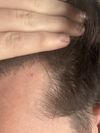
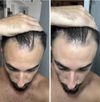
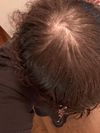
The user has been using topical finasteride and minoxidil for a month to address hair thinning. They are experiencing shedding but have noticed small hairs on their temples.
PP405 is discussed as a potential hair growth stimulant, possibly more effective than minoxidil, but not a cure for hair loss. There is skepticism about its ability to regrow "deadzones," and concerns about its impact on those with hair transplants.
PP405 is expected to be on the market between 2027 and 2030, with phase 3 trials starting in 2026. There is skepticism about its fast-tracking due to its cosmetic nature, and it may appear on the gray market sooner.
Verteporfin is being discussed for its potential to regrow hair and heal scars, possibly aiding hair transplants or replacing them. Some users are skeptical about its effectiveness, while others suggest combining it with microneedling for better results.
A 37-year-old male started a hair loss treatment 7 weeks ago using 1mg finasteride, 1.5mg minoxidil, and microneedling, with noticeable coverage improvement except for the right temple. He is considering a hair transplant in the future if needed.
Platelet-rich plasma (PRP) therapy for hair loss is expensive, painful, and often ineffective, with mixed reviews on its benefits. Alternatives like minoxidil, finasteride, and hair transplants are suggested as more reliable options.
A 19-year-old is experiencing rapidly progressing male pattern baldness and is unsure whether to start Minoxidil now or wait until they can access Finasteride. They currently use Ketoconazole shampoo and are concerned about the long-term commitment and potential shedding associated with Minoxidil.
The conversation is about the safety of using a dermastamp at 0.25mm depth twice a day when applying Minoxidil. The user seeks confirmation on whether this practice is safe despite mixed opinions.
Hope Medicine's announcement of the HMI-115 Phase II clinical trial for androgenetic alopecia in China; other related trials have been conducted or are ongoing in different countries, including Australia, US, and Europe. There is speculation that the product may be accepted across borders without additional testing.
A 28-year-old male started a hair loss treatment with 2.5mg oral minoxidil daily, 1mg finasteride every other day, and a 1.5mm dermaroller once a week. After two months, he believes he sees some progress.
A 24-year-old man is experiencing hair shedding after starting Minoxidil and Creatine, and is concerned about accelerated hair loss. A user suggests that Creatine does not increase DHT levels and recommends considering oral Dutasteride, low-dose oral Minoxidil, and Ciclopirox Shampoo, advising consultation with a doctor.
Hair loss progress in 4.5 months using dutasteride 3x/week, topical minoxidil 1-2x daily, and microneedling 2x/month. Users praised the significant improvement.
PP405 is a potential hair loss treatment that may work by blocking signals that cause hair cells to stop growing, requiring daily application for effectiveness. It could serve as an alternative to minoxidil and finasteride, but it is not yet available on the market and may take several years to be released.
The user switched from finasteride to dutasteride while continuing minoxidil and microneedling, seeing gradual hair regrowth. They are considering adding oral minoxidil and possibly a LLLT helmet for further improvement.
The user is seeing positive results in hair growth using a combination of topical minoxidil, finasteride, microneedling, and keto shampoo. They also use a red light panel for collagen rebuilding and are happy with the progress.
The user is using 5% minoxidil, 1mg finasteride, and a 1.5mm dermaroller 1-2 times a week for hair growth, noting improved growth speed and density. They avoid applying minoxidil immediately after dermarolling due to skin irritation.
The conversation discusses a clinical trial for Setipiprant in the US, starting June 29th, with eligibility excluding recent users of minoxidil or finasteride. It encourages informed decision-making before signing up.
The conversation discusses two methods for making topical finasteride: using ethanol and propylene glycol or mixing it with topical minoxidil. The focus is on solubility and absorption, with a suggestion to crush pills finely and possibly mix with minoxidil at a slightly elevated temperature.
The conversation discusses a user's 3.5-month experience using pyrilutamide and minoxidil for hair loss, with some perceived improvement in the temples but potential recent regression. Another user suggests that maintaining the current hairline, even without improvement, is positive.
PP405 is expected to finish Phase 2 trials in late 2025, with potential market availability around 2028-2029 if all goes well. Current treatments like finasteride and minoxidil are still popular, while new options like KX-826 and Breezula are anticipated soon.
Han Bio plans to start clinical trials for a new hair multiplication technology this year, which could significantly reduce the cost and time of hair transplantation. The technology uses a single hair strand to cultivate enough cells for 30,000 hair strands.
Mixing RU58841 with cetosomal minoxidil is discussed due to scalp irritation from ethanol PG vehicles. A mixture of the two turned bright pink when left to dry.
ET-02 is seen as promising for addressing hair loss and graying, but PP405 is more advanced in development and has better publicity. Some users plan to use both treatments alongside minoxidil and dutasteride.
The conversation is about a 23-year-old man's 5-month progress using minoxidil, finasteride, and dermarolling to treat hair loss, with before and after photos taken in the same location and lighting. One commenter notes difficulty in assessing the improvement due to the way the hair is combed over the bald spots.
The conversation is about someone who initially had positive results with Minoxidil for hair loss, lost those gains due to a hospital stay, and is now not seeing the same results upon resuming treatment. They plan to add microneedling and/or tretinoin to their regimen and are seeking success stories from others who did not respond to Minoxidil alone.
PRP therapy cannot make oral minoxidil's effects permanent, as minoxidil does not stay permanently in the system. Dosage of oral minoxidil is typically increased gradually, but there is a limit, and it should not be increased indefinitely.
A 43-year-old man shares his slow progress using low-dose topical finasteride and 5% minoxidil for hair growth, along with scalp massages, microneedling, biotin supplements, and pumpkin seed oil. Another user suggests shaving and warns about potential infertility from finasteride, but the original poster remains optimistic, citing others' successful results.
User shows temple area progress after hair transplant, using DUT every other day and oral Min 2.5 daily. Another user asks about number of grafts and cost.