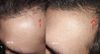
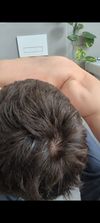
Minoxidil users can safely use salicylic acid shampoo to manage scalp pimples and dandruff. Nizoral is also recommended for hair gain and treating scalp pimples.
Using a blunt tip syringe for applying hair loss treatments like Minoxidil provides better scalp coverage than droppers. Users discuss the benefits of liquid over foam and share tips for effective application.
The user shows hair regrowth after using Hims 2 in 1 finasteride/minoxidil spray and dermarolling, with visible improvement in two months. Replies suggest continued use and inquire about the need for a prescription and any side effects.
The user has been using oral Dutasteride (.5mg) for 104 days and oral Minoxidil (.5mg) for about 2 months to address hair loss. Changes in hair appearance are noted, influenced by haircuts and dyeing, which affect the visibility of thinning areas.
The post discusses a product from Hims that combines finasteride, minoxidil, and biotin in one pill for hair loss. Users share mixed opinions, with one praising its effectiveness, while another warns against potential heart-related side effects of oral minoxidil, suggesting topical solutions instead.
Microneedling for hair loss, with concerns about cost and conflicting information on protocols. The user is unsure about purchasing and reusing microneedling stampers.
miR-205, a tiny RNA, can stimulate hair growth by softening aging hair follicle stem cells in mice. Future tests aim to see if this can work in humans.
A user shared their positive experience with hair regrowth using minoxidil, hormone replacement therapy, and cyproterone acetate during their male-to-female transition. Another user discussed their successful hair transplant after transitioning and using finasteride, highlighting the challenges of hair loss and regrowth during transition.
The conversation discusses skepticism about the effectiveness of scalp tension theory and scalp massagers for hair regrowth, contrasting it with treatments like finasteride and minoxidil, which have more user-reported results. Participants question the belief in scalp tension theory, suggesting it may be a marketing tactic, while others argue for a multifactorial approach to hair loss.
The user has been using minoxidil and finasteride for hair loss without positive results and switched to dutasteride 1.5 months ago. They suspect seborrheic dermatitis might be affecting the effectiveness of these treatments.
A user shared their 4-month hair regrowth progress using 0.5mg dutasteride and 2.5mg minoxidil, reporting no side effects and significant improvement. The conversation includes discussions on treatment choices, dosages, and personal experiences with hair loss treatments.
After 2 months of using Minoxidil and finasteride, OP noticed fuller hair, confirmed by their wife's observation. OP is pleased with the progress, though the change isn't drastic.
The user switched from Minoxidil to a Hims spray containing both Finasteride and Minoxidil but hasn't seen significant progress after 6 months. They are seeking advice for hair loss, particularly at the front and corners, and are using derma stamping twice a week.
A trial of verteporfin for hair regeneration, with pictures comparing the original and current status, as well as links to other resources discussing the efficacy of this treatment in combination with Minoxidil, Finasteride, and RU58841.
The conversation discusses whether to take oral minoxidil in a split dose or a single dose at night. Users suggest that taking a single 10mg dose at night is simpler, while splitting may help minimize side effects.
A 22-year-old is frustrated with friends and family's dismissive attitudes towards hair loss and finds support and hope in an online community. They have not yet treated their hair loss but are considering medications like minoxidil and finasteride.
The user has been using a regimen of dutasteride (DUT) and topical minoxidil (1ml once a day) for six months, resulting in hair regrowth and increased thickness. The user reports no side effects and mentions that the shedding phase lasted about a month.
Hair loss discussion involving finasteride's side effects and effectiveness. Users shared mixed experiences, with some reporting side effects and others seeing positive results.
The user has been using oral Minoxidil, Finasteride, and Biotin for hair recovery and is considering adding topical Minoxidil and dermastamping to improve results. It is suggested to use micro-needling once a week with a 24-hour gap before applying topical Minoxidil.
The user experienced hair regrowth and reduced scalp visibility after six months of using 0.5 mg dutasteride and 5 mg oral minoxidil. Suggestions included continuing the treatment, dermarolling with hyaluronic acid, and considering a hair transplant.
Hair loss discussion involves minoxidil, finasteride, and RU58841. Minoxidil non-responders may see results after adding stemoxydine due to increased enzyme presence.
The discussion is about using ASCEplus HRLB exosomes for hair loss treatment, which combines 10 billion exosomes with growth factors, nutrients, biotin, and copper tripeptide. The treatment is expensive and typically administered via scalp injections, but in Europe, it's done with microneedling.
A 39-year-old man shared his 18-month hair regrowth progress using oral dutasteride, oral minoxidil, saw palmetto, biotin, red light therapy, and microneedling. He experienced significant improvement after switching from finasteride to dutasteride and adding oral minoxidil, with plans to possibly consider a hair transplant in the future.
The conversation is about a female experiencing hair loss and seeking advice on why it's difficult to regrow hair. Specific treatments like Minoxidil, finasteride, or RU58841 are not mentioned.
User experienced telogen effluvium and diffuse thinning, started using 5% minoxidil two months ago, and resolved several deficiencies. They report noticeable improvement in hair health and plan to update progress in a month.
The user shared their 6-month progress using 5mg oral minoxidil, 1mg oral finasteride, topical 5% minoxidil, tretinoin, and weekly microneedling, noting improved results after adding these treatments post hair transplant. They hope for continued improvement.
The user experienced increased hair density after starting 1mg finasteride in February and 2.5mg oral minoxidil two months ago, along with 10mg biotin daily. They initially used topical minoxidil but switched to oral due to application difficulties and have seen improvements without significant side effects.
The conversation discusses the progress of Clascoterone (Breezula) for hair loss treatment, noting that COVID-19 delayed female trials by three months but Phase III trials for males are proceeding with a Special Protocol Assessment filed with the FDA. Users express hope for Breezula as an alternative to existing treatments like finasteride and minoxidil, despite concerns about its potential high cost.
A 22-year-old male is switching from topical to oral minoxidil due to limited results with topical use, while continuing oral finasteride and considering side effects. Users discuss experiences with oral minoxidil, noting potential side effects like swelling and headaches, but also its effectiveness compared to topical treatments.
A 24 year old male with no family history of balding who has been using minoxidil foam and Redensyl liquid for two months to treat hair loss, posting pictures to document his progress.